Stained Concrete
in Gilbert.
Acid-stained or water-based stained concrete creates unique color and figure work in the slab itself. Locked under polish, the color becomes permanent. Built by Danny Carpenter personally on every install. Get a free walkthrough.
Stained Concrete in Gilbert.
Stained Concrete is architectural polished concrete with color, figure, or texture work added to the slab. Acid-stained or water-based stained concrete creates unique color and figure work in the slab itself. Locked under polish, the color becomes permanent.
Decorative polished concrete sits where architects and interior designers specify a polished surface but want it to read as a deliberate design choice rather than a structural one. Color, aggregate exposure, stain patterns, dye gradients, and topical micro-texture all live inside the polished surface, none of it sits on top as a coating film.
Specified for
- Restaurant
- Boutique retail
- Architectural residential
- Showrooms
- Lobby
How stained reads in the finished space
The underlying polish protocol is identical to a standard commercial polish. The decorative layer happens between densification and the final polishing pass, stain or dye is applied, the surface is densified again, then progressively polished through to the spec gloss. The color or pattern becomes part of the slab itself, locked under the polished impregnator-sealer, with no topical film to peel or yellow.
For commercial design teams looking to spec stained on an upcoming project, share the design intent and Mint will walk through what’s achievable on the existing slab.
Acid stain and dye are two different animals
People use the words interchangeably and they should not. Acid stain is a reactive chemistry. Metallic salts in a weak acid carrier eat into the free lime and calcium hydroxide sitting in the top fraction of the slab and leave behind an insoluble mineral color. That reaction is why acid stain gives you the mottled, leathery, no-two-square-feet-alike look. It is also why acid stain is unpredictable on a slab that was troweled hard, cured under plastic, or dosed heavy with fly ash. Less free lime means less reaction means paler color, and no amount of a second coat fixes a slab that has nothing left to react with.
Water-based dye is the opposite. It carries fine pigment particles into the open pore structure mechanically, so the color you see on the sample board is close to the color you get on the floor. Dye gives you range acid stain cannot reach: true blacks, saturated blues, clean grays that read architectural instead of rustic. The tradeoff is that dye lives in the pores rather than bonded into the chemistry, so it depends entirely on the densifier and the polish above it to stay put. On a slab we are taking to a mirror finish, dye is usually the better answer. On a 30-year-old slab in a restaurant buildout where the client wants character, acid stain almost always wins.
Where the color goes in the grit sequence
Timing is the part most people get wrong, including some contractors. Color goes down after the metal-bond grinding is done and the slab is opened up, generally after the 80 or 150 grit pass, and after the lithium silicate densifier has had its dwell and been burnished in. Put stain down too early on a raw 30-grit surface and the next two grinding passes take most of it back off. Put it down too late, after the resin polishing has already closed the surface at 400 or 800 grit, and the color sits on top with nowhere to soak in. It streaks, it wipes, and it will not last.
Once the color is in and neutralized, if it is acid, we densify a second time to lock it and then run the resin sequence up through 400, 800, 1500, and 3000 depending on the gloss the drawing calls for. Every one of those passes takes a hair of color with it, which is exactly why the sample boards get polished to the same endpoint as the floor. A dye that looks perfect at 200 grit reads two shades lighter at 3000, and a client who signed off on the unpolished board is going to be unhappy on walkthrough day.
Arizona slabs bring their own problems to color work
Vapor drive is the one that bites. A slab poured on grade in the Valley without a proper vapor retarder, and there are plenty of those from the eighties and nineties around Gilbert and Mesa, will push moisture up through the concrete year round. That moving moisture carries dissolved salts with it, and when they hit the surface and dry they leave a white haze. Under a coating, that is what delaminates the floor. Under polish, it will not delaminate anything, but it can absolutely cloud a dark dye job and make a black floor look chalky in patches. We run a relative humidity probe on any slab getting dark color before we commit, and if the number comes back high we either move the client toward a lighter palette that hides it or spec a penetrating treatment that slows the drive.
Then there is the dust. Danny has lost more color work to construction dust than to bad chemistry. Stain has to go onto a genuinely clean surface, and on a Valley job site with the doors open in April, fine desert silt settles on a floor within twenty minutes of the last vacuum pass. On color days we close the building, run negative air if the GC has it, and stain in tighter zones instead of trying to pull a whole floor at once. It is slower. It is also the difference between an even field and a floor with faint dirty streaks that nobody can explain later.
Sample boards, and why we insist on them
Nobody picks a concrete color off a chip. The slab is the pigment and the color is only the modifier, so the same dye that reads warm walnut on a gray slab in Chandler will read orange on a high-sand mix in Queen Creek. Before we commit a floor, Danny grinds two or three test areas in a low-visibility corner of the actual slab, takes each one through the full sequence including the final polish, and lets the design team look at them under the building’s real lighting rather than a work light. Overhead LED at 4000K and a warm pendant will make the same floor look like two different materials.
Once a board is signed off it stays on site as the reference for the rest of the job, so nobody argues from memory about what the color was supposed to be. If a project needs a specific brand color matched, we say up front what concrete chemistry can and cannot hit. Sometimes the honest answer is that the color is not achievable in stain and the client is better served with a polished gray floor and the brand color living on the walls and fixtures.
Living with a stained floor
Maintenance is the easy part and the part most owners overdo. A stained, densified, polished floor wants a dust mop daily and a neutral pH cleaner with an auto-scrubber weekly. What kills the look is not traffic, it is chemistry. Acidic cleaners, citrus degreasers, and anything with ammonia will etch the polished surface and dull the color long before foot traffic ever wears it. On restaurant jobs we walk the closing crew through this personally, because the floor gets handed to whoever is mopping at ten at night, not to the owner who signed the contract. Desert sand tracked in on shoes is abrasive too, so a walk-off mat at every entry does more for a color floor over ten years than any product on the market.
The numbers.
Every Mint install ships with a written spec sheet, a copy of the AZ ROC-348746 license, a certificate of insurance on request, and Danny Carpenter on site for every grind, repair, densify, and polish pass. No subcontracted crews. No walk-on labor.
From the job site.
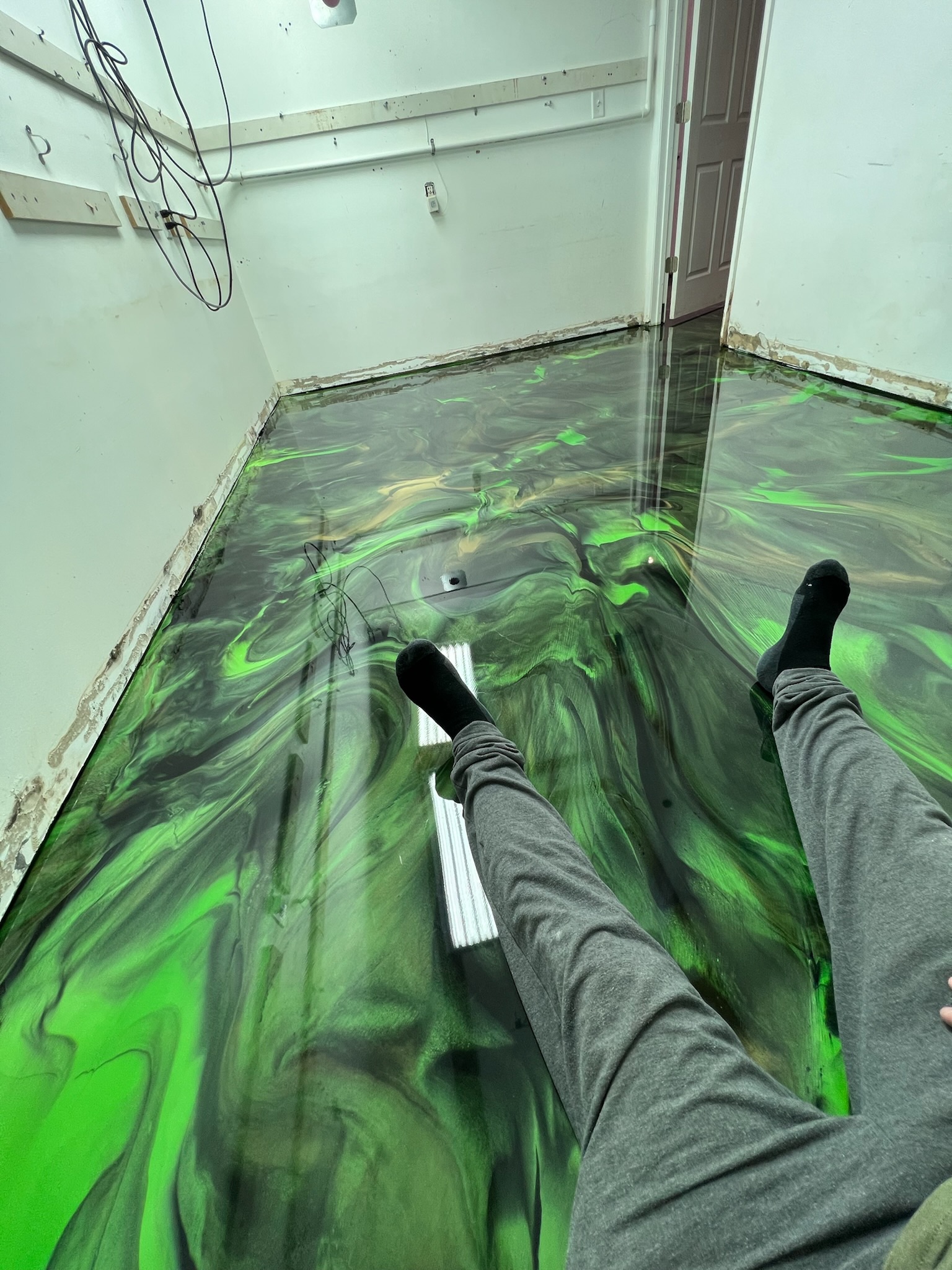
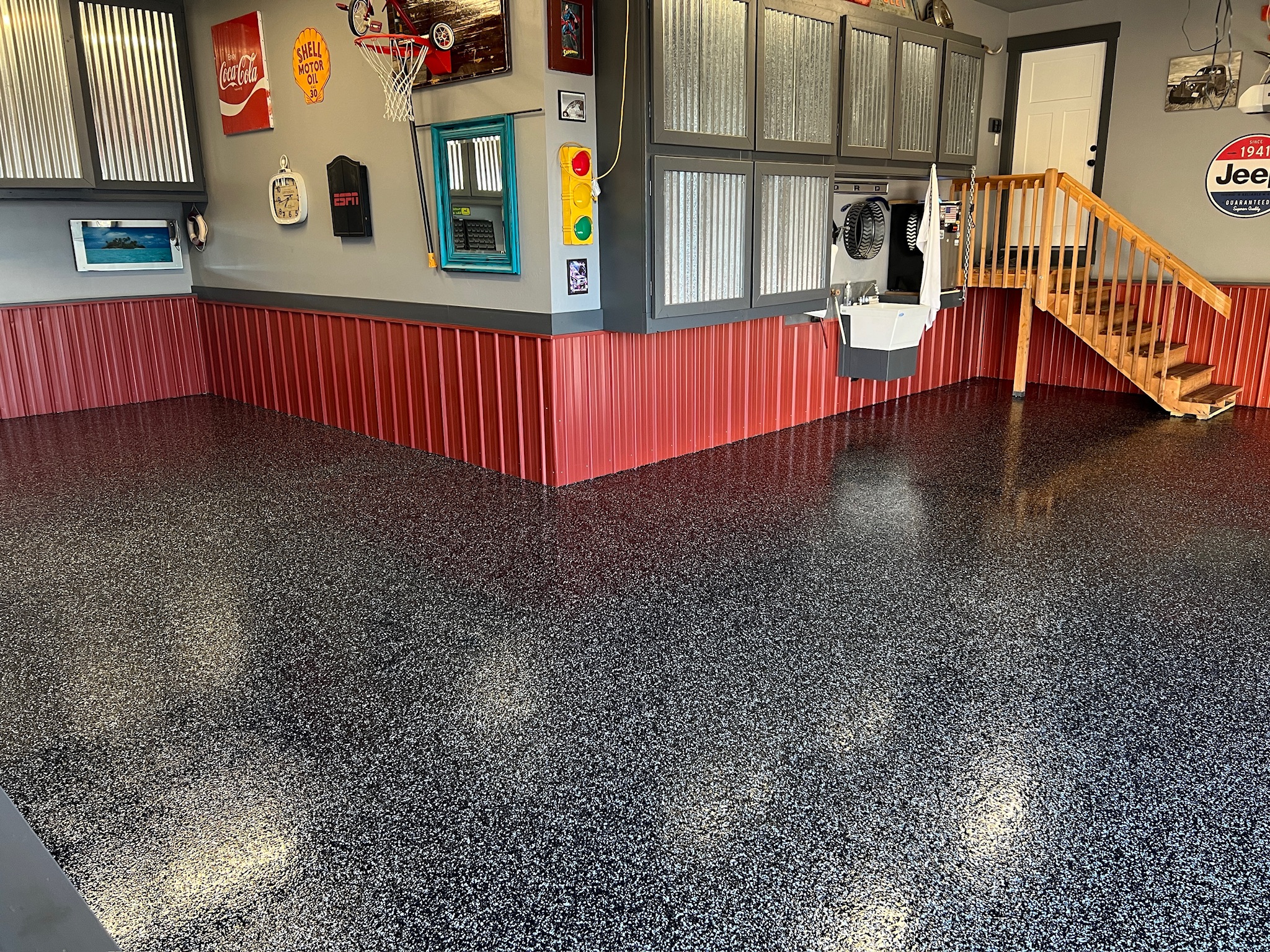
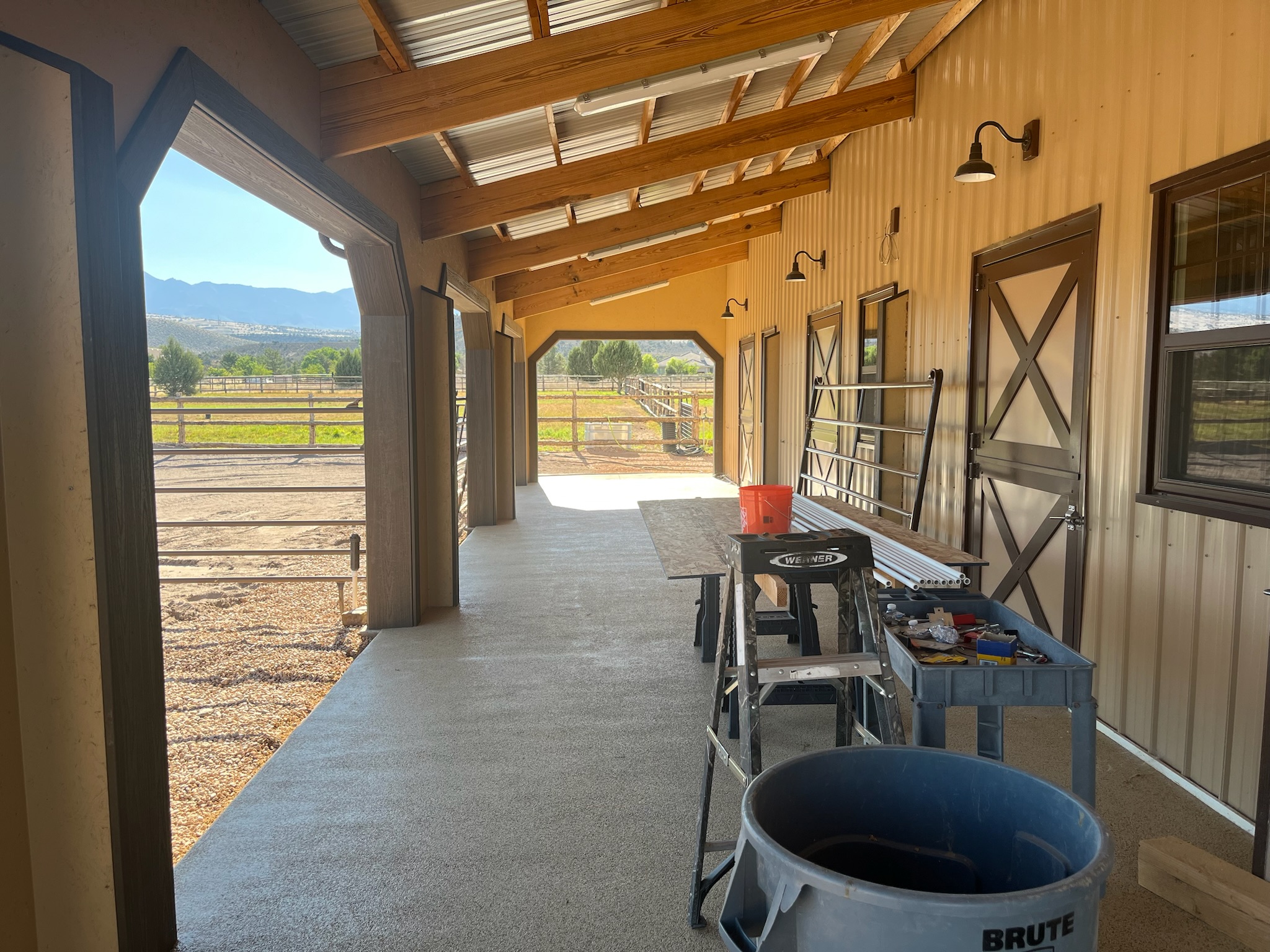
Real slabs from Maricopa and Pinal jobs. Every one was ground, densified, and finished by Danny’s crew, not a subcontractor.
Service area · Gilbert AZ
Questions, answered.
Will stained colors fade over time?
Stains and dyes locked under polished densifier are UV stable and chemically inert. The color becomes part of the slab itself, there’s no topical film to fade, peel, or yellow. Designed life of the color work matches the life of the building.
Can stained match a specific brand color?
Yes, within the chemistry of concrete-compatible dyes and stains. We’ll do sample boards on offcuts from the actual slab to confirm the color before committing the full floor. Most architectural projects start with 2-3 sample boards before final color lock.
Is stained more expensive than standard polished concrete?
Modestly. The base polishing process is identical; the color, dye, or aggregate work adds material and labor. Most stained jobs land 15-30% above a standard polished concrete install of the same square footage. Full quote at the walkthrough.
What’s included in a Mint stained install?
Every stained project includes mechanical surface prep, Acid + water-based, slab repair where required, Custom blends, polishing or coating to the spec endpoint, and Polished sealer. Written spec sheet on completion. AZ ROC-348746 license on file.
Does Mint take on stained jobs outside Maricopa and Pinal?
Maricopa and Pinal counties are the primary service area. Projects elsewhere in Arizona get evaluated on a case-by-case basis depending on scope, distance, and schedule. Send the project location and we’ll respond either way.
Tell us about the slab.
Free walkthrough. No commitment. Send us the address, square footage, and finish you have in mind. Danny Carpenter shows up personally to measure the slab, scope the prep, and quote the polish.
- Mon to Sat · 7 AM to 6 PM
- Maricopa + Pinal coverage
- Free walkthroughs, no obligation
- License: AZ ROC-348746