Concrete Grinding in Chandler
Mechanical surface prep done right: coating removal, slab leveling, diamond grinding, and surface profiling for commercial floors across Chandler and East Valley. AZ ROC-348746.
Concrete grinding is the foundation of every quality floor finish. Whether a floor is being prepared for polishing, an epoxy system, or a polyaspartic coating, the prep determines the result. A single-pass scuff with a cheap machine and chemical etching is not mechanical surface preparation. Mint Concrete Polishing grinds to specification using industrial diamond tooling calibrated to the existing surface condition and the finish system that follows.
When Concrete Grinding Is Needed
- Coating removal. Stripping existing epoxy, paint, adhesive, or tile mastic before a new floor system goes down.
- Surface profiling. Opening the concrete surface to the CSP (Concrete Surface Profile) required by the coating manufacturer.
- High-spot leveling. Removing ridges, lippage, and surface irregularities that would telegraph through a polished or coated finish.
- Prep for polishing. First-stage coarse diamond pass that begins the concrete polishing sequence.
- Renovation prep. Removing failed or damaged floor systems before restoration or recoating.
Diamond Grinding vs. Chemical Etching
Chemical acid etching opens concrete surface pores but leaves an irregular, micro-roughened surface that polishing systems cannot refine and coating systems may not adhere to uniformly. Mechanical diamond grinding produces a flat, consistent surface profile. For commercial applications in Chandler, mechanical grinding is the correct preparation method. We do not use acid etching as a substitute for mechanical prep. See our gallery for project examples, or visit our commercial polished concrete page for more on the full process.
What We Cover in Chandler
Chandler commercial concrete grinding projects typically include warehouses in the Chandler Airpark, retail buildouts along Chandler Boulevard and Arizona Avenue, restaurant renovations, office suites, and industrial spaces in the Price Road Corridor. We work on both new slab prep for first-time floor systems and renovation prep on existing floors. Call (602) 292-2849 or contact us for a project scope assessment.
Tooling the Job to the Chandler Slab
The diamonds do the work, and picking the wrong ones wastes a day and dulls the floor. Grinding tooling is graded by bond hardness, and it has to run opposite the slab: a soft, abrasive concrete calls for a hard-bond diamond so the segment does not wear out in twenty minutes, while a hard, dense slab wants a soft-bond diamond that keeps exposing fresh grit. Chandler gives us both. A chalky Airpark warehouse pour and a tight tech-corridor tilt-up off Price Road are opposite ends of that scale, and running one bond across both is how a crew ends up glazing the diamonds and burning through metal without cutting. We read the slab hardness before the machine rolls, match the bond, and adjust as the floor changes across the space, because a big Chandler floor is rarely one uniform pour.
Why Desert Slabs Grind Differently
Concrete placed in Chandler’s low-humidity summers behaves in ways a wetter-climate slab does not. When the bleed water leaves fast, the cement paste and fines get pulled to the top, leaving a laitance crust that is soft, dusty, and weak, exactly the layer that has to come off before a densifier or coating can reach solid concrete. On other pours, aggressive early drying pulls a hard skin that fights the first pass. Curing compounds and cure-and-seal products, common on Chandler commercial pours to slow that desert moisture loss, sit on the surface as a bond-breaker that has to be ground off completely before anything new goes down. We plan the grind knowing the slab was fought against the climate when it was placed, and we do not assume a flat, uniform surface just because the floor looks clean.
Dust and Silica Control in an Occupied Chandler Building
Grinding dry concrete throws respirable silica, and in an occupied Chandler office, retail space, or medical suite that is not something to hand-wave. Every grinder we run is shrouded to an industrial HEPA vacuum that pulls the dust at the cutting head before it can drift into the building. That keeps the air workable for adjacent tenants, protects your inventory and equipment from a concrete-dust film, and keeps us compliant with the silica-exposure rules that apply to this work. For sensitive Chandler environments like a functioning clinic or a food-service buildout, we can add poly containment and negative-air scrubbing on top of the shrouds. The goal is a clean grind that does not shut the rest of your operation down.
Standalone Grinding for Other Chandler Contractors
Not every grind we do ends in our own polish. A fair amount of our Chandler work is standalone surface prep for someone else’s finish: a coating contractor who needs a slab profiled to a specific CSP, a flooring installer who needs old adhesive and laitance gone before new material goes down, or a facility manager who wants a failed floor stripped to bare concrete. We grind it to the profile you or your coating manufacturer specify, hand it off flat and clean, and stay out of the finish. If you are a Chandler builder or GC who needs prep done right so your coating actually bonds, that is a call we take.
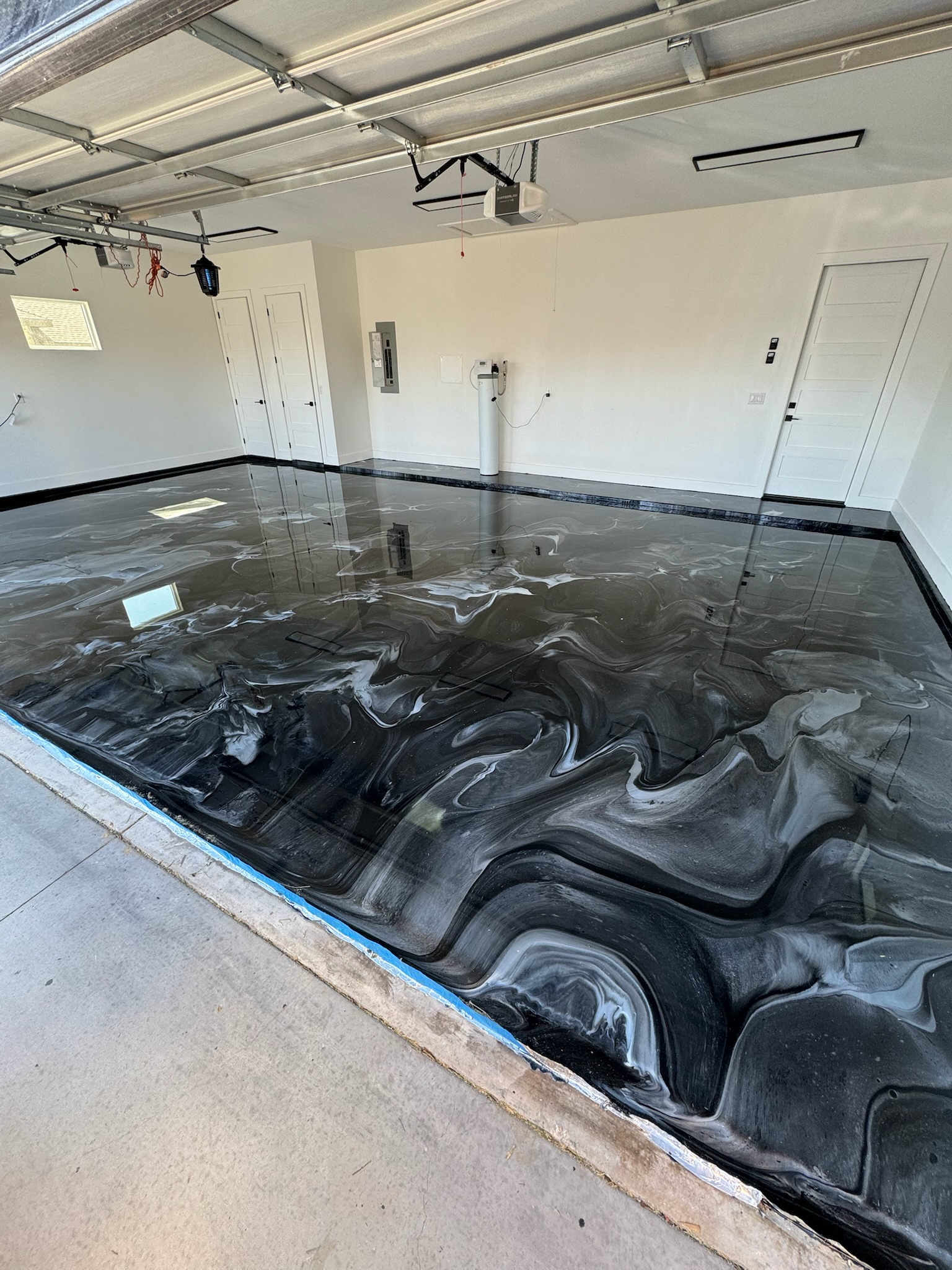
Concrete Grinding FAQ: Chandler, AZ
How do I know what grit to start with for my floor?
Starting grit depends on the existing surface condition, what’s on it, and what finish system follows. A floor with thick coating gets a coarser start (16-30 grit). A bare slab in good condition being prepped for a coating may start at 50-80 grit. We assess the specific floor and specify the process before beginning.
Is concrete grinding dusty in a commercial building?
Our grinders use dust shrouds connected to industrial HEPA vacuums that capture the vast majority of concrete dust at the source. Some residual dust is unavoidable, but our process keeps it manageable. We can discuss containment strategies for occupied adjacent spaces in your Chandler facility.
Can you grind over an existing epoxy coating?
Yes. We grind off existing epoxy coatings as part of the prep process. Thick or multi-layer systems may require multiple passes at coarser grits before reaching bare concrete. We handle this as part of standard prep on renovation projects.
How long does concrete grinding take for a commercial floor?
Rough rule: a single-pass grind on an open commercial space runs about 2,000 to 5,000 square feet per day depending on machine size, tooling, and surface condition. Multi-pass prep for polishing takes longer. We scope project timelines during the assessment.
Do you provide concrete grinding as a standalone service?
Yes. We do standalone grinding and surface prep for contractors, facility managers, and building owners who will apply their own coating system afterward. Call (602) 292-2849 or reach us through our contact page to discuss scope.
Can you grind out high spots and lippage on a Chandler slab?
Yes, within reason. Diamond grinding flattens trowel ridges, curled joint edges, and moderate high spots so a floor is level enough for racking, finish flooring, or an even polish. There is a limit: if a Chandler slab has severe curl, deep dips, or structural unevenness, grinding alone will not fix it and you are into a self-leveling overlay or slab repair. We measure the floor and tell you which one it is. Grinding a floor flatter than the slab will allow just chases the low spots and wastes tooling.
Will grinding remove oil stains from a Chandler shop or garage slab?
Surface oil grinds off with the top layer, but oil that has soaked deep into the concrete is a different problem. Deep contamination in a Chandler shop or service-bay slab has to be degreased and drawn out before grinding, because a coating or polish laid over oil that is still living in the pores will fail no matter how clean the surface looks. We degrease, grind, and check the slab for bleed-back before we call it prepped. Cutting that step is how a beautiful new floor blisters over an old stain a month later.
How soon after grinding can the next coating or polish go down?
Usually the same day or the next, as long as the slab is clean, dry, and profiled. On a polish job we roll straight from the coarse grind into the finer passes and the densifier without stopping. On a coating prep, the slab needs to be free of dust and at the right moisture level for the product, so we vacuum the surface down and confirm conditions before your coating goes on. If we flagged elevated moisture during the grind, that gets addressed first, because a coating over a wet Chandler slab is a callback waiting to happen.
Prep That Actually Works
Chandler, AZ · Mechanical diamond grinding · AZ ROC-348746