Cream Polish
in Gilbert.
Light grind that stops at the cream layer of the slab. Smooth, uniform surface with zero aggregate exposure. The cleanest, most consistent polished concrete look for spaces that want surface uniformity over character. Built by Danny Carpenter personally on every install. Get a free walkthrough.
Cream Polish in Gilbert.
Cream Polish is one of five process tiers in the polished concrete catalog. The tier defines how deep we grind into the slab and how the final surface reads. Light grind that stops at the cream layer of the slab. Smooth, uniform surface with zero aggregate exposure. The cleanest, most consistent polished concrete look for spaces that want surface uniformity over character.
Where cream polish fits in the Mint catalog: this is the process Danny specs when the project calls for modern office or premium retail. Every install runs through the four-step polished concrete protocol, diamond grinding, slab repair, lithium-silicate densification, then progressive grit polishing through Zero exposure. Foot traffic is allowed within 24 hours of the final pass; vehicle traffic at 72.
Who specs cream polish
Modern office is the most common project type for this tier in the Phoenix metro. Premium retail is the second-largest segment. Beyond those two, cream polish ships into a range of commercial and industrial environments across Maricopa and Pinal counties:
- Modern office
- Premium retail
- Boutique showrooms
- Architectural residential
- Galleries
How we install it
Mechanical surface prep is the foundation of every cream polish job. Progressive diamond grinding opens the slab to the specified depth without scarring the surface beneath. Crack and joint repair happens between grind passes. Lithium-silicate densifier penetrates the open slab and chemically hardens it from the inside out. Final polish steps from 400 to 800 to Zero exposure grit produce the spec-sheet finish. A penetrating impregnator-sealer locks it in, no topical film, no peel risk, no recoat cycle.
What the cream layer actually is
When concrete is placed and finished, the heavier rock settles and a layer of cement paste and fine sand rises to the top. Troweling works that paste smooth. That top skin, usually an eighth to a quarter inch deep, is the cream. Grind into it lightly and you get a clean, monolithic surface with no visible stone. Grind through it and you start pulling sand, then small aggregate, then the big rock. There is no going back once you’ve crossed that line.
That’s the whole discipline of a cream polish. You are working inside a very thin window, and the tolerance for error is smaller than any other tier we offer. On an aggregate-exposed floor you’re cutting deep on purpose and a little variation just reads as character. On cream, a half pass too deep in one corner leaves a patch of exposed sand sitting in the middle of an otherwise flawless floor, and the only fix is grinding the entire room down to match it.
The slab decides whether this finish is even possible
We turn down cream polish jobs, and we would rather do that at the walkthrough than after the deposit. If a slab is out of flat by much, grinding it flat means cutting deep at the high spots, which blows through the cream there and leaves you with random exposure. If a previous tenant anchored racking and the holes were patched with mortar, those patches are a different color and different hardness and they will never disappear at this grind depth. Saw-cut trenches from a plumbing retrofit are the same story.
So the first thing Danny does on a cream job is read the slab. Straightedge for flatness, a look at every patch and penetration, a test grind in an inconspicuous spot to see how deep the cream runs and how uniform the color is underneath. If the answer is that this slab wants to be a salt and pepper floor, we say so, because a salt and pepper finish done well beats a cream finish done badly every time.
Getting it right on a new pour
The best cream floors are the ones we’re involved in before the concrete truck shows up. Placement flatness, the finishing schedule, curing method, and whether the crew uses a cure and seal product all determine what we can do later. A slab that’s power-troweled to a hard burnish is dense and beautiful but can be tight for a densifier to penetrate. A slab left with tire tracks from a buggy has permanent low spots.
Curing matters most. If the concrete crew sprays a membrane cure and seal, we have to remove all of it before densifying, which is extra work and sometimes leaves ghosting. Wet cure or a curing blanket costs the GC nothing extra and gives us a clean slab. We’ll come to the preconstruction meeting and say all this to the concrete sub directly, which saves everybody money later. We’ll also ask that saw cuts land on the column grid and that anyone doing overhead work does it before we polish, because a dropped fitting from a scissor lift makes a divot we cannot hide at this depth.
Color, and the fact that concrete is a natural material
A cream floor shows the color of the paste, which means it shows any variation in that paste. Two truckloads from different plants, a change in the sand source mid-pour, an area that got extra water worked into it by a finisher chasing workability on a hot afternoon, all of that can read as a subtle blotch once polished. It is usually beautiful and it is always a little unpredictable, and anyone who promises you a floor with the uniformity of a manufactured tile is going to disappoint you.
Where a project genuinely needs consistency wall to wall, the answer is dye. A penetrating concrete dye applied between densification and the final grits evens out the tone while keeping everything inside the slab, no film on top. We show clients dyed and undyed samples on their own concrete before deciding, because the photo on a website is somebody else’s slab.
Timeline and living with the finish
A typical 5,000 square foot office or retail floor runs three to five days start to finish for a cream polish. Foot traffic is fine 24 hours after the last pass, and we hold vehicle or heavy rolling loads for 72 so the sealer fully cures. If the space is occupied, we zone it and work nights.
Once it’s down, the maintenance is a dust mop and a neutral cleaner, and in this valley the dust mop is the important half. Fine desert grit tracked in from the parking lot is abrasive, so entry matting protects a cream floor more than any product upgrade would. Skip wax entirely. If you want the floor looked at on a schedule rather than when something goes wrong, get on the calendar and we’ll water test it annually.
The numbers.
Every Mint install ships with a written spec sheet, a copy of the AZ ROC-348746 license, a certificate of insurance on request, and Danny Carpenter on site for every grind, repair, densify, and polish pass. No subcontracted crews. No walk-on labor.
From the job site.
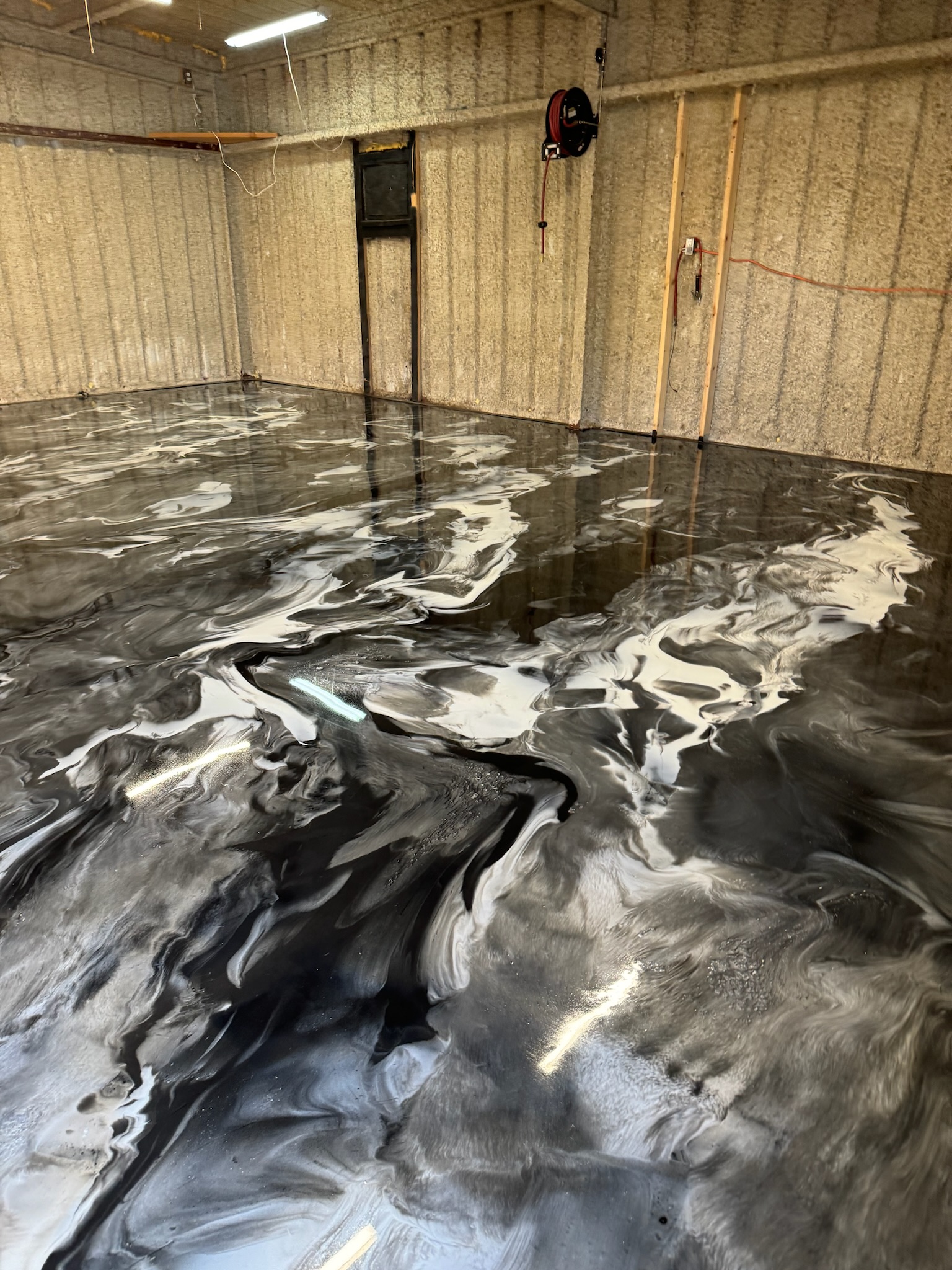
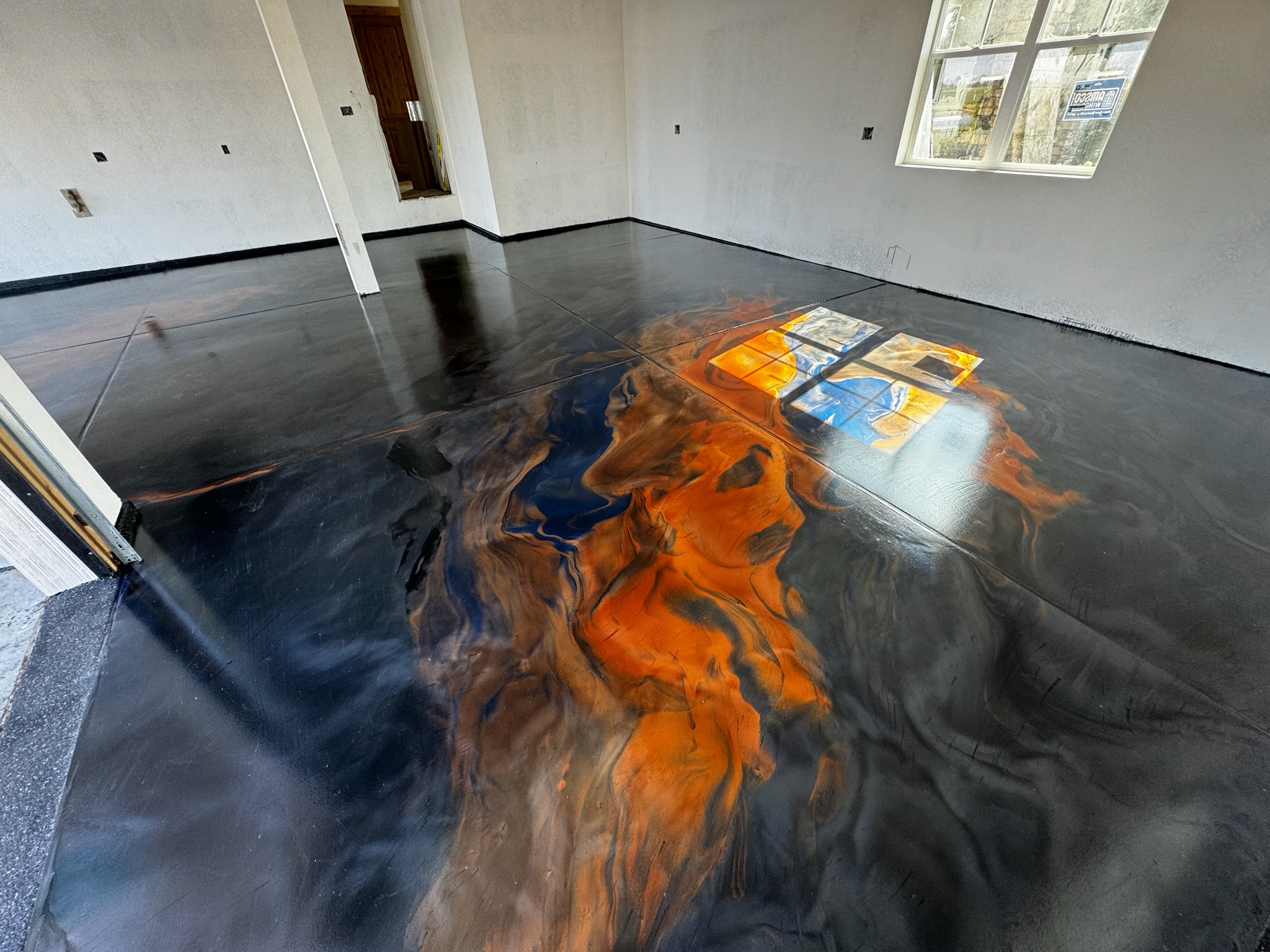
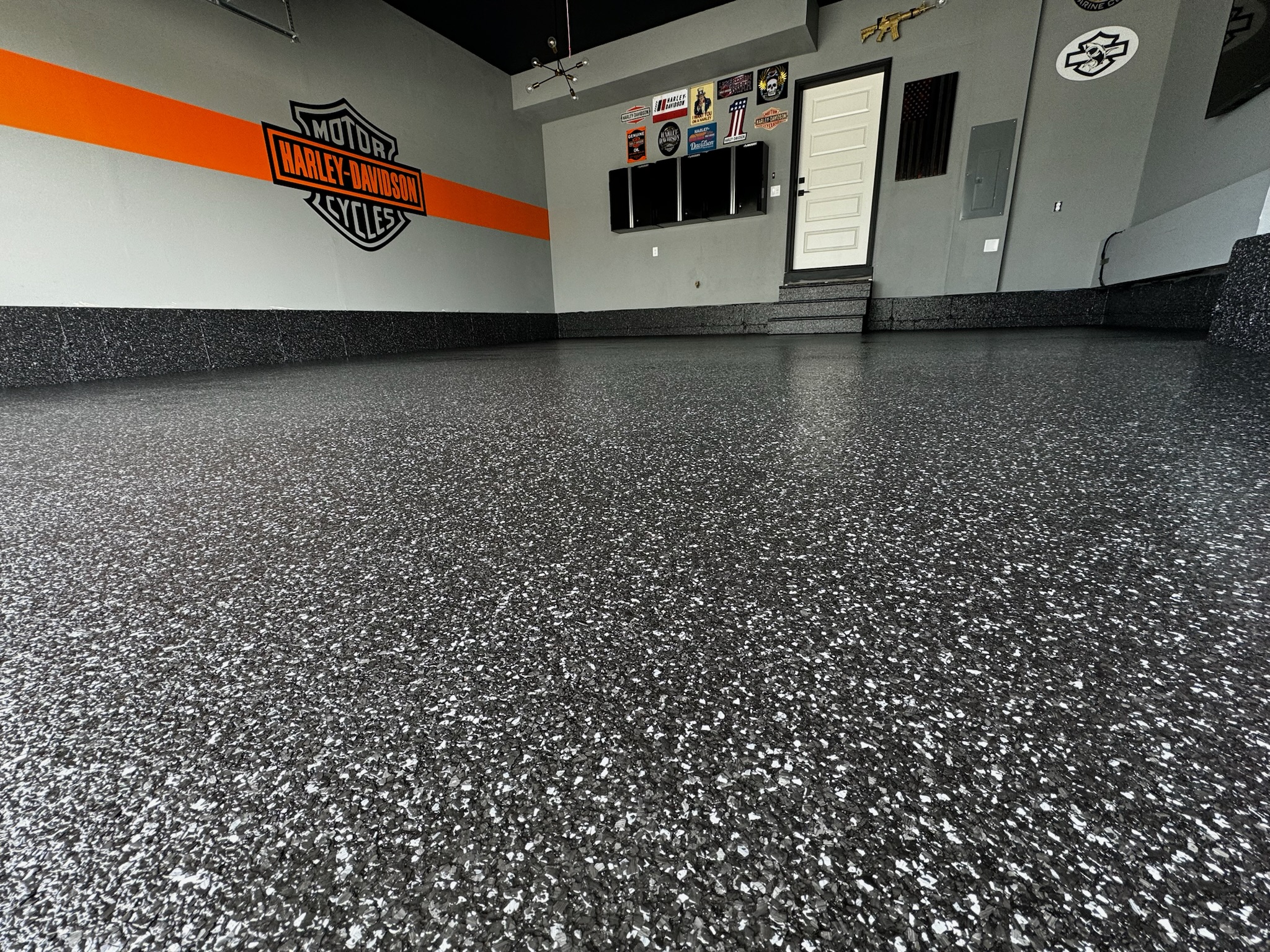
Real slabs from Maricopa and Pinal jobs. Every one was ground, densified, and finished by Danny’s crew, not a subcontractor.
Service area · Gilbert AZ
Questions, answered.
How much does cream polish cost in Phoenix?
Cream Polish polish in the Phoenix metro typically runs Cream polish is the shallowest cut we offer, so the number leans hard on how flat and how clean the existing slab is. A well-finished new pour holds its cream layer and polishes lean. An older slab with trowel burns, patchwork, or a coating that has to come off first will not stay in the cream once we open it, and that changes the work in front of us. Square footage, the gloss level you want, and mobilization round it out. We read the slab in person, show you a test section, and hand you a firm written price for your scope. Send us the details and we’ll come look at the floor.
How long does cream polish take to install?
A typical 5,000 square foot cream polish job runs 3 to 5 days from grind start to walk-on. Larger industrial slabs get zoned to keep operations live through the install. Foot traffic at 24 hours after final pass; vehicle traffic at 72 hours.
What’s the difference between cream polish and epoxy?
Cream Polish is the slab itself, diamond-ground, densified, and polished. Epoxy is a topical coating layered on top. Polished concrete lasts the life of the building and never delaminates. Epoxy can fail by hot-tire pickup, UV yellowing, or moisture blistering. For commercial spaces with long-term traffic, polished concrete is almost always the right answer.
What’s included in a Mint cream polish install?
Every cream polish project includes mechanical surface prep, Cream layer only, slab repair where required, Zero exposure, polishing or coating to the spec endpoint, and 1500+. Written spec sheet on completion. AZ ROC-348746 license on file.
Does Mint take on cream polish jobs outside Maricopa and Pinal?
Maricopa and Pinal counties are the primary service area. Projects elsewhere in Arizona get evaluated on a case-by-case basis depending on scope, distance, and schedule. Send the project location and we’ll respond either way.
Tell us about the slab.
Free walkthrough. No commitment. Send us the address, square footage, and finish you have in mind. Danny Carpenter shows up personally to measure the slab, scope the prep, and quote the polish.
- Mon to Sat · 7 AM to 6 PM
- Maricopa + Pinal coverage
- Free walkthroughs, no obligation
- License: AZ ROC-348746