Penetrating Concrete Sealers
in Gilbert.
Impregnator-grade penetrating sealers that protect polished concrete against oil, water, and contaminants without forming a topical film. The right sealer chemistry per service environment. Built by Danny Carpenter personally on every install. Get a free walkthrough.
Penetrating Concrete Sealers in Gilbert.
Penetrating Concrete Sealers uses impregnator-grade penetrating sealers that protect polished concrete against oil, water, and contaminants without forming a topical film. The right sealer chemistry per service environment.
Decorative polished concrete sits where architects and interior designers specify a polished surface but want it to read as a deliberate design choice rather than a structural one. Color, aggregate exposure, stain patterns, dye gradients, and topical micro-texture all live inside the polished surface, none of it sits on top as a coating film.
Specified for
- Polished concrete protect
- Warehouse stain-block
- Restaurant grease protect
- Healthcare antimicrobial
- Architectural longevity
How sealers reads in the finished space
The underlying polish protocol is identical to a standard commercial polish. The decorative layer happens between densification and the final polishing pass, stain or dye is applied, the surface is densified again, then progressively polished through to the spec gloss. The color or pattern becomes part of the slab itself, locked under the polished impregnator-sealer, with no topical film to peel or yellow.
For commercial design teams looking to spec sealers on an upcoming project, share the design intent and Mint will walk through what’s achievable on the existing slab.
Densifier and sealer are two different products
People use the words interchangeably and then get surprised by the result. A densifier is a lithium or sodium silicate that reacts with free lime inside the slab and grows hard crystalline material in the pore structure. It makes the concrete harder and denser so it takes a polish and holds it. It does almost nothing about a spilled cup of coffee, because it is filling pores at a scale much smaller than a stain.
A penetrating sealer, sometimes called an impregnator, is the stain defense. It wicks down into that densified surface and lines the remaining pore walls with a water-repellent and oil-repellent chemistry, so a liquid beads and sits long enough for somebody to wipe it. Both belong on a polished floor and they go on in that order, densifier first while the slab is open, sealer near the end once the grit sequence has closed the surface. Skip one and you get either a floor that will not hold gloss or a floor that stains the first week.
The chemistry families and where each one belongs
Silane and siloxane products handle water beautifully and breathe well, which makes them the right pick when moisture is coming up through the slab and needs somewhere to go. They are weak against oil, so we do not put them in a shop bay.
Fluoropolymer impregnators are the ones that repel oil and water both. They’re what goes into a restaurant kitchen, a quick lube, a car showroom where a leaking display vehicle can sit for a week. They cost more per square foot and they’re worth it in any environment where the spill is greasy rather than watery.
Lithium-fortified sealers blend a little more hardening into the same pass, which suits a warehouse floor that is going to see steel wheels and pallet jack traffic more than it sees spills. And for clinical spaces we spec an impregnator with an antimicrobial component, which does not sterilize anything by itself but does keep the pore structure from becoming a place where growth gets a foothold between cleanings.
Why Arizona is hard on a sealed floor
Two things here work against a floor and neither is heat. The first is water chemistry. Valley tap water is loaded with calcium and magnesium, and when a mop leaves a film on a floor at 100 degrees, that water flashes off in minutes and leaves the minerals behind. Over months you get a haze that people mistake for a failing sealer. Usually the sealer is fine and the floor needs a mild acidic descaler and a proper rinse, which is a very different and much cheaper fix than a reseal.
The second is dust. The fine silty soil out here gets tracked in constantly, and it’s angular under a microscope. Grit under a shoe is abrasive, and abrasion is what actually consumes a sealer in the traffic lanes. Walk-off matting at every entry does more for sealer life than any product upgrade we could sell you, and we say that on every walkthrough. During haboob season, when a wall of dust rolls through and the whole Valley gets a coating, a building with good matting and a scheduled dust mop keeps its floor and a building without them does not.
Testing a floor instead of guessing
When someone calls and says their sealer failed, we do a water drop test before quoting anything. Put a few drops on the floor in several zones, wait a couple of minutes, and watch. If it beads and sits, the sealer is alive and the problem is something else, usually mineral haze or a cleaner residue. If it darkens the concrete and soaks in, that zone has lost protection and needs a re-application. Very often the traffic lanes fail the test and the perimeter passes, which tells us we can do a partial and save the client most of the cost.
Re-application is straightforward when the floor was sealed with an impregnator to begin with. Deep clean, let it dry fully, apply, remove the excess before it flashes. There is no sanding, no stripping, no film to remove, because there was never a film. That’s the practical argument for impregnators over topical coatings on a commercial floor: the maintenance cycle never involves shutting down for a strip and recoat.
How long a sealer really lasts
Nobody can give you an honest number without knowing the traffic. A polished slab in an architectural office with matted entries and a nightly dust mop can hold protection for five to seven years in the field and longer under furniture. The same product in a restaurant kitchen, where the floor gets degreased aggressively every night, is a two-year conversation. A warehouse aisle under constant forklift traffic sits somewhere between, and the aisle will need attention long before the racking bays do.
What we do is set a check date rather than a replace date. We come back, water drop test the zones, and tell you what we find, including when the answer is that nothing needs doing yet. If you’d like the floor looked at, send the address and we’ll bring the test kit. Sealer work pairs naturally with ongoing maintenance and with restoration when a floor has gone too long without either.
The numbers.
Every Mint install ships with a written spec sheet, a copy of the AZ ROC-348746 license, a certificate of insurance on request, and Danny Carpenter on site for every grind, repair, densify, and polish pass. No subcontracted crews. No walk-on labor.
From the job site.
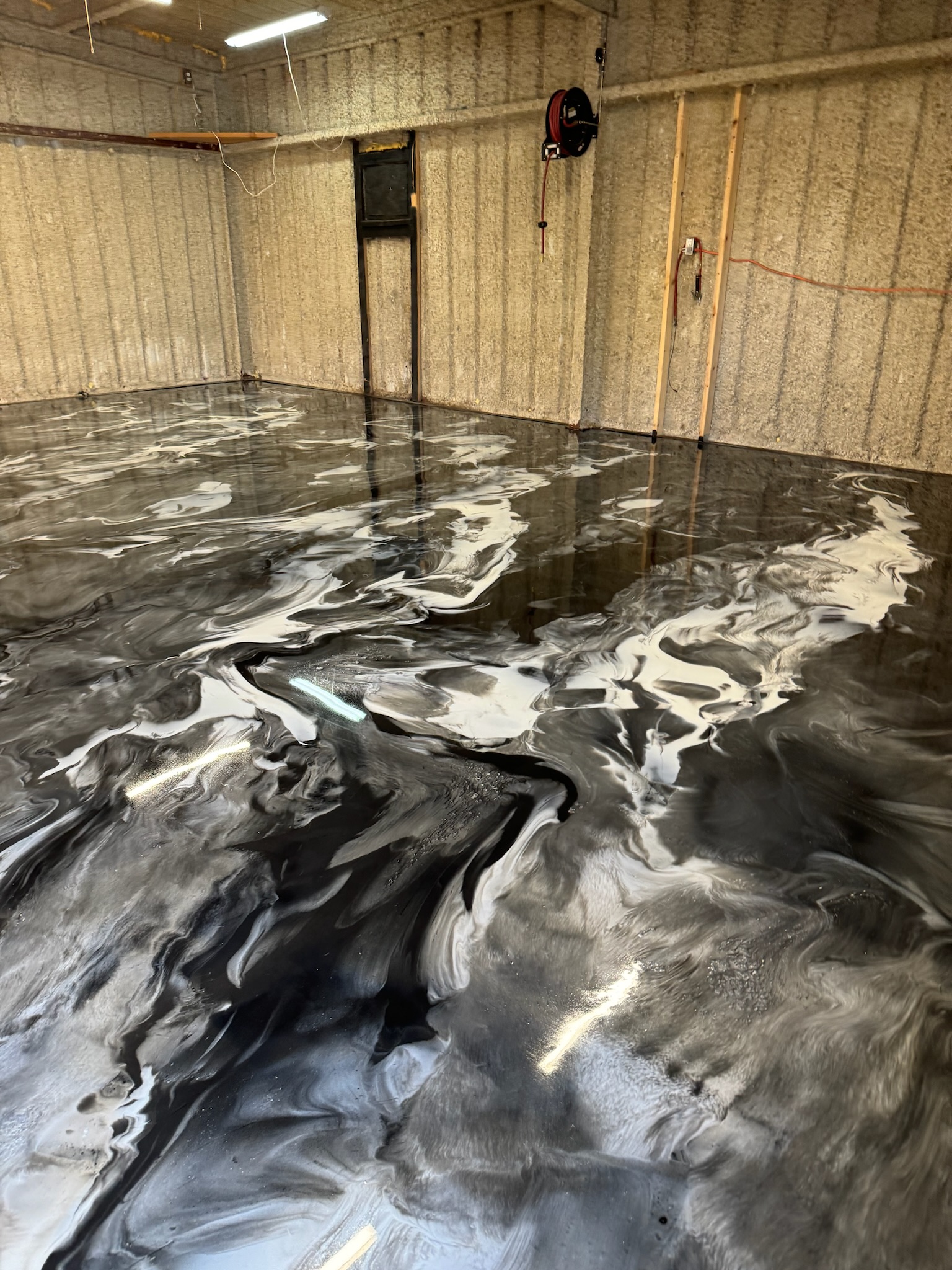
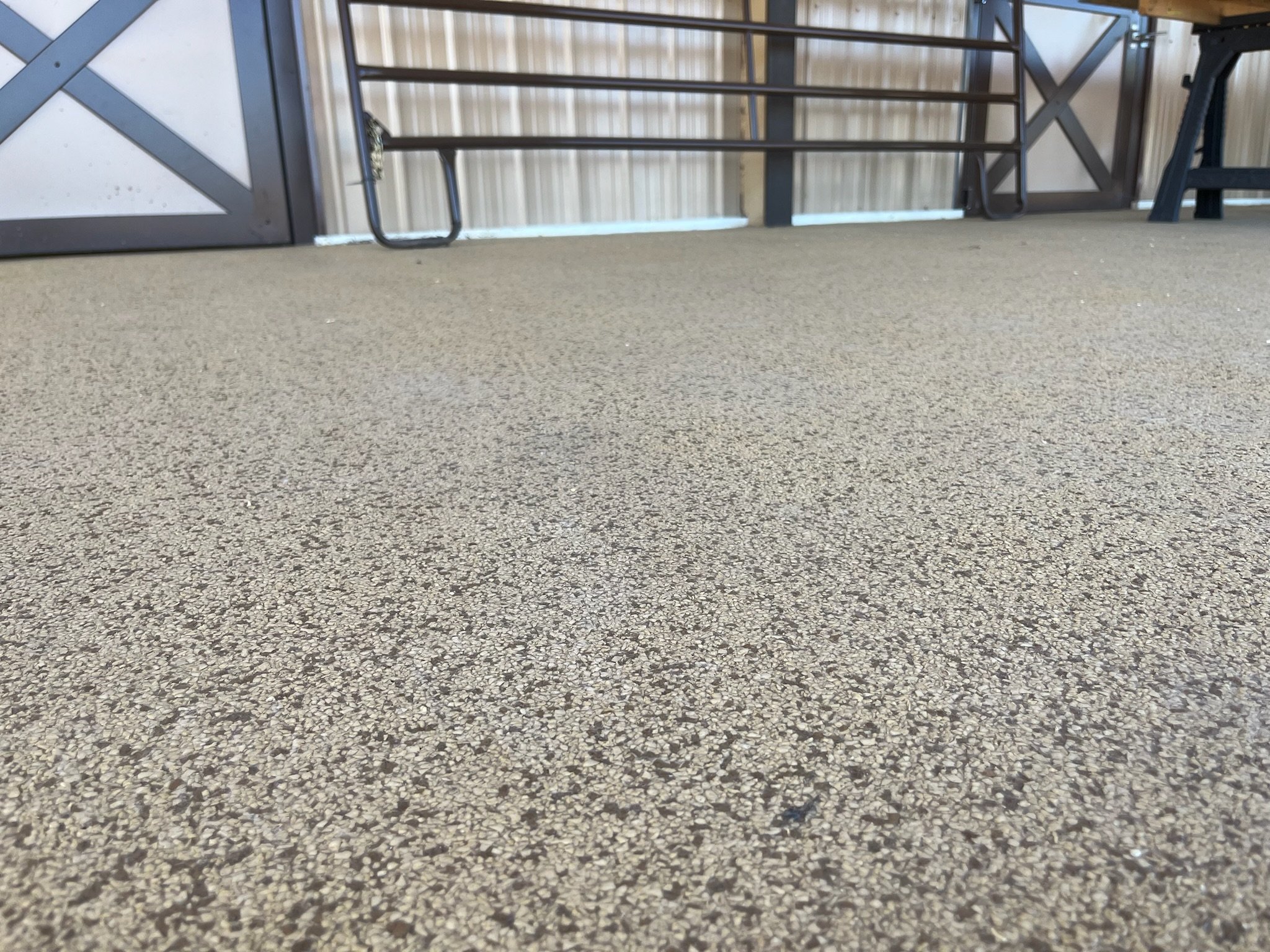
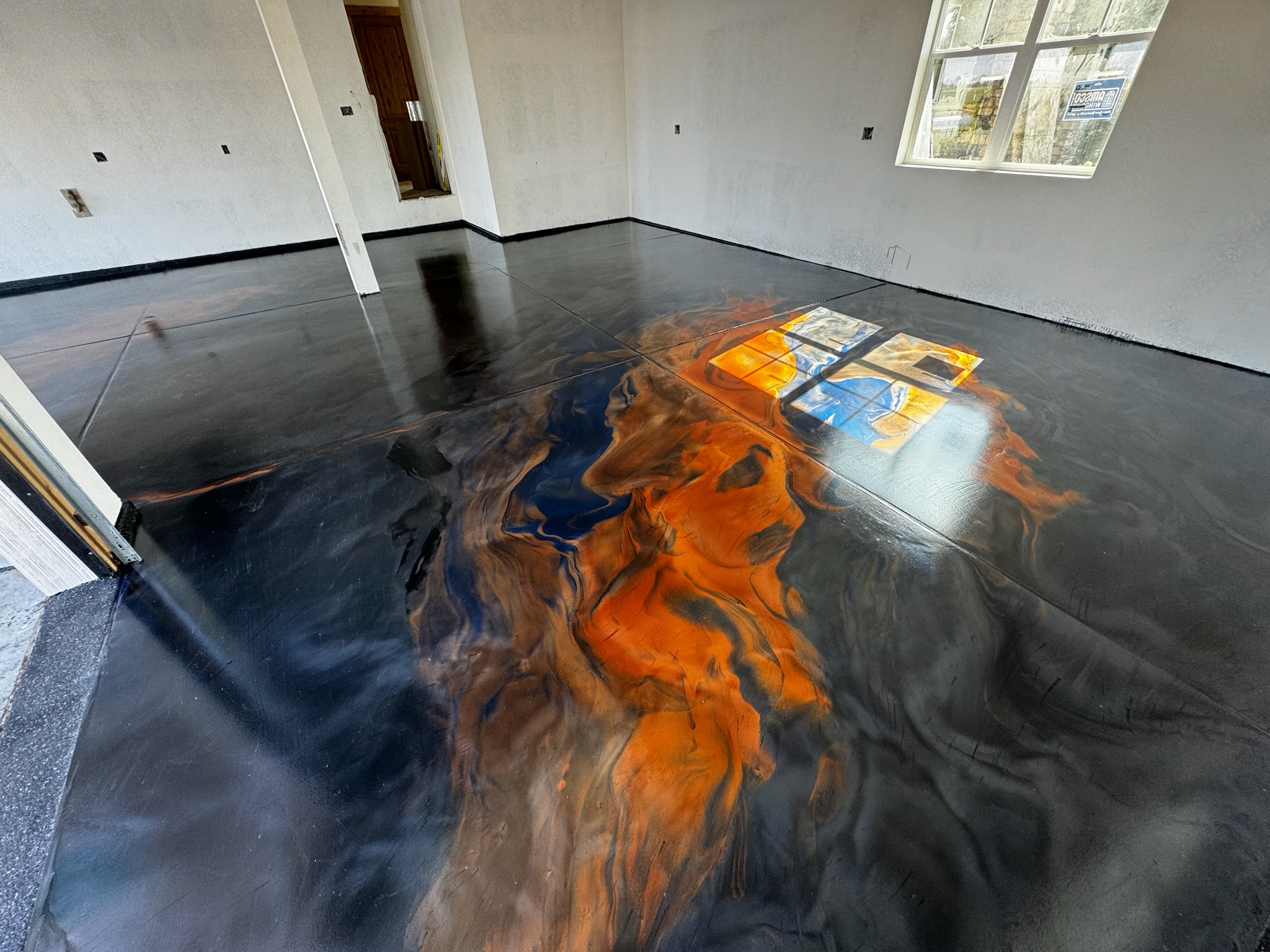
Real slabs from Maricopa and Pinal jobs. Every one was ground, densified, and finished by Danny’s crew, not a subcontractor.
Service area · Gilbert AZ
Questions, answered.
Will sealers colors fade over time?
Stains and dyes locked under polished densifier are UV stable and chemically inert. The color becomes part of the slab itself, there’s no topical film to fade, peel, or yellow. Designed life of the color work matches the life of the building.
Can sealers match a specific brand color?
Yes, within the chemistry of concrete-compatible dyes and stains. We’ll do sample boards on offcuts from the actual slab to confirm the color before committing the full floor. Most architectural projects start with 2-3 sample boards before final color lock.
Is sealers more expensive than standard polished concrete?
Modestly. The base polishing process is identical; the color, dye, or aggregate work adds material and labor. Most sealers jobs land 15-30% above a standard polished concrete install of the same square footage. Full quote at the walkthrough.
What’s included in a Mint sealers install?
Every sealers project includes mechanical surface prep, Penetrating impregnator, slab repair where required, None, polishing or coating to the spec endpoint, and As needed. Written spec sheet on completion. AZ ROC-348746 license on file.
Does Mint take on sealers jobs outside Maricopa and Pinal?
Maricopa and Pinal counties are the primary service area. Projects elsewhere in Arizona get evaluated on a case-by-case basis depending on scope, distance, and schedule. Send the project location and we’ll respond either way.
Tell us about the slab.
Free walkthrough. No commitment. Send us the address, square footage, and finish you have in mind. Danny Carpenter shows up personally to measure the slab, scope the prep, and quote the polish.
- Mon to Sat · 7 AM to 6 PM
- Maricopa + Pinal coverage
- Free walkthroughs, no obligation
- License: AZ ROC-348746