Burnished Concrete
in Gilbert.
High-speed burnishing pass over densified concrete drives the sealer deep and produces an even, durable sheen. A maintenance pass that restores polish to slabs already in service. Built by Danny Carpenter personally on every install. Get a free walkthrough.
Burnished Concrete in Gilbert.
Burnished Concrete defines the gloss level of the finished polished concrete. Same densification process, same long-life slab, different polishing endpoint and a different visual read in the finished space. High-speed burnishing pass over densified concrete drives the sealer deep and produces an even, durable sheen. A maintenance pass that restores polish to slabs already in service.
Burnished sits on the polishing-level spectrum at a specified level. Where on that spectrum your project should land comes down to lighting, traffic, slip requirements, and what the surrounding architecture asks for. Danny walks every project before recommending a finish level so the polish matches the space, not the other way around.
Best fit applications
The most common project types calling for burnished in Phoenix:
- Polish restoration
- Wear refresh
- Maintenance contracts
- Commercial re-polish
- Showroom refresh
What the spec sheet calls for
Burnished polish runs through the same four-step protocol as every Mint polished concrete install: progressive diamond grinding, slab repair, lithium-silicate densification, then progressive grit polishing to the spec-level endpoint. Penetrating impregnator-sealer goes on last. The difference between finish levels is the grit endpoint and the burnishing pass count. The longevity, slip resistance, and density of the underlying slab are identical.
What burnishing actually does to the surface
A burnisher is a high-speed machine, usually 1500 to 2000 RPM, running a soft pad flat across a floor that has already been ground, densified, and polished. The pad generates heat. That heat softens the impregnating sealer sitting in the top fraction of a millimeter of the slab and works it further into the pore structure while flattening the microscopic peaks the diamonds left behind. Flatter surface, less light scatter, more gloss. That is the whole trick, and it is mechanical, not chemical.
Because it is mechanical, burnishing does not add thickness to the floor. Nothing is being laid on top. A dealership that burnishes its showroom every quarter has the same slab profile after five years as it had on day one, minus normal wear. Compare that to a floor kept shiny with acrylic finish, where every coat builds a film that eventually goes cloudy at the traffic lanes and has to be stripped with chemicals that nobody enjoys handling.
Propane or electric, and why it matters indoors
Propane burnishers are faster and have no cord to drag, which is why they own the big-box and warehouse world. They also throw exhaust, so they need real air exchange and a CO monitor on the floor. In an occupied restaurant, a medical suite, or a tenant office with sealed windows, propane is the wrong call regardless of how much faster it is. Electric burnishers are slower and you spend part of the shift managing cable, but they run clean and quiet enough to work a suite next to occupied space.
On most Valley jobs Danny runs electric after hours and propane on open warehouse deck where the roll-up doors can stay wide. Pad choice changes with the machine and the target gloss: a coarser hogs hair pad for cutting through light scuff, a white or natural pad for the final gloss pass. Running a pad too aggressive on a satin floor will burn a shine into it that the architect never specified, and that is a real callback.
Reading a floor before the burnisher comes out
Burnishing is a restoration move, not a repair. It brings back gloss that traffic has dulled. It will not fix a floor whose sealer has been chemically stripped out by the wrong cleaner, and it will not do anything for gouges, spalls, or joints that have started to ravel under pallet jack wheels. Running a burnisher across a floor that actually needs re-densification just polishes a worn surface and buys three months.
Danny checks a few things before scheduling a burnish. Water drop test in the traffic lane: if the drop darkens the slab and soaks in within a minute, the impregnator is gone in that zone and needs to be reapplied first. Sheen reading at the walls versus the lanes: if the gap is wide, the floor may need a light 800 or 1500 grit resin pass before burnishing rather than a pad alone. Joint condition, because a burnisher will chatter across an open joint and chip the edges. All of that gets written down at the walkthrough so the quote reflects the floor as it is.
How often, and what the desert does to the interval
Phoenix is hard on gloss for one specific reason: the dust here is quartz sand, and quartz is harder than cement paste. Every load-in door in the Valley is a conveyor belt for abrasive grit. Two identical retail floors, one in a mall interior and one with a roll-up door to a gravel lot, will not hold the same sheen on the same schedule.
A rough guide from our own maintenance work: light-traffic office and boutique floors do fine on an annual burnish. Restaurants and gyms want it twice a year, because the combination of foot traffic and daily wet mopping flattens sheen faster. Grocery, warehouse aisles, and anything under forklift traffic can want quarterly attention on the main runs while the perimeter goes annually. Good walk-off matting at the entries is worth more than an extra burnish pass, and it costs a fraction as much. Mint schedules recurring burnish work in blocks so a facility manager is not chasing a contractor every time the floor starts to flatten out.
The numbers.
Every Mint install ships with a written spec sheet, a copy of the AZ ROC-348746 license, a certificate of insurance on request, and Danny Carpenter on site for every grind, repair, densify, and polish pass. No subcontracted crews. No walk-on labor.
From the job site.
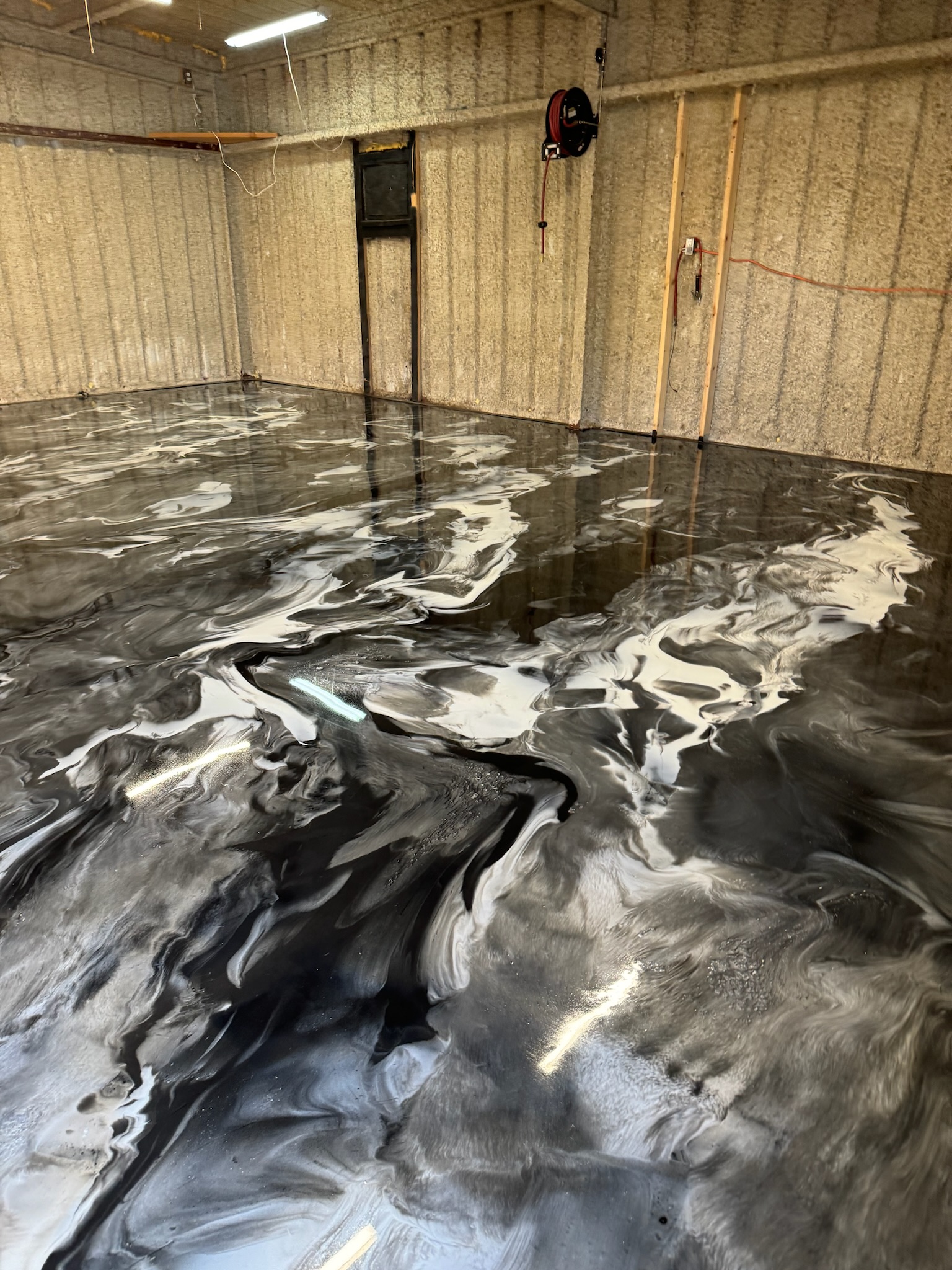
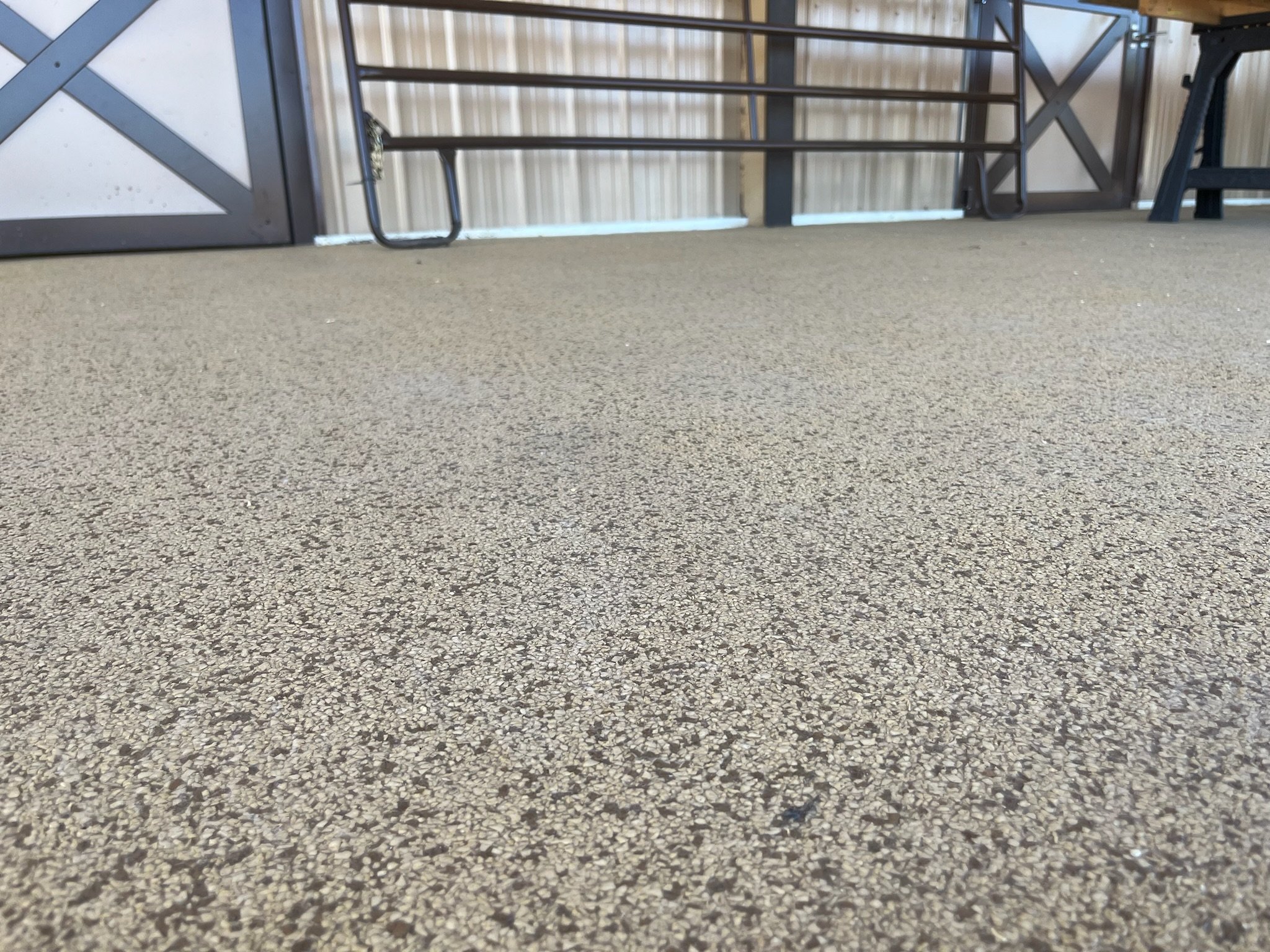
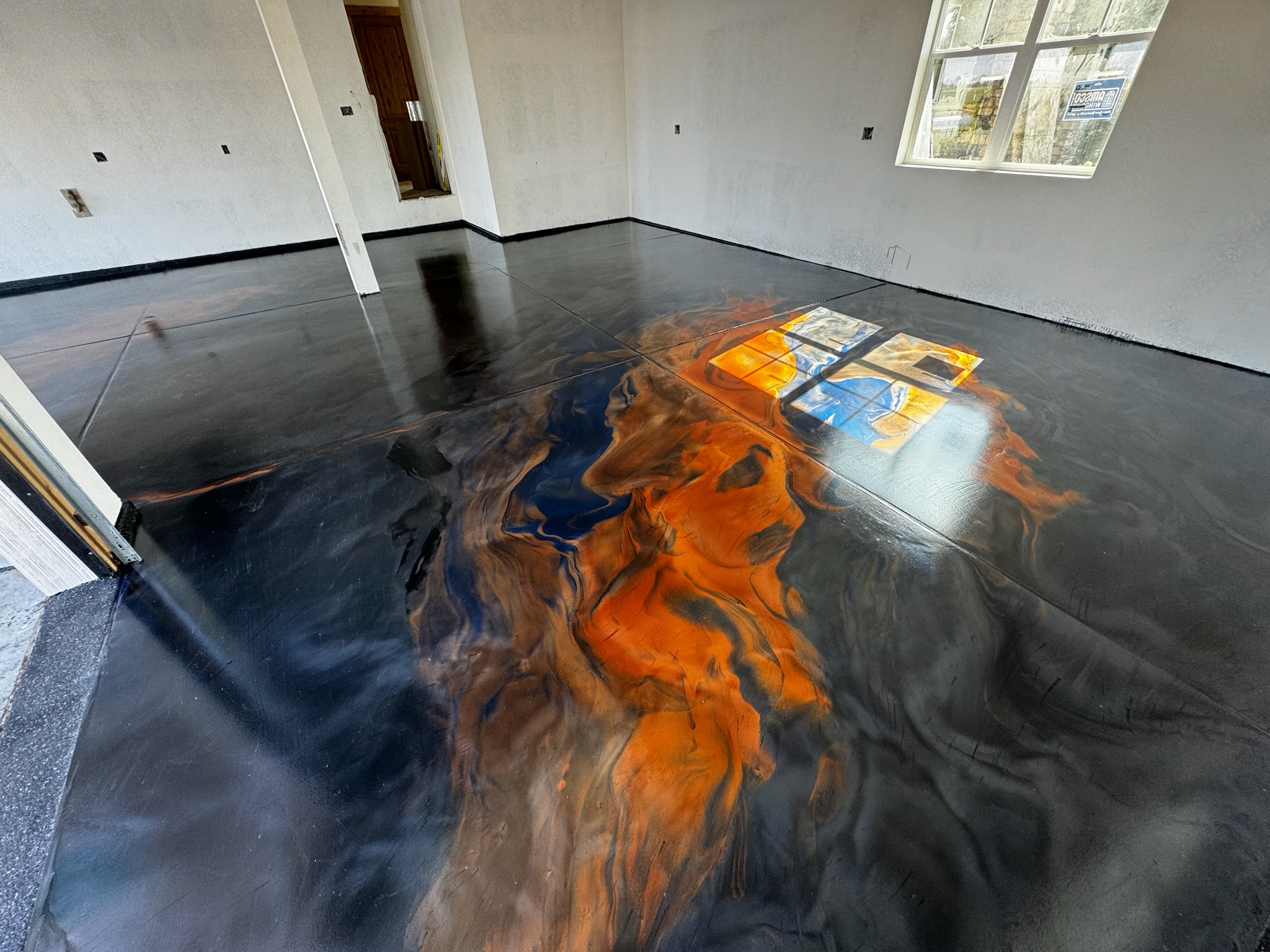
Real slabs from Maricopa and Pinal jobs. Every one was ground, densified, and finished by Danny’s crew, not a subcontractor.
Service area · Gilbert AZ
Questions, answered.
How is burnished different from a higher-gloss polish?
Burnished stops the polishing progression at a specific grit endpoint. Going to higher grit produces more reflection but adds time and cost. Burnished is the right call when the design intent is for polish restoration-style spaces.
Will burnished hold up in commercial traffic?
Yes. The wear performance of polished concrete comes from the densification, not the gloss level. burnished polish on a properly densified slab will outlast any topical coating system in a commercial wear environment.
Can burnished be made more or less reflective later?
Yes. The polish level is the last step in the install and can be adjusted up or down with a re-burnish or a higher-grit pass. Many commercial clients start at a moderate sheen and burnish up after a few months of operations to land where the space actually wants to live.
What’s included in a Mint burnished install?
Every burnished project includes mechanical surface prep, High-speed burnish, slab repair where required, Propane / electric, polishing or coating to the spec endpoint, and As needed. Written spec sheet on completion. AZ ROC-348746 license on file.
Does Mint take on burnished jobs outside Maricopa and Pinal?
Maricopa and Pinal counties are the primary service area. Projects elsewhere in Arizona get evaluated on a case-by-case basis depending on scope, distance, and schedule. Send the project location and we’ll respond either way.
Tell us about the slab.
Free walkthrough. No commitment. Send us the address, square footage, and finish you have in mind. Danny Carpenter shows up personally to measure the slab, scope the prep, and quote the polish.
- Mon to Sat · 7 AM to 6 PM
- Maricopa + Pinal coverage
- Free walkthroughs, no obligation
- License: AZ ROC-348746