Joint Filling & Sealing
in Gilbert.
Control-joint fill with semi-rigid polyurea that flexes with the slab and grinds flush under the final polish. The unsung component of every long-life polished concrete floor. Built by Danny Carpenter personally on every install. Get a free walkthrough.
Joint Filling & Sealing in Gilbert.
Joint Filling & Sealing is the pre-polish or pre-coating work that determines whether the final surface lasts. Control-joint fill with semi-rigid polyurea that flexes with the slab and grinds flush under the final polish. The unsung component of every long-life polished concrete floor.
Most polished concrete failures are prep failures. Skipped grinding, missed joint repair, untreated cracks, insufficient densification, every one of these shows up six months later as a worn surface, a delamination, or a polish that didn’t hold. Mint runs joint filling as a standalone service for GCs and facility managers who want the prep done right before another contractor handles the finish, or as part of a full polished concrete or coating install.
Where joint filling fits
- Polished concrete
- Warehouse + industrial
- Pre-coating prep
- Joint failure repair
- Maintenance refill
What we bring to a joint filling job
Planetary diamond grinders, walk-behind and ride-on platforms for large slabs, HEPA-filtered dust collection for occupied buildings, PCD attachments for coating removal, semi-rigid polyurea for joint fill, polishable epoxy patch compounds, lithium-silicate densifier, the full slab-prep toolkit. Danny is on every job. No subcontractors.
If you need joint filling done as a one-off before another contractor handles the finish, that’s standard scope. Request a walkthrough with the slab address.
Filling a joint and sealing a joint are two different jobs
The words get used interchangeably on job sites and they mean opposite things. Filling means packing a control joint full, edge to edge and down to the bottom, with a material hard enough to carry a wheel load across the gap. Sealing means keeping water and debris out while letting the joint move, which is what a soft elastomeric caulk does. Interior floors that see hard wheels get filled. Exterior joints and isolation joints around columns get sealed. Putting a soft sealant in an interior control joint on a warehouse floor is the most common mistake we get called in to fix, because the joint shoulders have nothing supporting them and the concrete edges break off under traffic.
The load path is the whole argument. When a forklift wheel rolls over an unsupported joint, the entire wheel load lands on a quarter inch of unsupported concrete edge, which is exactly where concrete is weakest. A properly filled joint carries that wheel across the gap so the edges never take a point load alone. Filled joints stay square for decades. Unfilled or softly sealed ones spall, and once the spalling starts it accelerates, because each broken edge makes the next impact worse.
Why the fill is semi-rigid polyurea
Semi-rigid polyurea sits in a narrow band on the hardness scale, usually around Shore A 80 to Shore D 50 depending on the product, and that band is chosen deliberately. Soft enough to accommodate the small seasonal movement a cured slab still has, hard enough to support the joint shoulder under a steel wheel. It also cures fast, often within an hour to shave time, which means the fill can be installed and shaved flush the same day without holding up the polishing sequence behind it.
Epoxy joint fill is the older approach and it is harder and more brittle. It supports the edge fine but has almost no give, so on a slab that is still moving it can crack cohesively down the middle or pull away from one wall of the joint. Urethane sealants are the opposite failure: plenty of movement capacity, no edge support at all. Polyurea is the compromise that has held up on commercial floors, and it takes a diamond shave flush with the polish rather than tearing or gumming under the tooling, which matters when the whole point is a joint you can barely see in the finished floor.
Wait as long as the schedule allows
Concrete shrinks as it cures, and most of the drying shrinkage happens in the first several months. Fill a joint at twenty eight days and the slab keeps shrinking around it, which opens a thin gap between the fill and one joint wall. That gap is cosmetic on a warehouse floor and glaring on a polished retail floor where the light rakes across it. Industry guidance has long pushed for waiting as close to ninety days as the construction schedule permits, and where the general contractor will not give up that float, the honest move is to say up front that a touch-up fill pass may be needed later rather than pretending the gap will not appear.
Arizona changes this math a little in both directions. Low ambient humidity pulls moisture out of a slab faster than a humid climate does, so drying shrinkage front-loads and a Valley slab may be reasonably stable sooner than the same mix would be in a coastal market. But a slab that dries fast on top while still wet at depth curls at the joints, lifting the edges slightly, and filling a curled joint locks in a profile that will not shave perfectly flat. Reading which of those two conditions is in front of you is part of the walkthrough.
How the work actually runs
The joint gets cleaned first, and cleaned means mechanically. A crack chaser or a dedicated joint saw cuts out old filler, dried slurry, and construction debris, and the walls of the joint get taken back to sound concrete so the polyurea has something to bond to. Vacuuming follows immediately, because fine dust left on a joint wall is a bond breaker. If the joint was previously filled with a silicone caulk, that residue has to come out completely, since almost nothing bonds over silicone.
Fill goes in from the bottom up in a single pass, slightly overfilled so the material crowns above the slab surface, and it gets left proud to cure. Shaving happens after cure with a razor sled or under the grinder during the polishing sequence, cutting the crown flush so the joint reads as a fine line rather than a bead. On deep joints, a backer rod or sand fill goes in first so you are not paying to fill four inches of saw cut when the top inch and a half is what carries load. Joints that go all the way through to grade, meaning isolation and expansion joints, never get rigidly filled at all, because their entire job is to let two parts of the building move independently.
Cracks are not joints and get treated differently
Random cracks that show up outside the joint pattern are a separate repair. A dormant crack, meaning one that has stopped moving, gets cleaned and filled with a low viscosity epoxy that penetrates and structurally knits the two sides together, sometimes with stitching staples set across it in a slab that needs the tensile help. An active crack that is still moving cannot be rigidly bonded, because bonding it just moves the failure a few inches sideways into fresh concrete. Those get treated more like joints, routed and filled with a flexible material that accepts the movement.
Telling the two apart takes either time or judgment. Crack monitors installed across a suspect crack for a few weeks give you data. On a schedule that will not wait, Danny reads the crack pattern and the surrounding conditions to make the call, and says which one he thinks it is rather than papering over the uncertainty. On floors headed for densified polish, getting this right before the grinding sequence starts is the difference between a floor that reads clean and one that shows every repair. Send the slab address and a photo of the joint layout to start.
The numbers.
Every Mint install ships with a written spec sheet, a copy of the AZ ROC-348746 license, a certificate of insurance on request, and Danny Carpenter on site for every grind, repair, densify, and polish pass. No subcontracted crews. No walk-on labor.
From the job site.
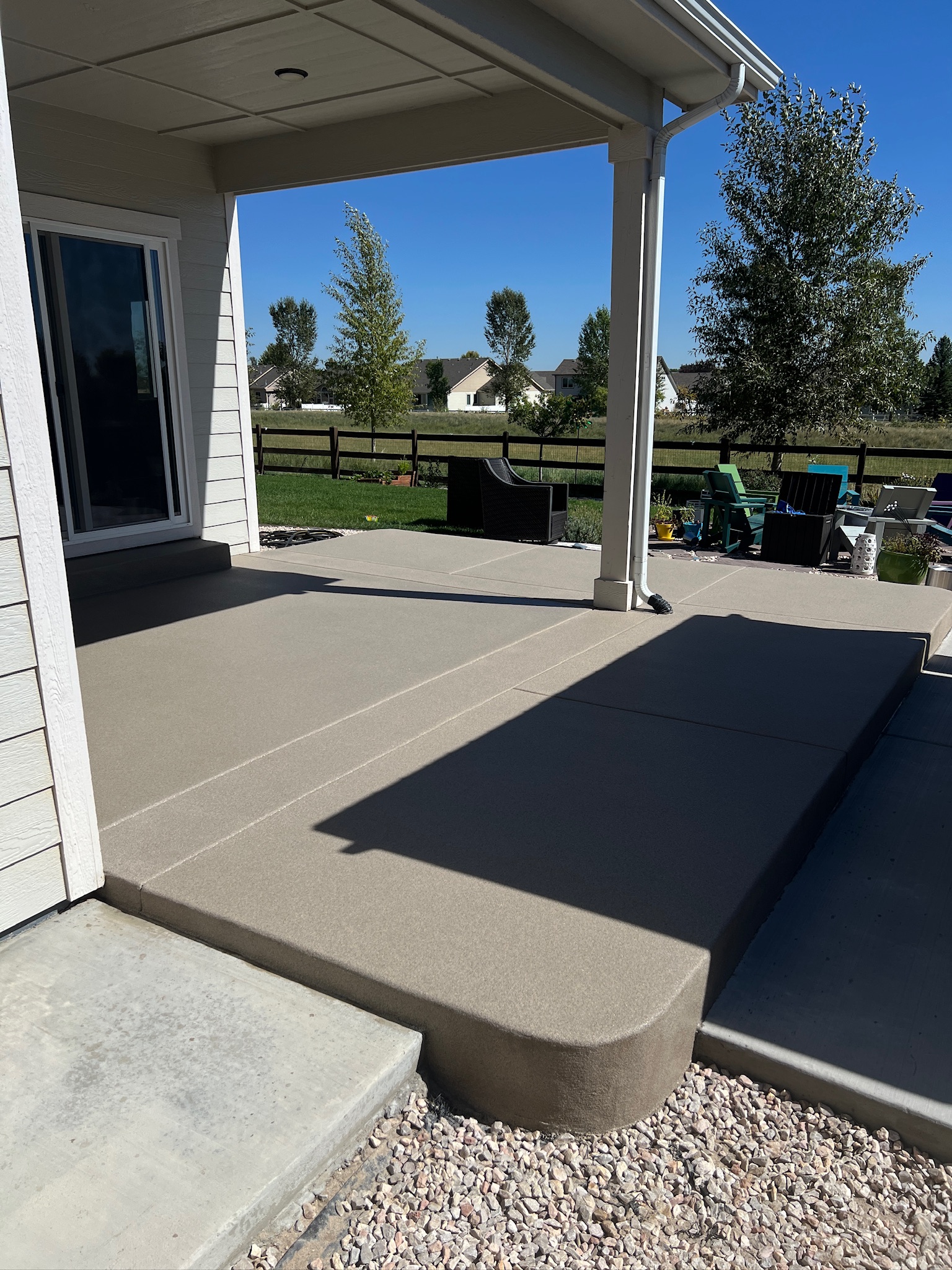
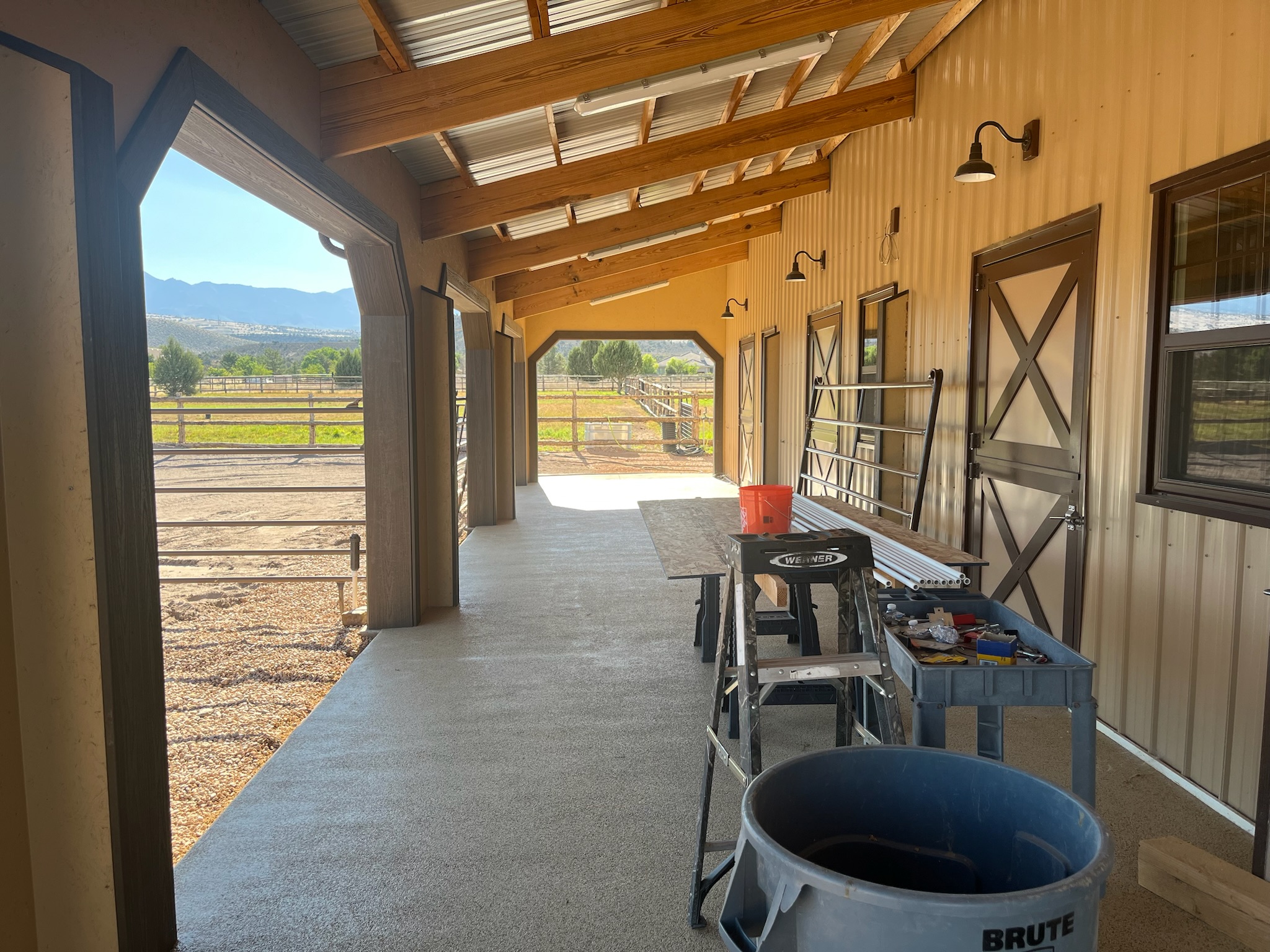
Real slabs from Maricopa and Pinal jobs. Every one was ground, densified, and finished by Danny’s crew, not a subcontractor.

Service area · Gilbert AZ
Questions, answered.
Do you do joint filling as a standalone service?
Yes. Mint runs joint filling as standalone scope for GCs and facility managers who want the prep handled correctly before another contractor finishes the floor. All work is ROC-licensed and Danny Carpenter-led. Schedule via the free walkthrough form.
What standards do you work to on joint filling?
ICRI CSP standards for surface profiling, coating manufacturer’s spec for any pre-coating prep, polished concrete protocol for any pre-polish prep. Documentation goes to the project team on request and a copy of the AZ ROC-348746 license is available for any contract.
Is dust control included?
Yes. Every Mint joint filling job runs under HEPA-filtered vacuum systems suitable for occupied buildings. Diamond grinding produces dust, not solvent fumes, so ventilation requirements are straightforward.
What’s included in a Mint joint filling install?
Every joint filling project includes mechanical surface prep, Polyurea SR, slab repair where required, Shore A 80, polishing or coating to the spec endpoint, and Grinds level. Written spec sheet on completion. AZ ROC-348746 license on file.
Does Mint take on joint filling jobs outside Maricopa and Pinal?
Maricopa and Pinal counties are the primary service area. Projects elsewhere in Arizona get evaluated on a case-by-case basis depending on scope, distance, and schedule. Send the project location and we’ll respond either way.
Tell us about the slab.
Free walkthrough. No commitment. Send us the address, square footage, and finish you have in mind. Danny Carpenter shows up personally to measure the slab, scope the prep, and quote the polish.
- Mon to Sat · 7 AM to 6 PM
- Maricopa + Pinal coverage
- Free walkthroughs, no obligation
- License: AZ ROC-348746