Concrete polishing
in Phoenix.
Largest commercial market in AZ. Selective project work, commercial + warehouse focus. Phoenix’s downtown commercial corridor, Sky Harbor industrial belt, and emerging North Phoenix tech buildouts drive the largest aggregate polished concrete demand in the metro. Mint takes commercial accounts here on a project-by-project basis. Free site walkthrough across Phoenix, AZ and surrounding Maricopa + Pinal coverage.
Polishing built for Phoenix.
Phoenix is a primary service market in our coverage area. Phoenix’s downtown commercial corridor, Sky Harbor industrial belt, and emerging North Phoenix tech buildouts drive the largest aggregate polished concrete demand in the metro. Mint takes commercial accounts here on a project-by-project basis.
Across Phoenix, AZ, the polished concrete projects Mint sees most often cluster around a handful of commercial and industrial corridors. The corridor matters because it tells us about the slab age, the prior tenant’s coatings or sealers (if any), and the operational reality of the space. Walking the slab in person is how every Mint project starts.
Commercial corridors in Phoenix
- Downtown Phoenix
- Sky Harbor industrial
- Roosevelt Row
- Camelback Corridor
- Deer Valley tech
Services available in Phoenix
The full Mint Concrete Polishing service catalog ships into Phoenix. The services that come up most often locally:
- Commercial Polished Concrete
- Warehouse Polished Concrete
- Polished Concrete Restoration
- Decorative Polished Concrete
- Concrete Densification
- Diamond Grinding
- Concrete Floor Repair
- Stained Concrete
Beyond polishing, Mint maintains an epoxy line for residential garages and select industrial applications across Phoenix. Epoxy garage coatings, metallic epoxy floors, and polyaspartic systems are all in scope for Phoenix projects.
What a Phoenix polishing project looks like
Most commercial polished concrete projects in Phoenix run 3 to 5 days from grind start to walk-on for a typical 5,000 square foot scope. Larger warehouse and distribution slabs get zoned so operations keep running through the install. Restoration work on older Phoenix slabs (especially older downtown or long-occupied commercial buildouts with multiple prior coating layers) takes longer because the strip and re-prep step is heavier.
Danny Carpenter walks every Phoenix project before quoting. The walkthrough takes 30 to 45 minutes, the quote comes back within 48 hours, and the schedule lock typically happens within a week. Request a walkthrough with your Phoenix project address.
Coverage area
Mint covers Phoenix, AZ and the surrounding Maricopa County metro. Crews dispatch from Gilbert and cover Phoenix on standard schedule windows. For projects outside of Maricopa or Pinal counties, contact us directly and we’ll evaluate based on scope and schedule.
The slabs under Phoenix are not all the same age
Phoenix is really several building eras stacked into one city, and the concrete tells you which one you are standing on before anybody finds the drawings. The warehouse stock along the Grand Avenue corridor and the older industrial blocks south of the tracks near Buckeye Road runs mid-century, poured hard with low slump and often no vapor retarder underneath. Those slabs polish beautifully when they are sound, because old concrete that was not over-watered is dense concrete. They also hide sixty years of tenant history: forklift gouges, patched trenches where a compressor line used to run, and two or three generations of coating that all have to come off before a diamond touches the surface.
Downtown and Roosevelt Row adaptive reuse is the opposite problem. A 1940s building being turned into a taproom or a gallery usually has a slab that was never meant to be the finished floor, with cold joints, add-on pours at different elevations, and a plumbing trench cut through the middle of the room in 1978. The design intent is almost always exposed concrete, which means the conversation is about how much character is charming and how much is just damage. Sometimes the answer is a straight polish that celebrates the patina. Sometimes it is a polishable overlay that gives the space one continuous surface.
Then there is everything built in the last two decades out toward Deer Valley and the Loop 303 industrial corridor, where the tilt-up distribution buildings go up on engineered slabs with laser screed flatness and a vapor retarder in place. Those floors are the easy ones. Modern mixes, consistent thickness, joints sawn on a proper grid. The work there is mostly about scheduling around an operating tenant rather than fighting the concrete.
Dust, irrigation, and the local conditions that matter
Two Phoenix-specific things change how a floor performs after we leave. The first is grit. The fine dust that blows off open desert and construction sites across the north Valley is quartz-hard, and it comes into every building on shoes and tires. On a polished floor that grit acts like loose abrasive underfoot, which is why the first thirty feet inside a Phoenix entrance goes dull years before the rest of the room. The fix is boring and effective: a real walk-off mat run at every entry and a dust mop schedule that actually gets followed. Buildings that do it keep their gloss. Buildings that do not are back asking about restoration in three years.
The second is water in the ground, which surprises people in a desert city. Older central Phoenix neighborhoods still flood irrigate, canals run through the middle of town, and landscape irrigation puts water against foundations on a timer year round. A slab on grade with no vapor retarder under it in that environment moves moisture upward continuously. It does not matter for a polished floor, since polished concrete breathes. It matters enormously for anything with a film on it, which is why moisture testing happens before any coating gets quoted and why polish is frequently the better recommendation for an older Phoenix building.
Monsoon and summer scheduling realities
Grinding and polishing run year round here because they are mechanical processes with no cure window to protect, which is a genuine advantage in a market where half the year is too hot for comfortable coating work. A July polish in an unconditioned Sky Harbor area warehouse is hard on the crew and slow, but the floor does not care about the temperature. Coating work is the opposite and gets planned around the calendar, with spring and fall as the easy seasons and summer installs shifted to early morning or evening so the slab is cooling rather than warming while material is going down.
Monsoon season adds humidity swings from July into September, which changes working times on fast-cure materials and puts wet vehicles onto floors that were dry an hour earlier. For occupied retail and restaurant work downtown, that is another argument for polish over a coating: the floor is finished the moment the last pass ends, so a storm rolling through does not cost a day of cure.
Getting a Phoenix project moving
Parking and access are the practical hurdles nobody thinks about until the morning of. Downtown and Roosevelt Row jobs need loading arrangements sorted in advance, because a ride-on grinder and a dust collector do not come in through the front door on a hand truck. Buildings with freight elevators need weight limits confirmed. Occupied warehouses near the airport belt usually need after-hours access and a contact who can actually open the building at five in the morning.
Danny handles that on the walkthrough along with the slab itself. He measures, sounds the floor for hollow spots, checks moisture where it is warranted, looks at the joint layout, and asks how the space gets used on a normal day, because that decides the finish more than any spec sheet does. The walkthrough takes half an hour or so and there is no charge and no obligation attached to it. Send the address, the rough square footage, and when the space is available, or call (602) 292-2849 and describe the floor.
From the job site.
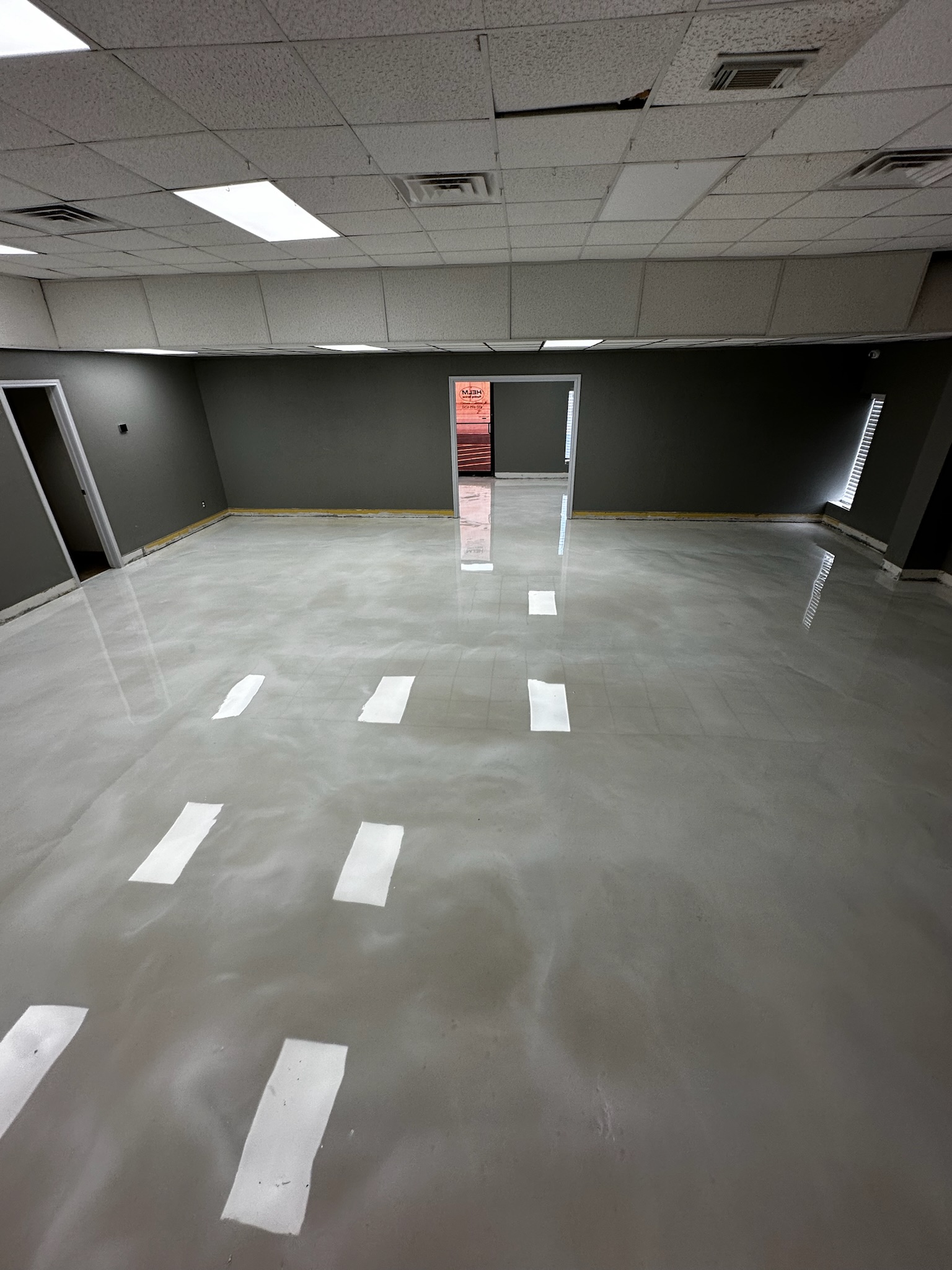
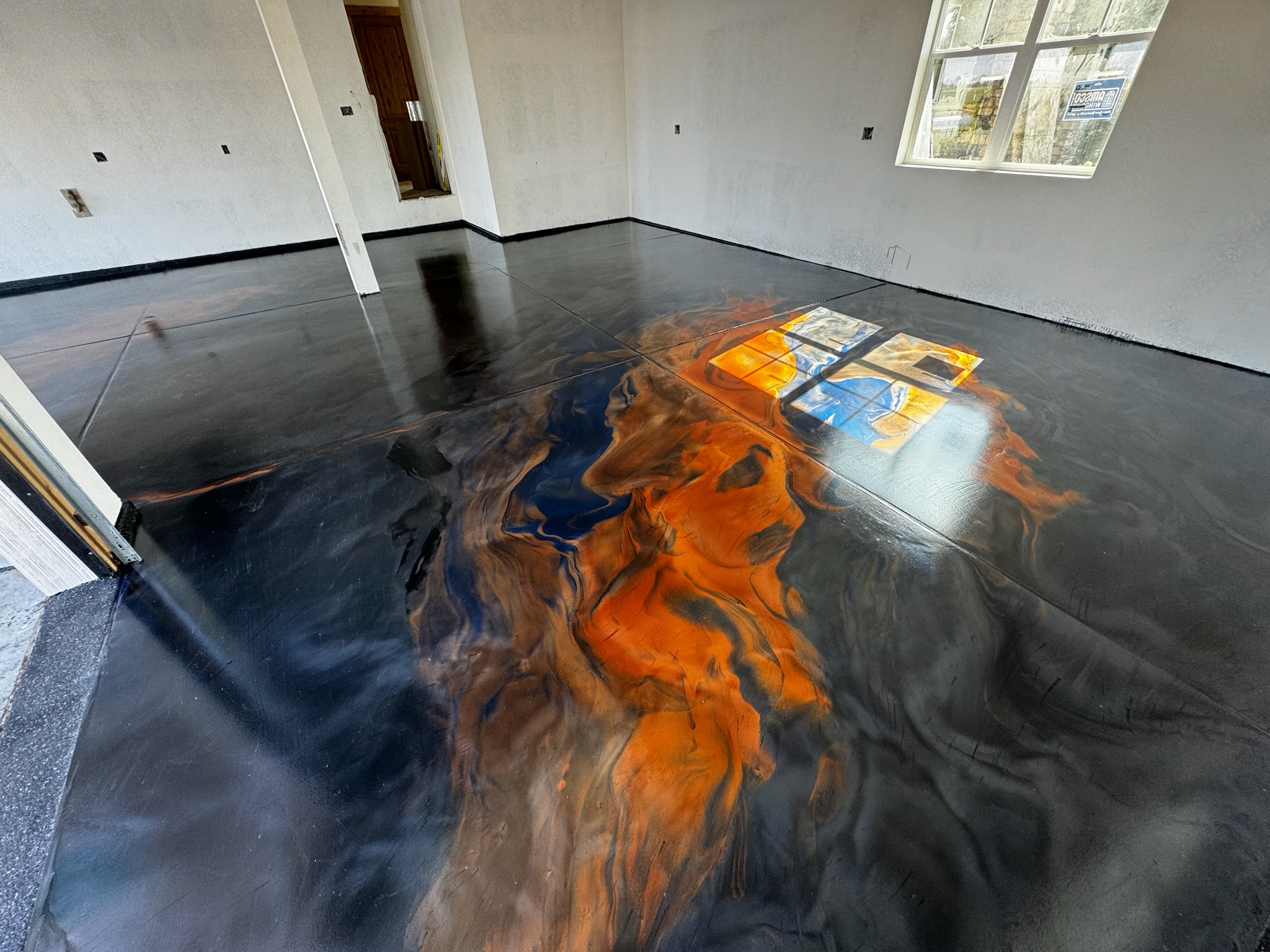
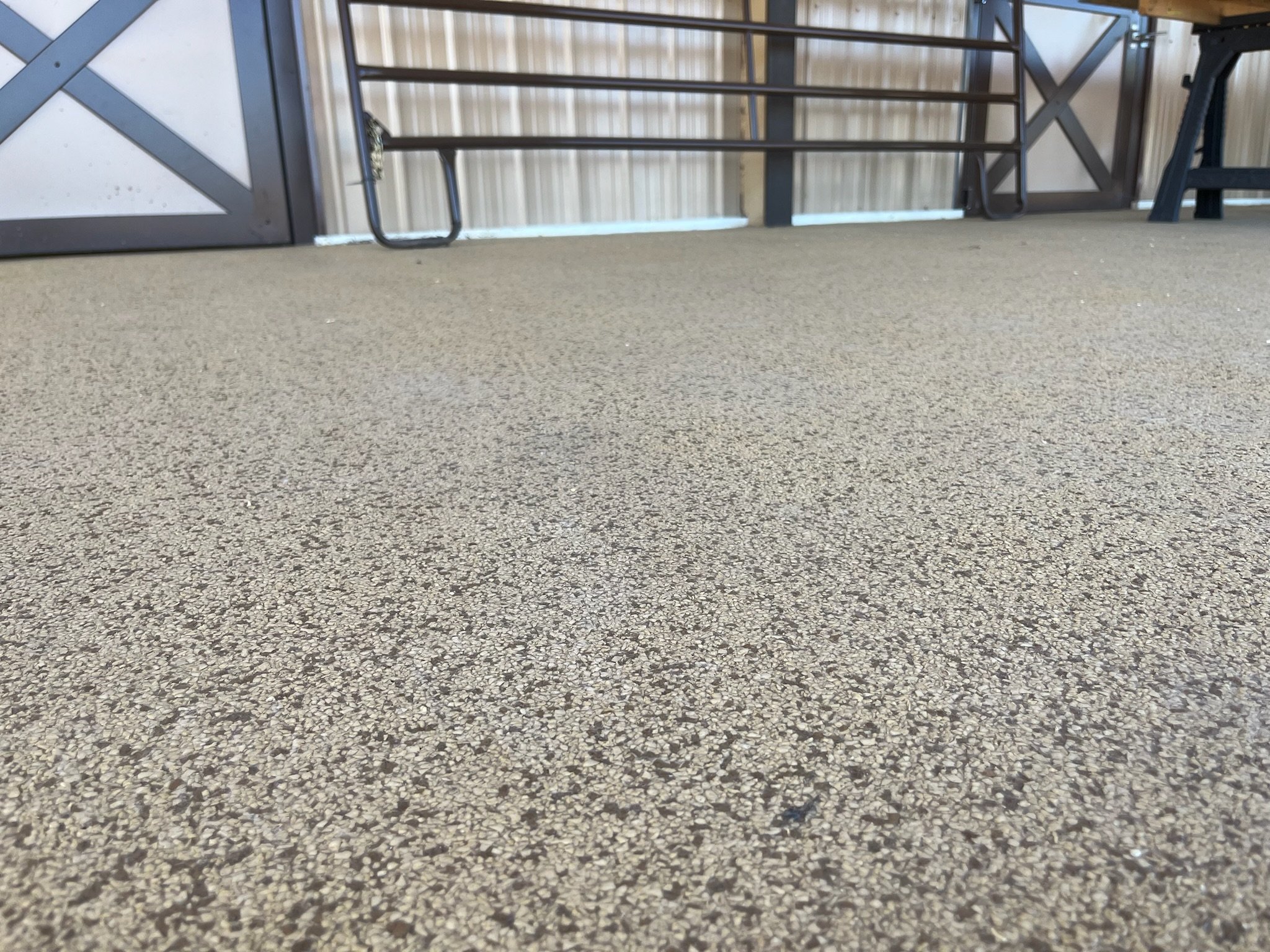
Floors we finished for homeowners and businesses across the Valley. Every one was ground, repaired, and finished by Danny’s crew.
Service area · Phoenix AZ
Questions, answered.
How much does commercial concrete polishing cost in Phoenix, AZ?
Commercial The cost of a Phoenix job depends on how much grinding the slab needs, the area, and the sheen you want. We walk it and hand you a firm written price. New-pour warehouse slabs run leaner; restoration work on older Phoenix commercial buildouts with multiple coating layers runs higher. Get a per-square-foot quote for your specific scope.
Does Mint Concrete Polishing service Phoenix, AZ?
Yes. Phoenix, AZ is part of Mint’s primary service area. Crews dispatch from our Gilbert headquarters and cover Phoenix on standard schedule windows. ROC-licensed, founder-led, full commercial polishing scope available.
How long does a typical Phoenix polish take?
A 5,000 square foot commercial polish runs 3 to 5 days from grind start to walk-on. Phoenix restoration jobs on older slabs with prior coatings can take longer. Larger Phoenix warehouse and distribution slabs get zoned to keep operations running through the install. Foot traffic at 24 hours; vehicle traffic at 72.
What kinds of buildings does Mint polish in Phoenix?
Across Phoenix, AZ, Mint polishes warehouses, distribution centers, retail showrooms, restaurants, office tenant improvements, gyms, auto showrooms, manufacturing floors, healthcare facilities, and high-end residential. The corridors that come up most often locally: Downtown Phoenix, Sky Harbor industrial, Roosevelt Row.
Can Phoenix polishing happen with the space staying open?
In most cases, yes. We zone large installs so operations keep running and we use HEPA dust collection in occupied buildings. Phoenix tenants with night-and-weekend availability windows often request schedule-around installs and we accommodate those routinely.
Does Mint do epoxy work in Phoenix too?
Yes. The epoxy line, epoxy garage coatings, metallic epoxy, polyaspartic, is available across Phoenix, primarily for residential garages and select industrial applications where polish isn’t the right answer.
Is Mint Concrete Polishing licensed for Phoenix work?
Yes. Arizona ROC-348746, full general liability and workers comp insurance. Danny Carpenter is on every install personally. Certificates of insurance and license verification go to Phoenix facility managers, GCs, and property owners on request before any contract is signed.
Tell us about the slab.
Free walkthrough. No commitment. Send us the address, square footage, and finish you have in mind. Danny Carpenter shows up personally to measure the slab, scope the prep, and quote the polish.
- Mon to Sat · 7 AM to 6 PM
- Maricopa + Pinal coverage
- Free walkthroughs, no obligation
- License: AZ ROC-348746