Densified Polished Concrete
in Gilbert.
Lithium-silicate densification locks the concrete from the inside out. Without it, you are just grinding concrete and waiting for it to wear. With it, the slab hardens chemically and stays polished for decades. Built by Danny Carpenter personally on every install. Get a free walkthrough.
Densified Polished Concrete in Gilbert.
Densified Polished Concrete is one of five process tiers in the polished concrete catalog. The tier defines how deep we grind into the slab and how the final surface reads. Lithium-silicate densification locks the concrete from the inside out. Without it, you are just grinding concrete and waiting for it to wear. With it, the slab hardens chemically and stays polished for decades.
Where densified polish fits in the Mint catalog: this is the process Danny specs when the project calls for high-traffic commercial or industrial floors. Every install runs through the four-step polished concrete protocol, diamond grinding, slab repair, lithium-silicate densification, then progressive grit polishing through Deep capillary. Foot traffic is allowed within 24 hours of the final pass; vehicle traffic at 72.
Who specs densified polish
High-traffic commercial is the most common project type for this tier in the Phoenix metro. Industrial floors is the second-largest segment. Beyond those two, densified polish ships into a range of commercial and industrial environments across Maricopa and Pinal counties:
- High-traffic commercial
- Industrial floors
- Long-term wear environments
- Forklift traffic zones
- Hard-wear retail
How we install it
Mechanical surface prep is the foundation of every densified polish job. Progressive diamond grinding opens the slab to the specified depth without scarring the surface beneath. Crack and joint repair happens between grind passes. Lithium-silicate densifier penetrates the open slab and chemically hardens it from the inside out. Final polish steps from 400 to 800 to Deep capillary grit produce the spec-sheet finish. A penetrating impregnator-sealer locks it in, no topical film, no peel risk, no recoat cycle.
What the densifier is actually doing down there
Densifier is not a sealer and it is not a coating, and calling it either one gets the expectations wrong. Portland cement hydration leaves calcium hydroxide in the concrete, a soft byproduct that sits in the pore structure doing nothing useful. A silicate densifier carries silica into those pores in solution, where it reacts with the calcium hydroxide to form calcium silicate hydrate, the same hard compound that gives concrete its strength in the first place. The reaction fills pore space with hard material and raises the surface abrasion resistance measurably. That is why a densified floor holds gloss under traffic while an undensified polished floor goes dull in the walking lanes within a year.
Lithium silicate is what Mint uses on most floors, and the reason is particle size and behavior rather than marketing. Lithium ions are small, the solution penetrates readily without needing heavy flooding, and it does not leave the white residue that sodium silicate is famous for when it is over-applied and not scrubbed off properly. Sodium and potassium silicates work and cost less, but they demand more water, more scrubbing, and more attention to residue, and on a floor that is going to be polished to a high gloss any leftover surface reactant shows up as haze that has to be cut back out.
Timing the application inside the grit sequence
Densifier goes on at the point where the concrete is open enough to absorb it but not so open that it soaks straight past the working surface. Practically that lands after the metal bond passes and the first resin steps, commonly somewhere around the 100 to 200 grit stage, though the honest answer is that the slab tells you. A hard, tight, low water-cement-ratio slab takes densifier later and less of it. A soft, porous, over-watered slab takes it earlier and drinks more.
Applied too early, on a wide-open slab straight off metal bond, the material runs deep into the body of the concrete and does comparatively little for the top millimeter that actually takes the wear. Applied too late, after the pores have already been closed by fine resin polishing, most of it sits on the surface, dries into residue, and gets ground off at the next step, which is money spread on the floor and then removed. Coverage rate matters as much as timing. Enough to keep the surface wet for the dwell period the product calls for, then any excess worked out with a burnisher or auto-scrubber before it can dry into a film.
Grit sequence, and why skipping steps shows
Polishing works by progressively removing the scratch pattern left by the previous tool. Every grit has one job, which is to erase the scratches from the step before it and leave a finer set of its own. Metal bond diamonds cut the slab and set the aggregate exposure. Transitional and resin bond steps refine. The high resin steps at 800, 1500, and 3000 are where reflectivity comes from, and none of that shows up if a coarser scratch is still sitting underneath.
Jumping a step is the most common shortcut in the trade and it does not save what people think it saves. Skip from 100 to 400 and the 400 diamonds spend their life failing to remove 100 grit scratches, which takes longer than running the 200 pass would have and leaves a floor that looks glossy from standing height and shows a haze of fine parallel scratching the moment sunlight rakes across it. Arizona buildings with tall glazing and hard afternoon light are unforgiving about this. A floor that reads fine under fluorescents at four in the afternoon will show every skipped step at five when the sun drops toward the horizon.
Gloss, clarity, and what the numbers mean
Two different things get called shine and it helps to separate them. Gloss is measured with a specular gloss meter and describes how much light bounces off at a mirror angle. Distinctness of image describes whether a reflection has sharp edges or is smeared. A floor can have a high gloss reading and poor image clarity, which is what happens when a burnished coating sits over an under-polished slab. Polishing to the full grit sequence produces both, because the shine is coming from the refined concrete itself rather than from something laid on top of it.
Where this gets useful is specification. Concrete polishing appearance levels run from a flat honed surface through semi-gloss to a full mirror finish, and the aggregate exposure class runs separately from cream through fine and coarse stone. Those are two independent choices, and a project can call for a low-gloss floor with heavy aggregate exposure or a mirror-gloss cream finish with almost no stone showing. Pinning both down on a sample panel in the actual building, under the actual lighting, is worth more than any number written on a drawing.
The numbers.
Every Mint install ships with a written spec sheet, a copy of the AZ ROC-348746 license, a certificate of insurance on request, and Danny Carpenter on site for every grind, repair, densify, and polish pass. No subcontracted crews. No walk-on labor.
From the job site.
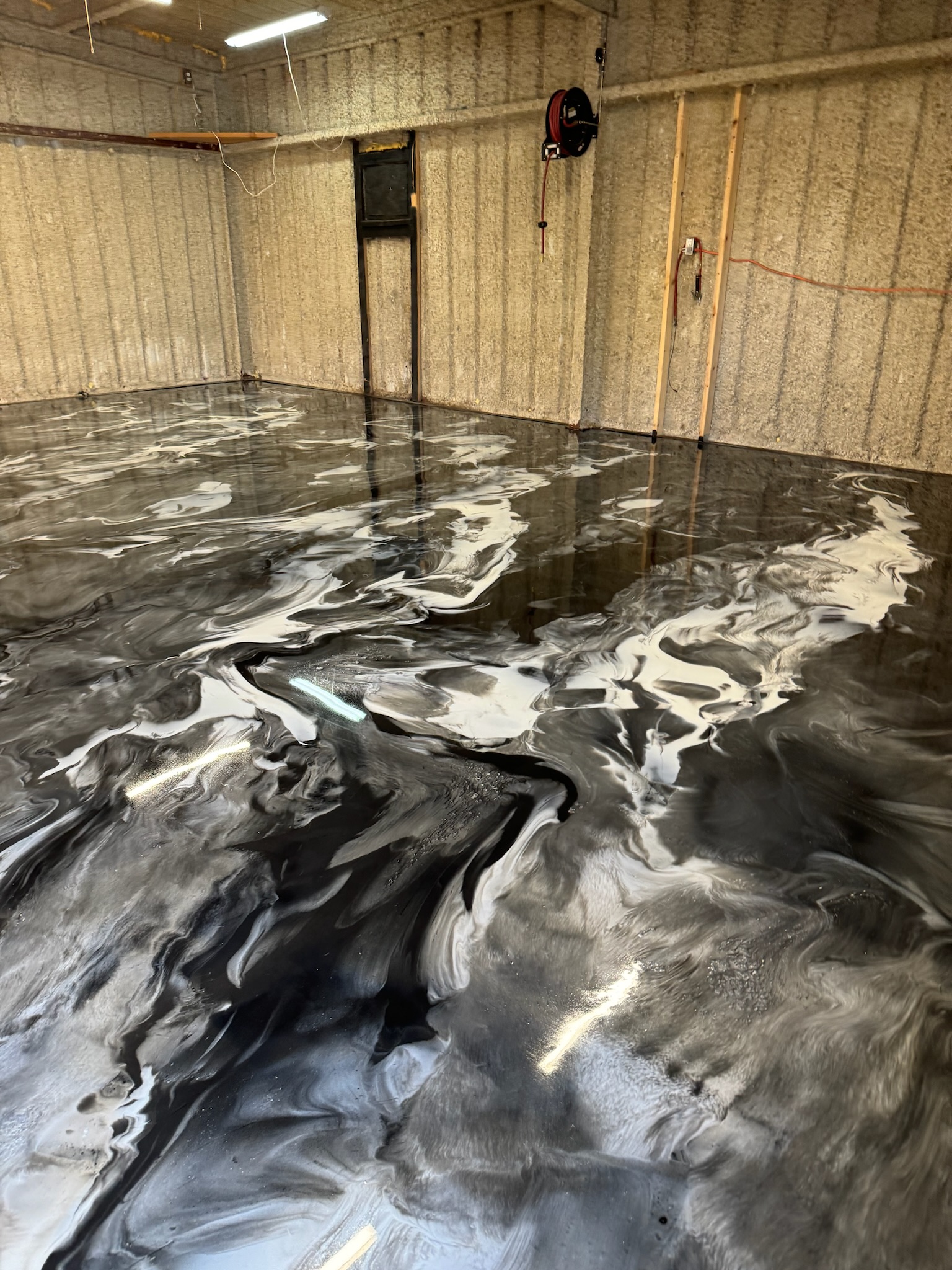
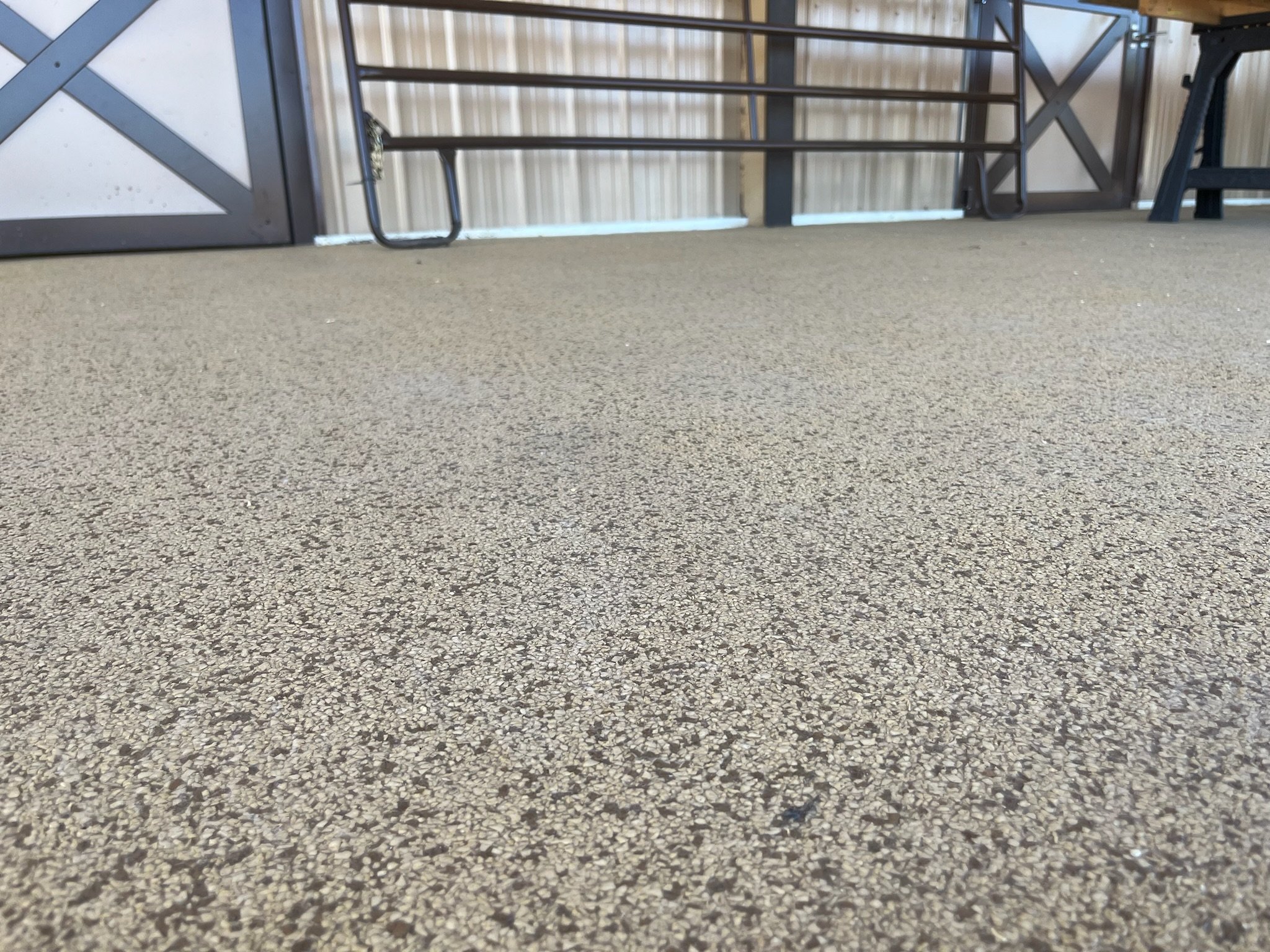
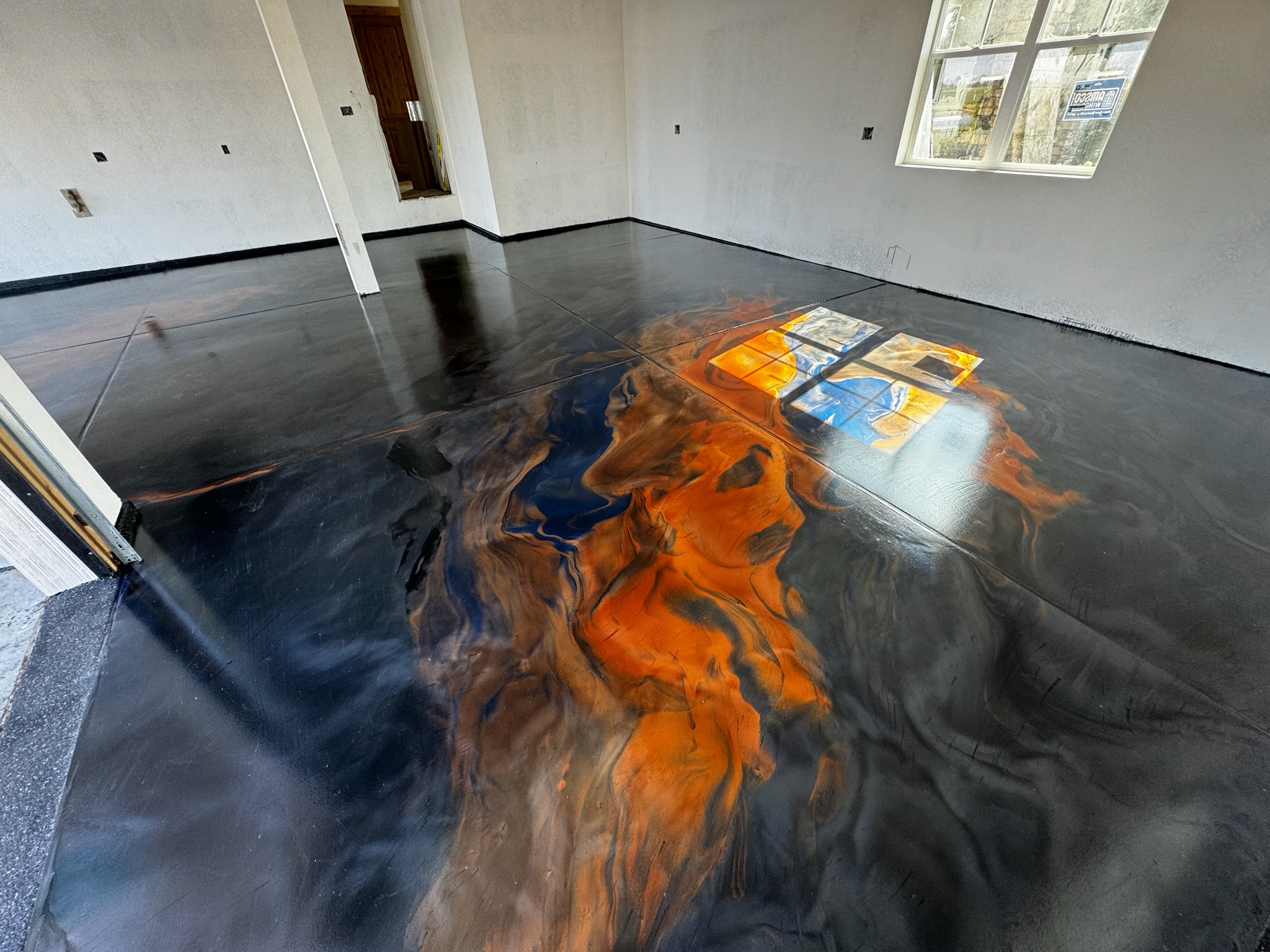
Real slabs from Maricopa and Pinal jobs. Every one was ground, densified, and finished by Danny’s crew, not a subcontractor.
Service area · Gilbert AZ
Questions, answered.
How much does densified polish cost in Phoenix?
Densified Polish polish in the Phoenix metro typically runs On a densified floor the number comes off the slab itself. Soft or porous concrete drinks more lithium densifier and sometimes wants a second application to harden the surface properly, while a dense, well-cured pour takes noticeably less material. Add square footage, the grind depth needed to reach the aggregate exposure you want, the gloss level specced, and whatever crack or joint repair the slab needs before we start polishing. Larger continuous floors run more efficiently than small chopped-up spaces. We test the slab hardness on site, watch how it takes the first application, and give you a firm written price against your actual scope. Send us the building details to get on the schedule for a walkthrough.
How long does densified polish take to install?
A typical 5,000 square foot densified polish job runs 3 to 5 days from grind start to walk-on. Larger industrial slabs get zoned to keep operations live through the install. Foot traffic at 24 hours after final pass; vehicle traffic at 72 hours.
What’s the difference between densified polish and epoxy?
Densified Polish is the slab itself, diamond-ground, densified, and polished. Epoxy is a topical coating layered on top. Polished concrete lasts the life of the building and never delaminates. Epoxy can fail by hot-tire pickup, UV yellowing, or moisture blistering. For commercial spaces with long-term traffic, polished concrete is almost always the right answer.
What’s included in a Mint densified polish install?
Every densified polish project includes mechanical surface prep, Lithium Silicate, slab repair where required, Deep capillary, polishing or coating to the spec endpoint, and Continuous. Written spec sheet on completion. AZ ROC-348746 license on file.
Does Mint take on densified polish jobs outside Maricopa and Pinal?
Maricopa and Pinal counties are the primary service area. Projects elsewhere in Arizona get evaluated on a case-by-case basis depending on scope, distance, and schedule. Send the project location and we’ll respond either way.
Tell us about the slab.
Free walkthrough. No commitment. Send us the address, square footage, and finish you have in mind. Danny Carpenter shows up personally to measure the slab, scope the prep, and quote the polish.
- Mon to Sat · 7 AM to 6 PM
- Maricopa + Pinal coverage
- Free walkthroughs, no obligation
- License: AZ ROC-348746