Healthcare Polished Concrete
in Gilbert.
Polished concrete for clinical and healthcare environments. Antimicrobial penetrating sealers, seamless joint systems, and ADA-compliant slip ratings out of the box. Built by Danny Carpenter personally on every install. Get a free walkthrough.
Healthcare Polished Concrete in Gilbert.
Healthcare Polished Concrete is polished concrete configured for outpatient clinics environments. Polished concrete for clinical and healthcare environments. Antimicrobial penetrating sealers, seamless joint systems, and ADA-compliant slip ratings out of the box.
Across the Phoenix metro, healthcare projects share a few common requirements: Antimicrobial impregnator, slab repair, joint sealing, and a finish level that fits the operational reality of the space. Danny scopes every project with the property owner, GC, and (where applicable) tenant before any grinder touches the slab.
Project types Mint takes on
- Outpatient clinics
- Medical office
- Dental + ortho
- Rehab + therapy
- Veterinary
How healthcare differs from generic polished concrete
The polish process is the same. What changes is the prep depth, the densification cadence, the joint repair system, and the topcoat sealer chemistry, all of those get tuned to the environment. Outpatient clinics installs lean heavier on Antimicrobial impregnator than a generic showroom polish. Dental + ortho installs lean heavier on slip-resistance. Mint specs each install to the operational reality of the space.
If your project doesn’t fit neatly into one of the named application categories, send us the scope and we’ll quote it directly.
Why clinics keep moving off sheet vinyl
Most of the medical offices we walk into around Gilbert, Chandler, and north Mesa have welded sheet goods on the floor, and the failure pattern is always the same. The seams and the coved base are where it goes. A rolling stool or an equipment cart hits the same three feet of hallway ten thousand times, the weld line opens up a hair, and now there’s a gap that holds whatever gets mopped into it. The facility manager can’t clean it out and the flooring rep says the whole room needs replacing.
Polished concrete does not have that problem because there is nothing on top of the slab to separate from it. The hardened surface is the slab. Control joints get filled full depth with semi-rigid polyurea and shaved flush so a cart rolls over them without a bump, and there is no adhesive layer that can let go. When a room does get damaged, we repair that room, not the whole floor.
Cleanability without an antimicrobial marketing claim
We are careful with the word antimicrobial because it gets oversold. No floor kills pathogens on contact in any way you should count on. What a properly densified and sealed polished slab does is remove the places where soil hides. Pore structure gets filled by lithium silicate, the surface closes under progressive polishing, and an impregnating sealer lines what’s left. A wet vacuum or an auto-scrubber picks up almost everything off a surface like that, where a porous or seamed floor keeps a percentage of it every pass.
For infection prevention staff the useful part is that the cleaning protocol is boring. Neutral cleaner, clean water, no wax layer, no burnishing schedule, and a floor whose appearance does not depend on a maintenance product film that a quaternary disinfectant might strip unevenly. We put the chemical compatibility list in writing at handover so the EVS team is not guessing.
Working in a building that cannot close
A dental practice or an imaging suite cannot lose a week. So we do not ask for one. We phase the work by operatory, by hallway run, by wing, and we build the schedule around the appointment book instead of the other way around. A single treatment room can get ground, repaired, densified, polished, and sealed between a Friday close and a Monday open, and we’ve done exactly that many times in the East Valley.
Containment is real containment. Negative-air machines with HEPA filtration, zippered poly walls, tacky mats at the transition, and the grinders themselves running on HEPA vacuums at the head so most of the dust never leaves the shroud. Diamond grinding produces silica dust, and everything we run is set up for OSHA Table 1 compliance, which matters both for your patients and for the guys doing the work. There are no solvent fumes at any stage of a polish, which is the single biggest reason polishing beats a coating in an occupied clinical building. Nobody has to leave the suite because of odor.
Slip resistance and ADA in a patient environment
Patient populations are not the general public. Rehab and physical therapy floors carry people who are unsteady by definition, and an imaging department has patients walking in socks. We do not spec a mirror finish into those rooms just because it photographs well. A honed or satin endpoint reads clean, holds a wet DCOF at or above the accepted threshold, and hides the scuffing that a high gloss telegraphs.
Where a wet zone exists, a hydrotherapy room, a soiled utility, a sterilization area with an autoclave, we add a micro-texture treatment that raises wet traction without changing the look between rooms. Transitions to carpet or to an adjacent tile floor get detailed flush so there is no lip for a wheelchair caster or a walker to catch.
What the desert does to a clinic floor
Two local realities shape these jobs. Fine caliche dust comes in on every shoe from the parking lot, and by afternoon it is on the floor of the waiting room whether or not anyone can see it. That grit is abrasive under traffic and it is the main thing that dulls a floor over time, so we push hard for a real walk-off matting run at the entry, ten to fifteen feet of it, not a three-foot mat.
The other is scheduling. From late June through September the slab in an unconditioned shell or a new buildout can be hot enough to change how densifier and sealer behave, flashing off before they penetrate. On summer work we either get the HVAC running before we start or we shift to early morning placements. Spring and fall are the easy seasons here and a facility with any flexibility should aim for them.
If you’re planning a buildout, a suite expansion, or a refresh of an existing space, send the drawings and the operating hours. Danny walks the floor personally, tells you what the existing slab will support, and lays out the phasing on your calendar before anyone quotes a number. Start with a walkthrough.
The numbers.
Every Mint install ships with a written spec sheet, a copy of the AZ ROC-348746 license, a certificate of insurance on request, and Danny Carpenter on site for every grind, repair, densify, and polish pass. No subcontracted crews. No walk-on labor.
From the job site.
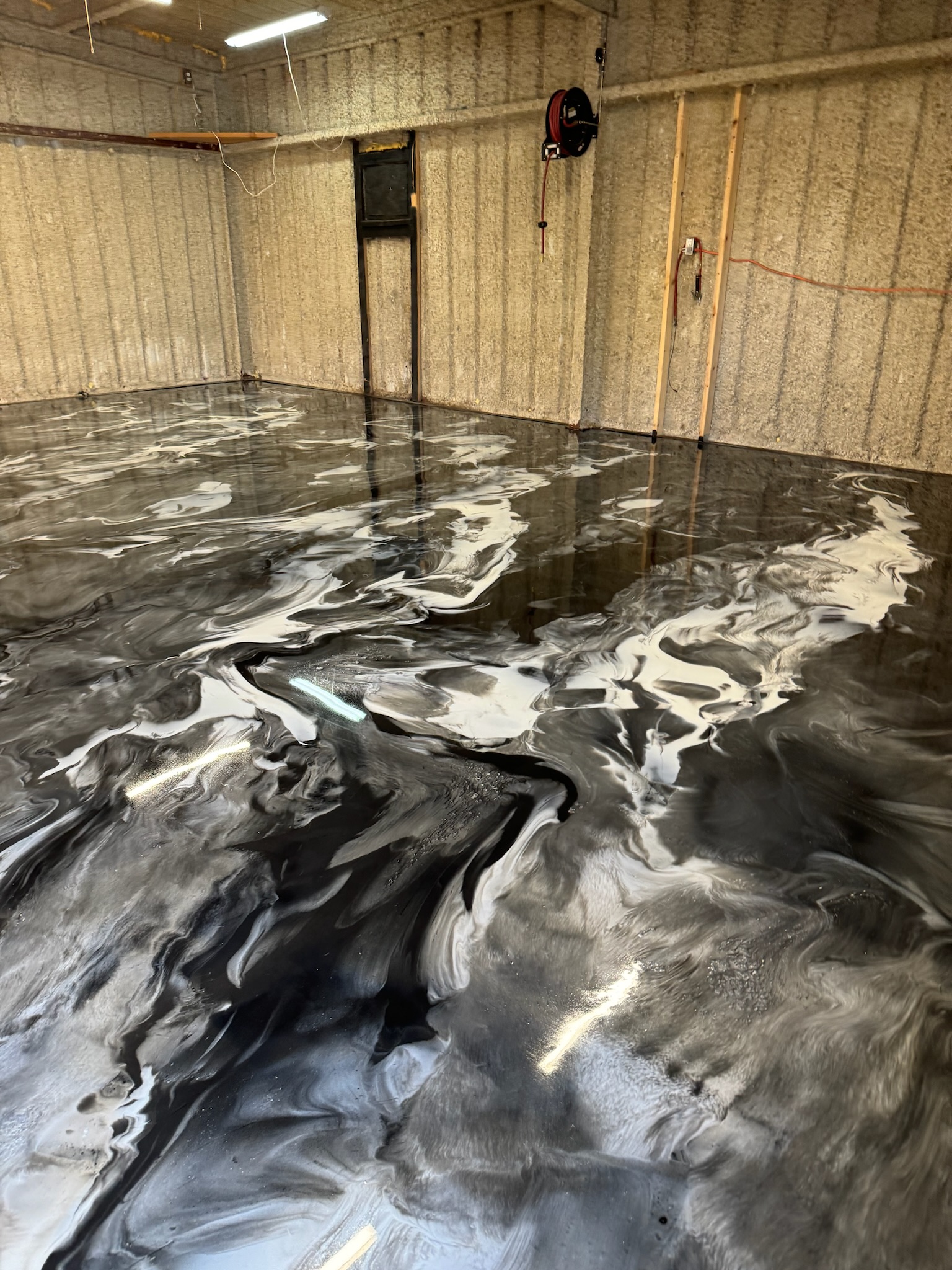
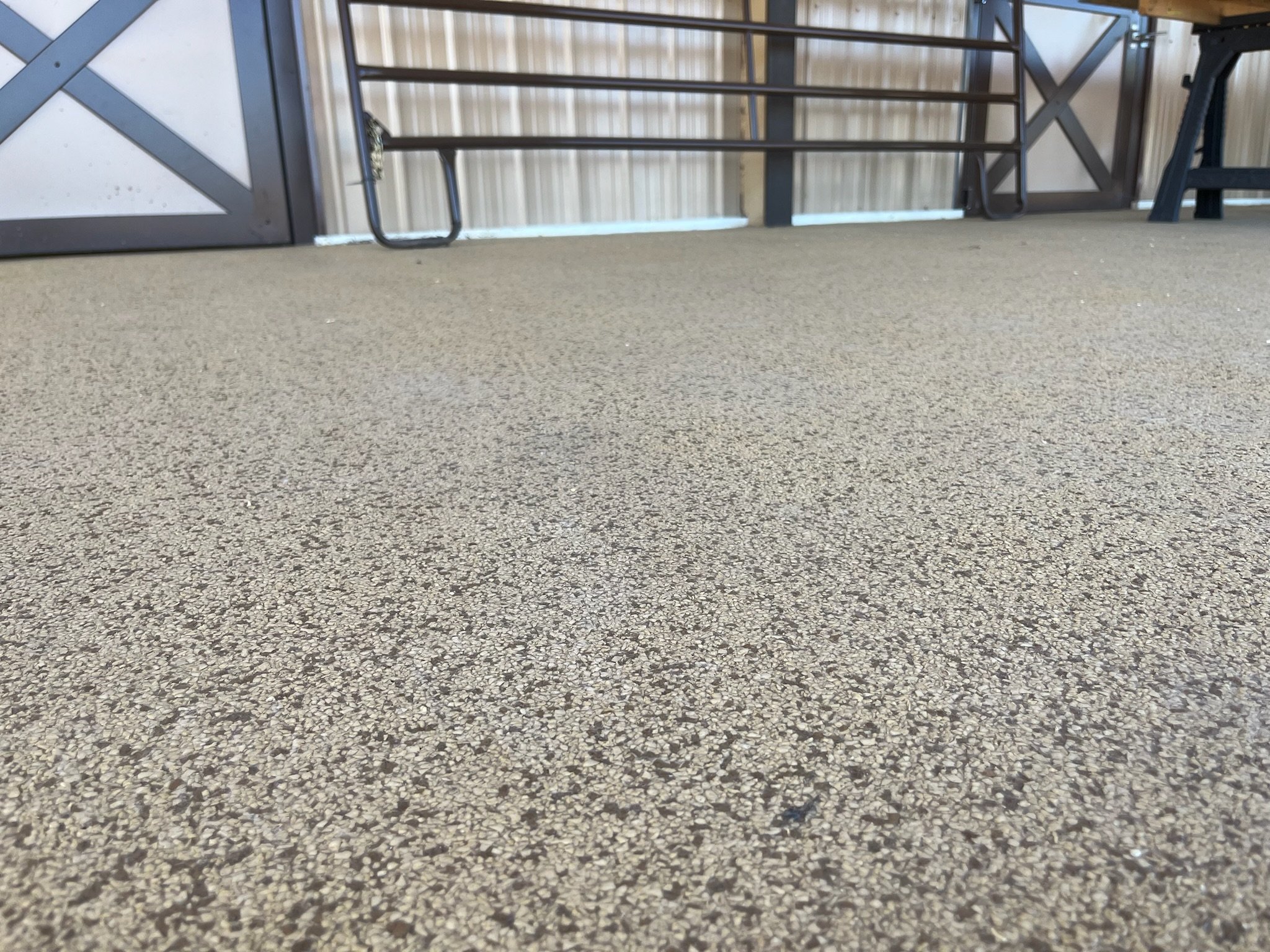
Real slabs from Maricopa and Pinal jobs. Every one was ground, densified, and finished by Danny’s crew, not a subcontractor.

Service area · Gilbert AZ
Questions, answered.
Can healthcare polishing happen while the space stays open?
In most cases, yes. We zone large installs so operations keep running, run HEPA dust control for occupied buildings, and schedule grind windows around the operational cadence of the space. Discuss the schedule constraint at the walkthrough and we’ll build the install plan around it.
Does healthcare meet code for slip resistance?
Yes. Properly polished and sealed concrete meets ADA slip-resistance standards (DCOF 0.42+) out of the box. For high-spill or high-moisture zones, we can apply micro-textured topical treatments that boost slip rating without dulling the gloss. Documentation goes to the property owner and operator on completion.
What’s the maintenance cost on a healthcare floor?
Polished concrete has the lowest ongoing maintenance cost of any commercial floor finish. Daily dry mop or auto-scrub, quarterly or annual burnish, and a sealer refresh every 3-5 years. No waxing, no recoating, no stripping. Total cost of ownership across 20 years typically runs less than half of any coated alternative.
What’s included in a Mint healthcare install?
Every healthcare project includes mechanical surface prep, Antimicrobial impregnator, slab repair where required, ADA + DCOF 0.6, polishing or coating to the spec endpoint, and Seamless polyurea. Written spec sheet on completion. AZ ROC-348746 license on file.
Does Mint take on healthcare jobs outside Maricopa and Pinal?
Maricopa and Pinal counties are the primary service area. Projects elsewhere in Arizona get evaluated on a case-by-case basis depending on scope, distance, and schedule. Send the project location and we’ll respond either way.
Tell us about the slab.
Free walkthrough. No commitment. Send us the address, square footage, and finish you have in mind. Danny Carpenter shows up personally to measure the slab, scope the prep, and quote the polish.
- Mon to Sat · 7 AM to 6 PM
- Maricopa + Pinal coverage
- Free walkthroughs, no obligation
- License: AZ ROC-348746