Dyed Polished Concrete
in Gilbert.
Solvent-based or water-based dye applied to densified concrete, then polished into the slab. Saturated, predictable colors that read consistent across large floor areas. Built by Danny Carpenter personally on every install. Get a free walkthrough.
Dyed Polished Concrete in Gilbert.
Dyed Polished Concrete is architectural polished concrete with color, figure, or texture work added to the slab. Solvent-based or water-based dye applied to densified concrete, then polished into the slab. Saturated, predictable colors that read consistent across large floor areas.
Decorative polished concrete sits where architects and interior designers specify a polished surface but want it to read as a deliberate design choice rather than a structural one. Color, aggregate exposure, stain patterns, dye gradients, and topical micro-texture all live inside the polished surface, none of it sits on top as a coating film.
Specified for
- Brand-color flooring
- Commercial design
- Hospitality
- Brewery + taproom
- Boutique
How dyed reads in the finished space
The underlying polish protocol is identical to a standard commercial polish. The decorative layer happens between densification and the final polishing pass, stain or dye is applied, the surface is densified again, then progressively polished through to the spec gloss. The color or pattern becomes part of the slab itself, locked under the polished impregnator-sealer, with no topical film to peel or yellow.
For commercial design teams looking to spec dyed on an upcoming project, share the design intent and Mint will walk through what’s achievable on the existing slab.
Why dye and not stain
People use the two words like they mean the same thing. They don’t. Acid stain is a chemical reaction. It eats into the free lime in the slab and produces a mottled, variegated color you cannot fully control, which is fine if that’s the look you want and a problem if a brand standard is involved. Dye is pigment carried in solvent or water, and it deposits color rather than reacting with anything. The particle is small enough to travel into the pore structure the densifier hasn’t sealed off yet, so you get a color that reads even across a big floor instead of blooming light and dark wherever the finisher happened to work the slab harder.
Solvent-carried dye moves fast and penetrates deep. It also flashes off quick, which means the applicator has to keep a wet edge and never stop in the middle of an open field. On a floor over about 4,000 square feet Danny runs two people on the dye pass for that reason. Water-carried dye is slower, more forgiving on the edge, and reads a little softer in the finished floor. It also takes longer to dry out, and in a Phoenix August that is actually the easier problem to solve. Which one goes down depends on the color, the slab, and how much open field there is between control joints.
What the slab does to the color
Concrete is not a blank canvas and anybody who tells you otherwise has not dyed enough floors. A slab batched with a light Salt River aggregate takes color differently than a slab batched with a darker crushed rock, and if the pour happened in two trucks on two different days there is a real chance the color line follows that seam. Old slabs carry their history: forklift tire marks, glue shadows from carpet tile, a patch where somebody cored for a floor drain in 2009. Dye makes all of it more visible, not less. That is the honest tradeoff and it comes up at the walkthrough, not after the color is down.
Grind depth also drives color. Take the slab down deep enough to expose sand and aggregate and the dye has more mineral and less cement paste to color, which shifts the value lighter and cooler than the sample board suggests. Stay up in the cream and the color reads richer and warmer. Danny picks the grind depth with the color in mind, which is why the color conversation happens before the first diamond hits the floor rather than after.
Sample boards and how we lock a color
Nobody should approve a floor color off a printed chip or a photo on a phone. We cut sample boards from the actual slab where we can, or grind three or four test patches in a low-visibility corner where we can’t, then dye each one and polish it through to the specified endpoint. That last part matters. Color at 400 grit and color at 1500 grit are not the same color, because the more you close the surface the more light it throws back and the more saturated the pigment reads. A designer signing off on a matte test patch and then getting a high-gloss floor is going to be surprised, and it will not be a happy surprise.
Once the color is locked we photograph the approved board under the building’s own lighting, or as close to it as we can get. Showroom LEDs at 4000K and warm restaurant pendants pull the same dyed floor in two different directions. Facility managers and designers get a written record of the dye, the dilution, the carrier, and the grit endpoint so the color can be repeated years later if a section ever gets cut for plumbing.
Living with a dyed floor in Arizona
Once the dye is locked under lithium silicate and a penetrating impregnator, there is no film sitting on top, so there is nothing to peel off at a doorway or turn yellow in a south-facing window. Phoenix light is punishing on topical color. It is not a problem here, because the pigment lives in the slab and the sunlight has nothing to break down.
Maintenance is boring by design. Dust mop daily to keep the desert grit moving off the floor, because sand is harder than the paste and it will dull a gloss faster than any chemical will. Autoscrub weekly with a neutral cleaner, pH 7 to 9. Stay away from anything acidic, which includes most of the citrus degreasers sitting on restaurant shelves. On a heavy-traffic dyed floor plan on a burnish pass every twelve to eighteen months, which is a few hours of labor and no downtime, not a re-dye.
The numbers.
Every Mint install ships with a written spec sheet, a copy of the AZ ROC-348746 license, a certificate of insurance on request, and Danny Carpenter on site for every grind, repair, densify, and polish pass. No subcontracted crews. No walk-on labor.
From the job site.
Real slabs from Maricopa and Pinal jobs. Every one was ground, densified, and finished by Danny’s crew, not a subcontractor.
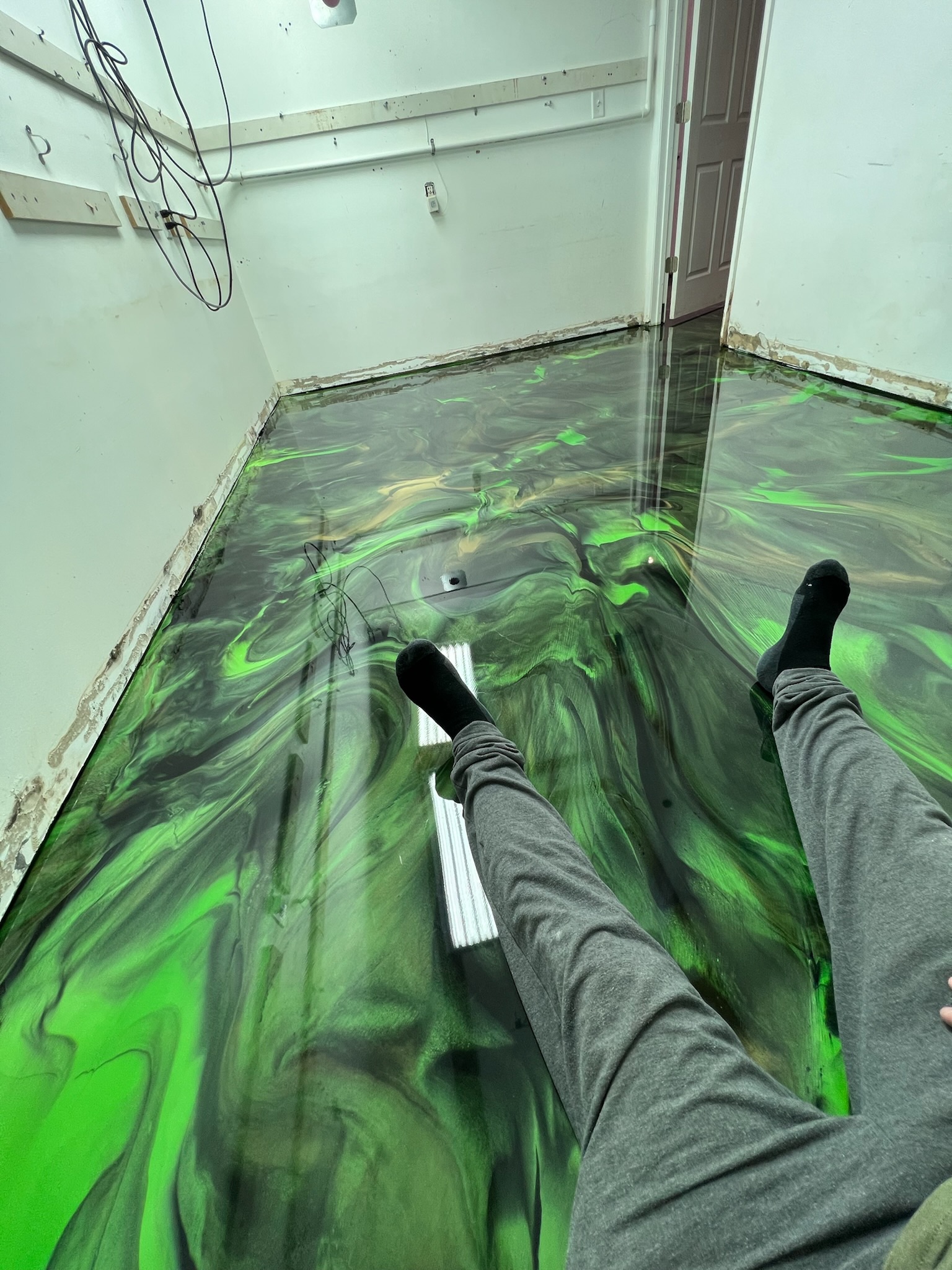
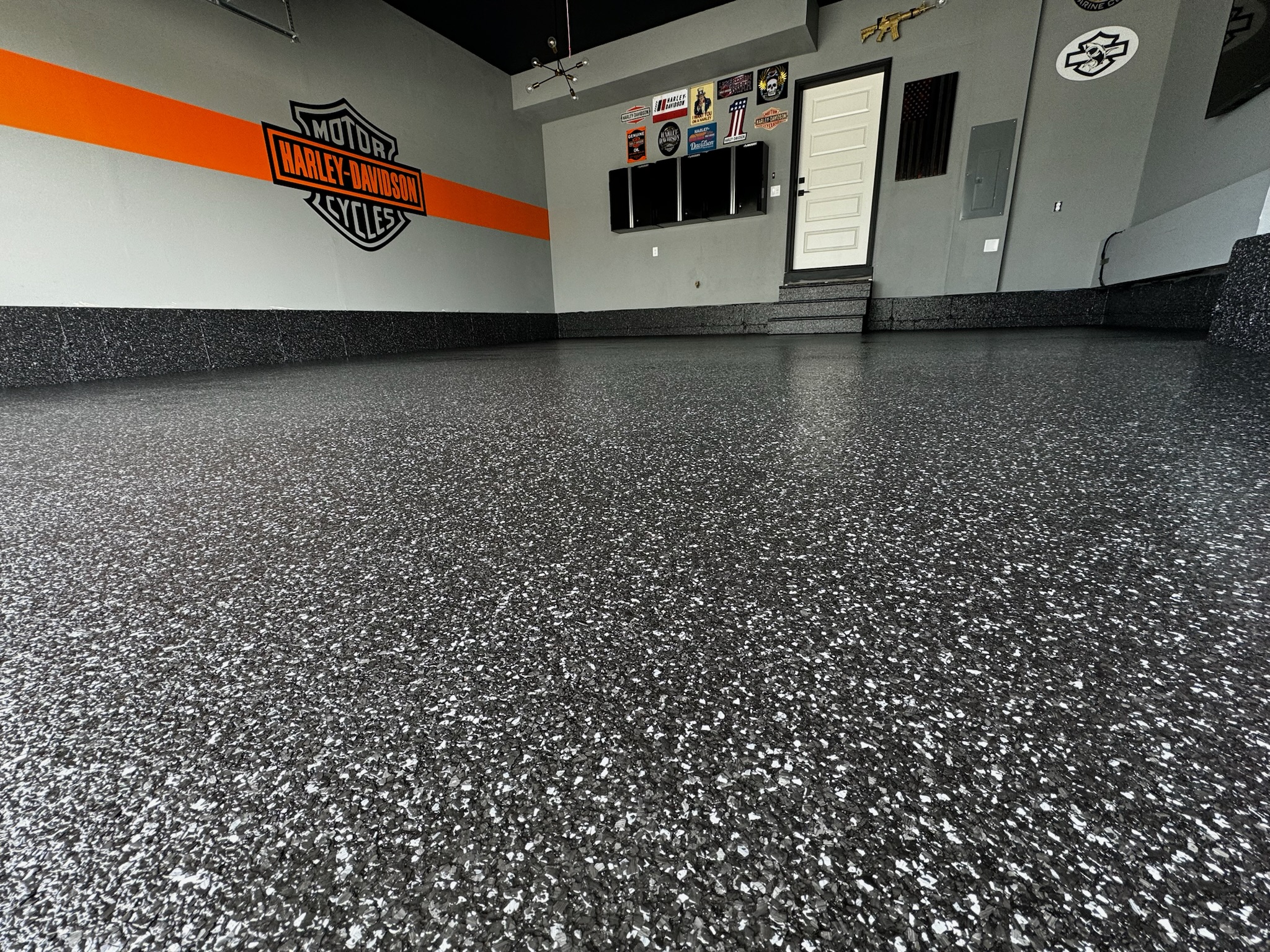
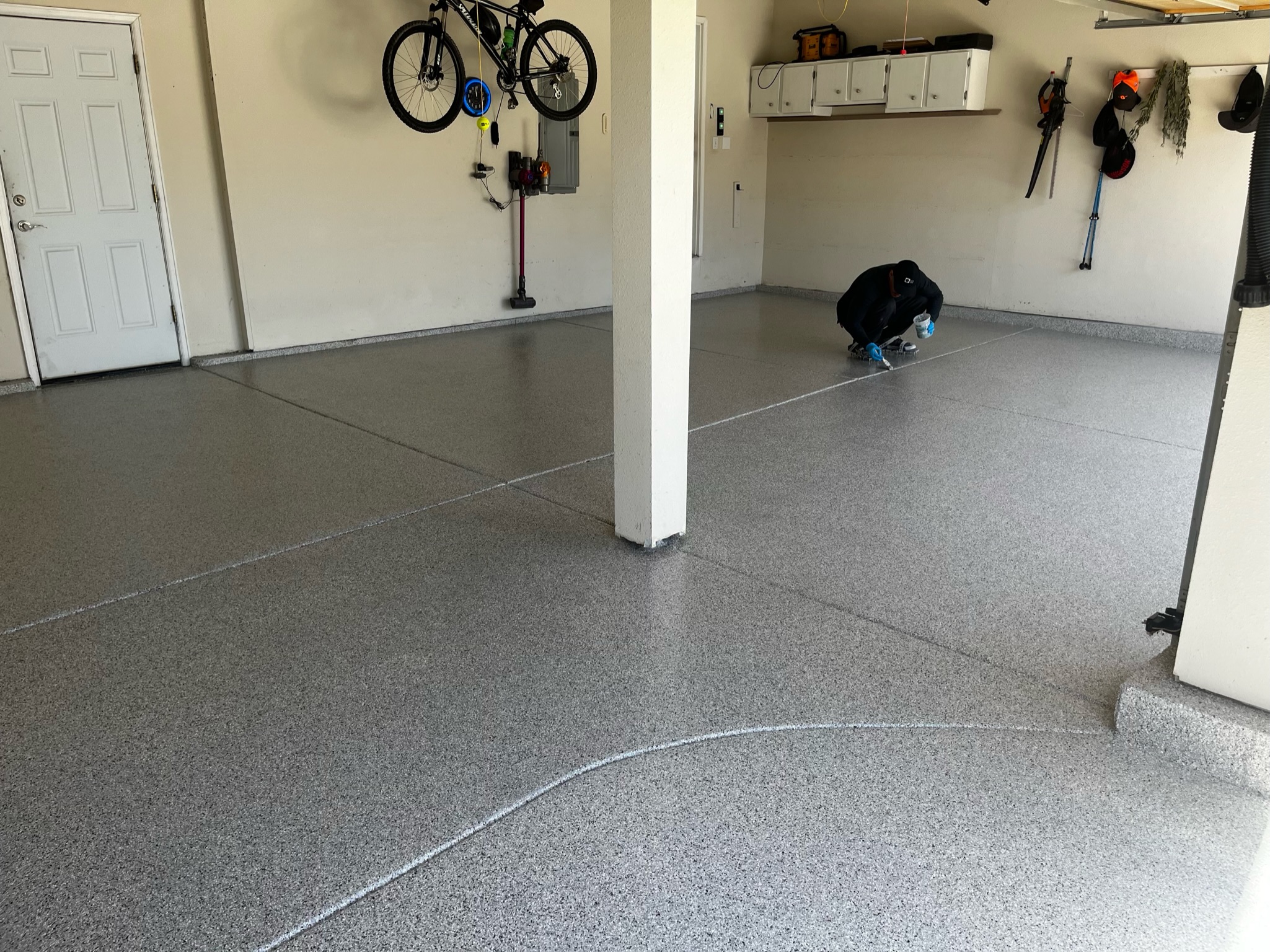
Service area · Gilbert AZ
Questions, answered.
Will dyed colors fade over time?
Stains and dyes locked under polished densifier are UV stable and chemically inert. The color becomes part of the slab itself, there’s no topical film to fade, peel, or yellow. Designed life of the color work matches the life of the building.
Can dyed match a specific brand color?
Yes, within the chemistry of concrete-compatible dyes and stains. We’ll do sample boards on offcuts from the actual slab to confirm the color before committing the full floor. Most architectural projects start with 2-3 sample boards before final color lock.
Is dyed more expensive than standard polished concrete?
Modestly. The base polishing process is identical; the color, dye, or aggregate work adds material and labor. Most dyed jobs land 15-30% above a standard polished concrete install of the same square footage. Full quote at the walkthrough.
What’s included in a Mint dyed install?
Every dyed project includes mechanical surface prep, Solvent / water, slab repair where required, Predictable, polishing or coating to the spec endpoint, and Polished + sealed. Written spec sheet on completion. AZ ROC-348746 license on file.
Does Mint take on dyed jobs outside Maricopa and Pinal?
Maricopa and Pinal counties are the primary service area. Projects elsewhere in Arizona get evaluated on a case-by-case basis depending on scope, distance, and schedule. Send the project location and we’ll respond either way.
Tell us about the slab.
Free walkthrough. No commitment. Send us the address, square footage, and finish you have in mind. Danny Carpenter shows up personally to measure the slab, scope the prep, and quote the polish.
- Mon to Sat · 7 AM to 6 PM
- Maricopa + Pinal coverage
- Free walkthroughs, no obligation
- License: AZ ROC-348746