Airport Hangar Polished Concrete
in Gilbert.
No peel, no FOD, no coating cycle. Polished concrete for private, corporate, and commercial aviation hangars across the Phoenix metro. Light-reflective slab cuts overhead lighting load 30 to 40 percent. Get a free walkthrough.
Polished Concrete for Phoenix-area hangars.
The hangar slab as the finished floor. No epoxy film, no urethane topcoat, no recoat cycle, no FOD hazard from delaminating coating. The slab itself, diamond-ground, lithium-densified, and progressively polished into a finished surface that handles tug tires, jet blast, prop wash, and decades of operational service. That is what polished concrete in a hangar actually is, and that is why corporate aviation operators and MRO facility managers spec it over coated systems when the calculation is honest.
The three numbers that drive the hangar polishing decision: FOD risk, lighting load, and life-cycle cost. FOD risk because anything that can delaminate from a hangar floor under aircraft tow weight or jet blast becomes foreign object debris, and FOD damages props, turbines, and landing gear. Polished concrete has no topical film and cannot delaminate. Lighting load because a polished slab reflects significantly more incident light than a sealed-coating or bare slab, which on a 10,000 to 25,000 square foot hangar translates to a 30 to 40 percent reduction in overhead lighting demand on average. Life-cycle cost because polished concrete is installed once and maintained on a wipe-down schedule, while coating systems require a recoat cycle every five to seven years that disrupts operations and recurring cost.
Hangar types Mint polishes
Hangar polishing in the Phoenix metro covers the full range of aviation facilities across Maricopa and Pinal counties:
- Corporate aviation hangars and FBO maintenance bays at Scottsdale, Gateway, Deer Valley, Falcon Field, and Chandler Municipal
- Single-aircraft T-hangars at private airparks and county airports throughout the Phoenix metro and Pinal county
- Multi-bay corporate hangars hosting fleet operations and aircraft management companies
- MRO, avionics, and aircraft restoration shop floors where chemical resistance and lighting reflectivity both matter
- New-build hangar slabs where polished concrete is specced from the structural design forward
How a hangar polish gets installed without shutting operations down
Larger hangar polishes sequence in zones. We section off a portion of the slab, contain the work area with dust barriers and HEPA-filtered vacuum systems, run the polish cycle through that zone, and move on. A 20,000 square foot hangar typically zones into four to six work areas over two to three weeks while the rest of the floor stays operational. The zone schedule coordinates with hangar operations: aircraft moves, scheduled maintenance windows, and operational tempo all shape the sequence. Smaller T-hangars and single-bay corporate hangars usually polish in one continuous push over four to seven days with the aircraft moved out for the work window.
Every grind pass runs through dust-controlled HEPA-filtered vacuum systems suitable for occupied buildings. No silica dust gets into adjacent operational space. No solvent fumes, no off-gassing, no cure-window stress that ties up the bay waiting for a coating to cross-link. The process is mechanical and chemical, not solvent-based, which is what makes phased work in an operational hangar feasible.
Fuel, hydraulic fluid, and chemical resistance
The penetrating impregnator-sealer applied at the end of the polish cycle repels jet fuel, avgas, hydraulic fluid, motor oil, and water without forming a topical film. Spills stay on the surface and wipe off with standard hangar cleaning protocols. The sealer does not break down under repeated fuel exposure the way some coatings do, and because there is no film, there is nothing to peel away from a stained area. For MRO bays handling specific shop chemicals, we can add a chemical-resistant impregnator that boosts protection against the chemistries that bay actually sees.
What hangar polishing costs in the Phoenix metro
Hangar numbers get driven by the slab in front of us, not by a rate card. The pieces that move it: the condition of the existing floor, total square footage, the grind depth needed to hit the aggregate exposure you want, the finish level specced, and how much fuel staining, coating residue, or crack and joint repair has to be handled before the polish sequence starts. Large continuous slabs at MRO and corporate aviation hangars work more efficiently per foot than a small chopped-up bay, because the machines stay in a cut longer instead of turning at every obstruction. Access hours matter too. Night and weekend work around an active flight line, escort requirements, and staging distance from the door all change the mobilization side of the job. We walk the hangar, check moisture where the slab warrants it, open a test area to see what the aggregate looks like, and put a line-itemed written price in front of you before anything goes to contract. Send the airport and hangar details and we’ll come measure the slab.
The numbers.
Every Mint install ships with a written spec sheet, a copy of the AZ ROC-348746 license, a certificate of insurance on request, and Danny Carpenter on site for every grind, repair, densify, and polish pass. No subcontracted crews. No walk-on labor. See recent commercial installs across the Phoenix metro.
From the job site.
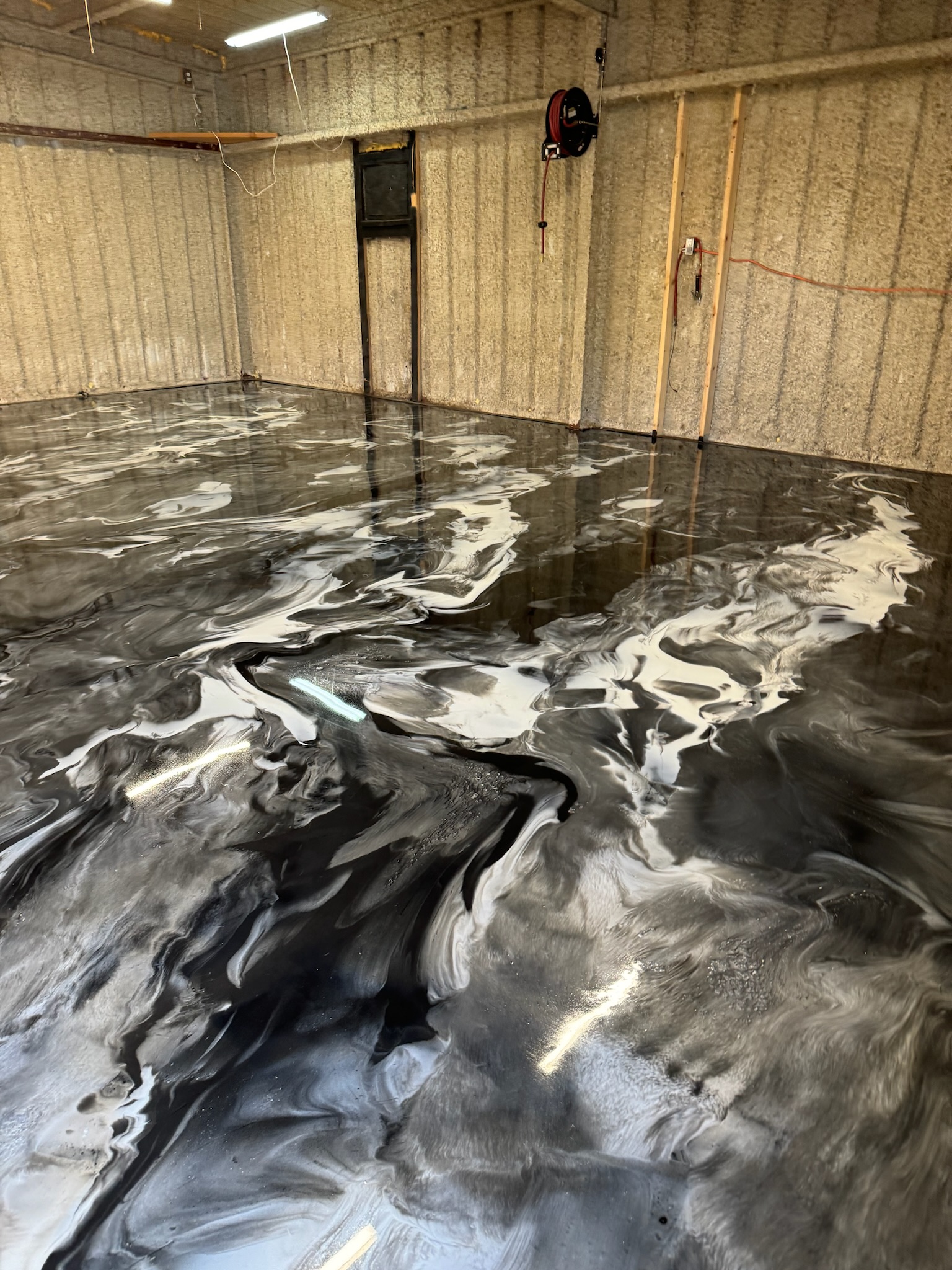
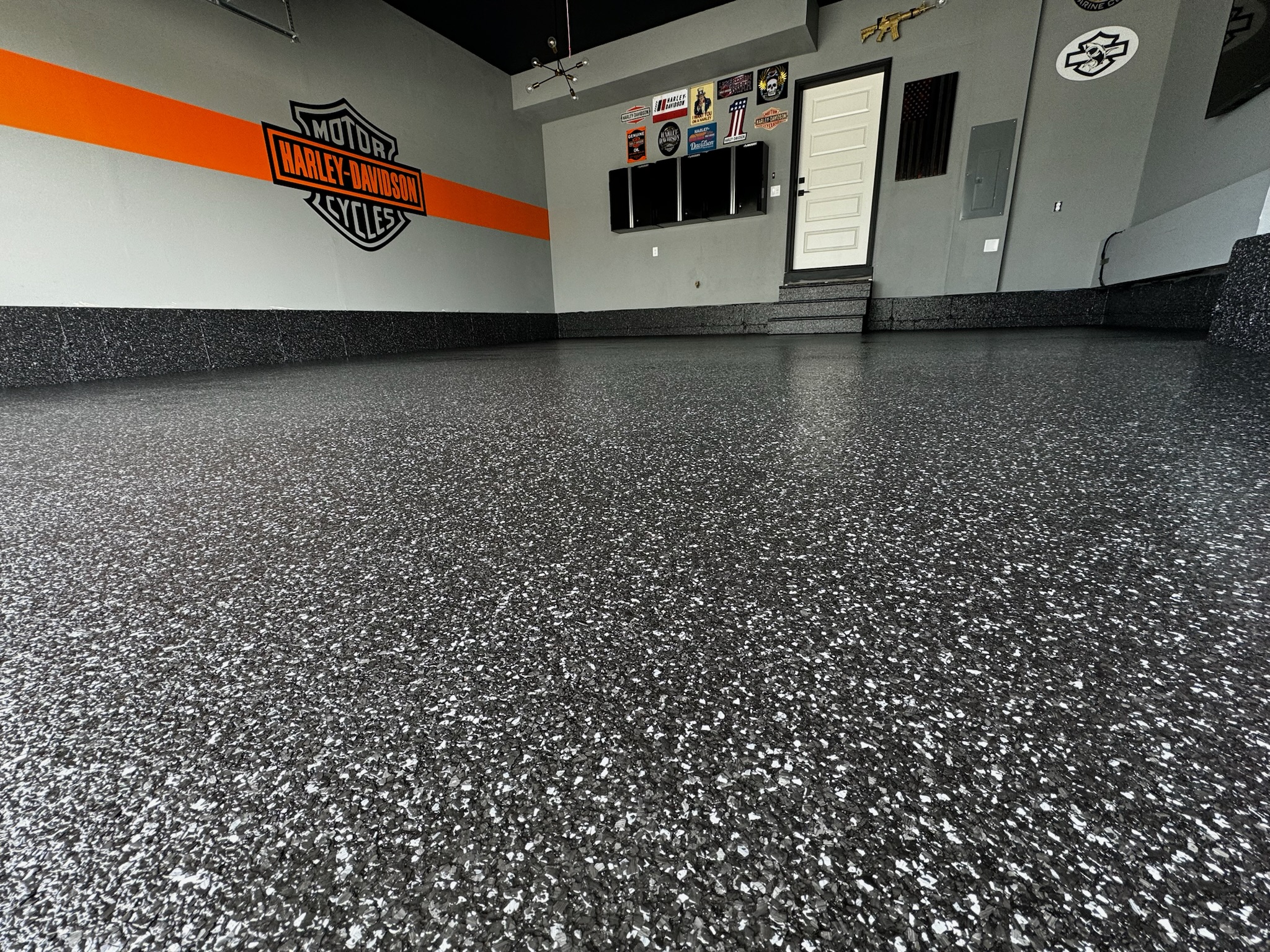
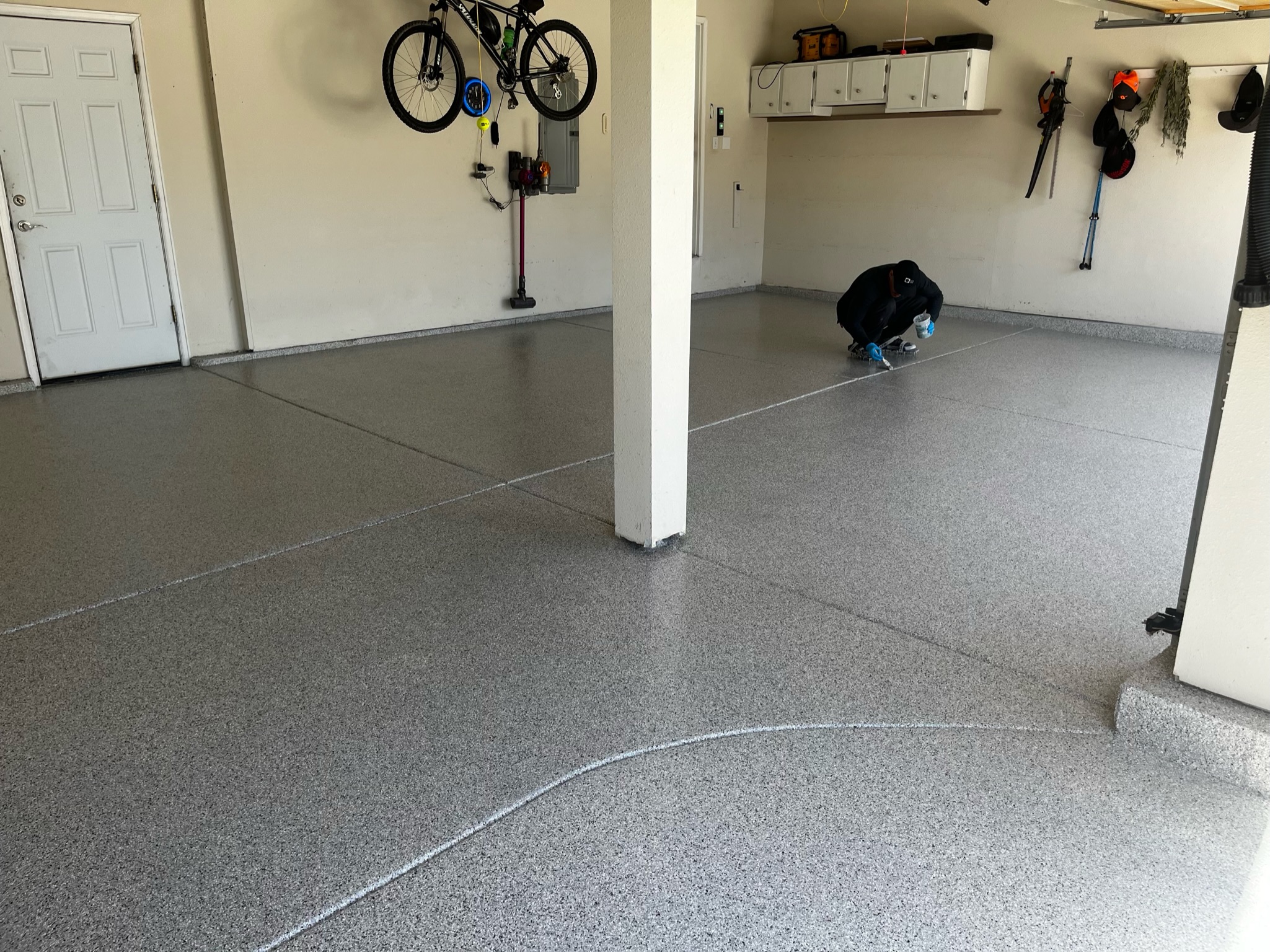
Real slabs from Maricopa and Pinal jobs. Every one was ground, densified, and finished by Danny’s crew, not a subcontractor.
Service area · Gilbert AZ
Hangar polishing, answered.
Why polished concrete for an airport hangar instead of epoxy or urethane?
Three reasons. No peel risk means no FOD hazard. A coating that delaminates under aircraft tow weight or jet blast creates foreign object debris that can damage props, turbines, and landing gear. Polished concrete has no topical film and cannot delaminate. Light reflection from a polished slab drops overhead lighting demand by 30 to 40 percent on average, which on a 10,000+ square foot hangar adds up to meaningful electrical savings over the life of the building. Fuel and fluid resistance means jet fuel, hydraulic fluid, and avgas spills wipe cleanly off an impregnator-sealed polished slab.
How much does polishing an airport hangar slab cost?
Hangar polishing typically runs Hangar numbers are driven by the slab, not by a rate card. What matters is the condition of the existing floor, the total square footage, the grind depth needed to reach the aggregate exposure you want, the finish level, and how much fuel staining, coating residue, or crack repair has to be dealt with before we polish. Big continuous slabs at MRO and corporate aviation hangars run more efficiently per foot than a small chopped-up bay, because the machines stay in a cut longer. Mobilization and hangar access hours factor in as well: night and weekend work around an active flight line changes the schedule. We walk the hangar, check moisture where it matters, and put a line-itemed written price in front of you before contract.
Can you polish a hangar slab without shutting down aircraft operations?
Yes. Hangar polishing gets scheduled in zones to keep operations live. We section off a portion of the slab, contain the dust with HEPA-filtered vacuum systems, run the polish cycle in that zone, and move on. A 20,000 square foot hangar can be polished in four to six zones over two to three weeks while the rest of the floor stays operational. Zone schedules coordinate with the hangar operator around scheduled maintenance windows and aircraft moves.
Will polished concrete handle aircraft tow tractor weight and turbine prop wash?
Yes. Polished concrete is the slab itself, mechanically and chemically densified to the hardness of natural stone. There is no coating to be scuffed by tug tires, no film for prop wash or jet blast to lift, no joint sealant cycle to maintain at the slab perimeter. Class 2 or Class 3 grind levels handle the loading classes that hangar slabs see in regular operation. Joint repair uses semi-rigid polyurea that flexes with the slab and grinds flush under the final polish pass.
What about fuel spills, oil drips, and hydraulic fluid on a polished hangar floor?
The penetrating impregnator-sealer applied at the end of the polish cycle repels jet fuel, avgas, hydraulic fluid, oil, and water without forming a topical film. Spills stay on the surface and wipe off with standard hangar cleaning protocols. The sealer does not break down under repeated fuel exposure the way some coatings do, and because there is no film, there is nothing to peel away from a stained area. For high-spill MRO bays, we can add a chemical-resistant impregnator.
Does Mint polish T-hangars and private corporate hangars in addition to commercial aviation hangars?
Yes. Mint installs hangar polished concrete across the full range of aviation facilities in the Phoenix metro: single-aircraft T-hangars, multi-bay corporate hangars, MRO and avionics shop floors, FBO maintenance bays, and aircraft restoration shops. The protocol is the same; only the scope and zoning schedule changes. Phoenix metro hangar work happens primarily at Gateway, Deer Valley, Scottsdale, Falcon Field, and private airparks throughout Maricopa and Pinal counties.
Tell us about the hangar.
Free walkthrough. No commitment. Send the airport, the hangar size, and the operational constraints. Danny Carpenter shows up personally to measure the slab, scope the prep, and quote the polish.
- Mon to Sat · 7 AM to 6 PM
- Maricopa + Pinal coverage
- Free walkthroughs, no obligation
- License: AZ ROC-348746