Slip-Resistant Polish Treatment
in Gilbert.
Micro-textured topical treatment applied over polished concrete to boost slip resistance without dulling the gloss. ADA + DCOF compliant out of the box. Built by Danny Carpenter personally on every install. Get a free walkthrough.
Slip-Resistant Polish Treatment in Gilbert.
Slip-Resistant Polish Treatment is a micro-textured topical treatment applied over polished concrete to boost slip resistance without dulling the gloss. ADA + DCOF compliant out of the box.
Decorative polished concrete sits where architects and interior designers specify a polished surface but want it to read as a deliberate design choice rather than a structural one. Color, aggregate exposure, stain patterns, dye gradients, and topical micro-texture all live inside the polished surface, none of it sits on top as a coating film.
Specified for
- Restaurants
- Healthcare
- Pool + spa adjacent
- Entryways
- Public areas
How slip-resistant reads in the finished space
The underlying polish protocol is identical to a standard commercial polish. The decorative layer happens between densification and the final polishing pass, stain or dye is applied, the surface is densified again, then progressively polished through to the spec gloss. The color or pattern becomes part of the slab itself, locked under the polished impregnator-sealer, with no topical film to peel or yellow.
For commercial design teams looking to spec slip-resistant on an upcoming project, share the design intent and Mint will walk through what’s achievable on the existing slab.
What DCOF actually measures, and what it doesn’t
Dynamic coefficient of friction is a wet test. A machine drags a rubber sled across a wetted surface and reports a number, and the common benchmark for a walking surface that may get wet is 0.42 or better. That number is useful and we test to it, but it is measured with clean water on a clean floor. Your restaurant floor is not clean water. It’s fryer oil aerosol that settles six feet out from the line, it’s a dropped ramekin of dressing, it’s the film that builds up when a mop bucket goes too long between changes. A floor can pass the test on Tuesday and still be slick on Friday night.
So we treat the number as the floor of the conversation instead of the end of it. We ask what gets spilled, who’s walking on it, what shoes they wear, how often it gets cleaned and with what. A physical therapy gym where patients walk barefoot needs something different from a brewery taproom where servers move fast in rubber soles. The treatment gets picked to match that, then we verify with the meter.
Micro-texture without killing the gloss
The reason people resist slip treatments is they’ve seen the bad version, where somebody rolled a gritty additive over a beautiful floor and turned it into sandpaper that looks cloudy and traps dirt in every low spot. That’s a topical film with aggregate suspended in it, and it wears off in traffic lanes within a year while staying intact under the shelving, which leaves you with a two-tone floor.
What we apply instead reacts into the surface. It is a fluoropolymer or silicate-based treatment that micro-etches the very top of the cement paste, creating texture measured in microns. Your eye cannot resolve it, so the gloss reading barely moves, usually a handful of points on a gloss meter. Your foot can absolutely feel it, especially wet, because that micro-profile breaks the water film that would otherwise let a shoe hydroplane. The polish underneath is untouched, so there’s nothing to peel and nothing to recoat on a cycle.
Where we’ve seen it earn its keep in the Valley
Pool decks and spa surrounds are the obvious ones, and the Phoenix metro has more of them per square mile than most places. Wet feet, sunscreen, and a hard surface are a bad combination, and a lot of the resort and multifamily amenity decks we get called into were originally sealed with something glossy because it photographed well. We can keep the look and fix the traction.
Less obvious is the entry vestibule. From roughly July through September, a monsoon cell will dump half an inch of rain in twenty minutes, and every person entering the building carries that water in on their shoes across the first fifteen feet of floor. That transition zone from wet outside to dry inside is where falls happen, and it’s the strip we always treat first even when the client only asked about the main floor. Same story with a walk-in cooler threshold in a restaurant, where condensation sits on the slab most of the day.
Cleaning is half of the traction
A treated floor that gets mopped with the wrong chemical goes right back to being slick, because a soap residue film sits on top of the micro-texture and fills it in. We hand over the actual instructions on the day we finish: a neutral pH cleaner, clean water changed often, and an auto-scrubber with the right pad where the square footage justifies one. No wax, no mop-and-shine product, no oil soap. Those products are how a floor that tested fine at handover ends up slick eight months later.
We also come back and re-test. Traffic lanes wear differently from the perimeter, and after a year in a busy space the meter will tell you which zones need a refresh pass. A refresh is a fraction of the original work since it’s a re-application on an already-prepped surface, and it can usually run overnight so nobody loses a service day. If you want that on a schedule, we’ll put it on the calendar rather than waiting for someone to slip.
Getting it specified correctly
If you’re an architect or a GC writing this into a set, the language matters. A spec that just says “slip resistant finish” leaves the finishing contractor to interpret it, and the cheapest interpretation is a gritty topcoat. Name the test method, name the wet threshold you want, and require field verification after installation rather than a manufacturer’s lab data sheet. We are happy to sit in a preconstruction meeting and help word it, and we’ll test the mockup so the number in the submittal came off your actual slab.
This treatment pairs with any of the polish tiers. It goes over a honed finish just as readily as a high-gloss floor, and it works alongside penetrating sealers rather than competing with them. Send the drawings and the space use and Danny will tell you what the slab can do.
The numbers.
Every Mint install ships with a written spec sheet, a copy of the AZ ROC-348746 license, a certificate of insurance on request, and Danny Carpenter on site for every grind, repair, densify, and polish pass. No subcontracted crews. No walk-on labor.
From the job site.
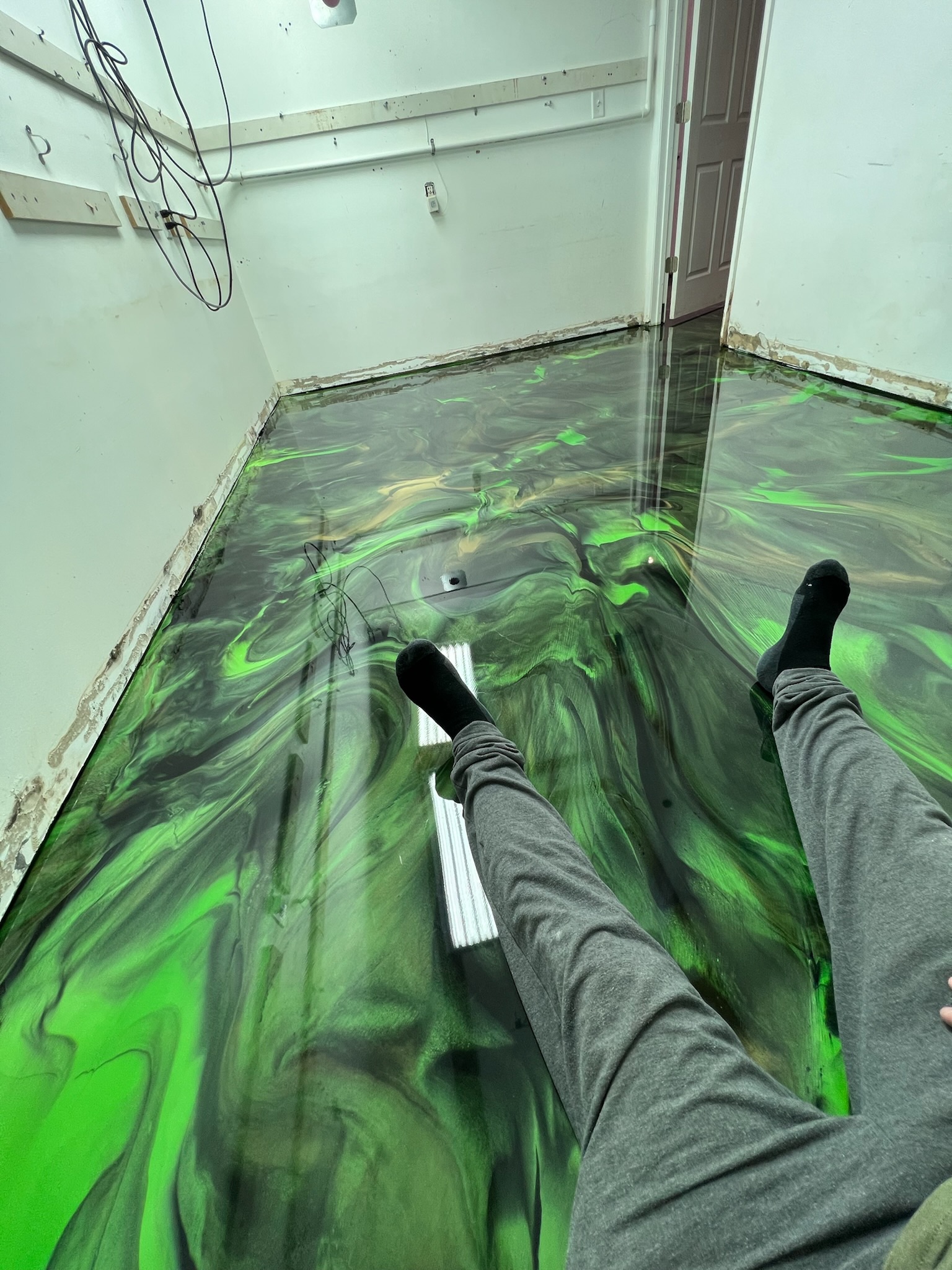
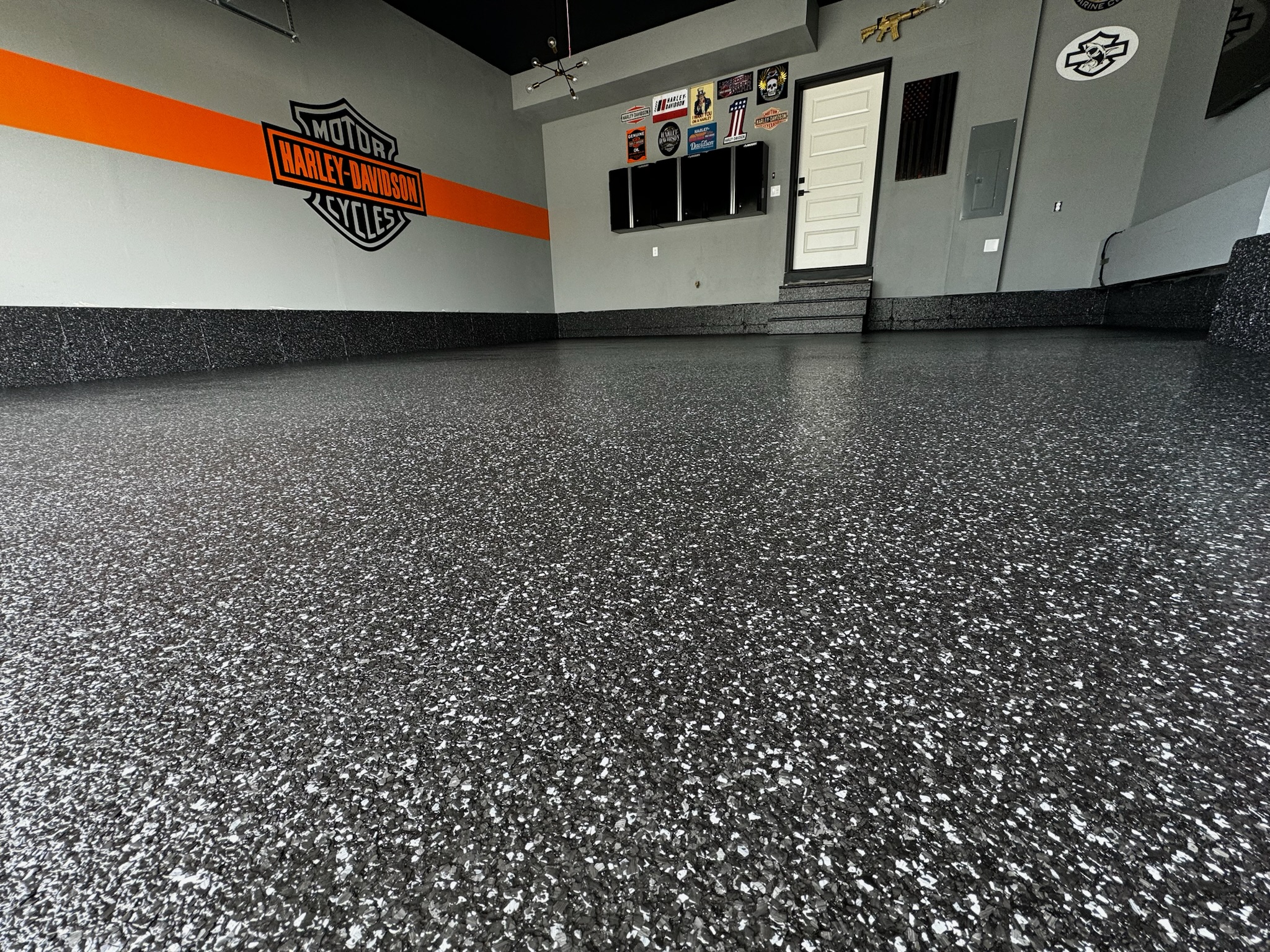
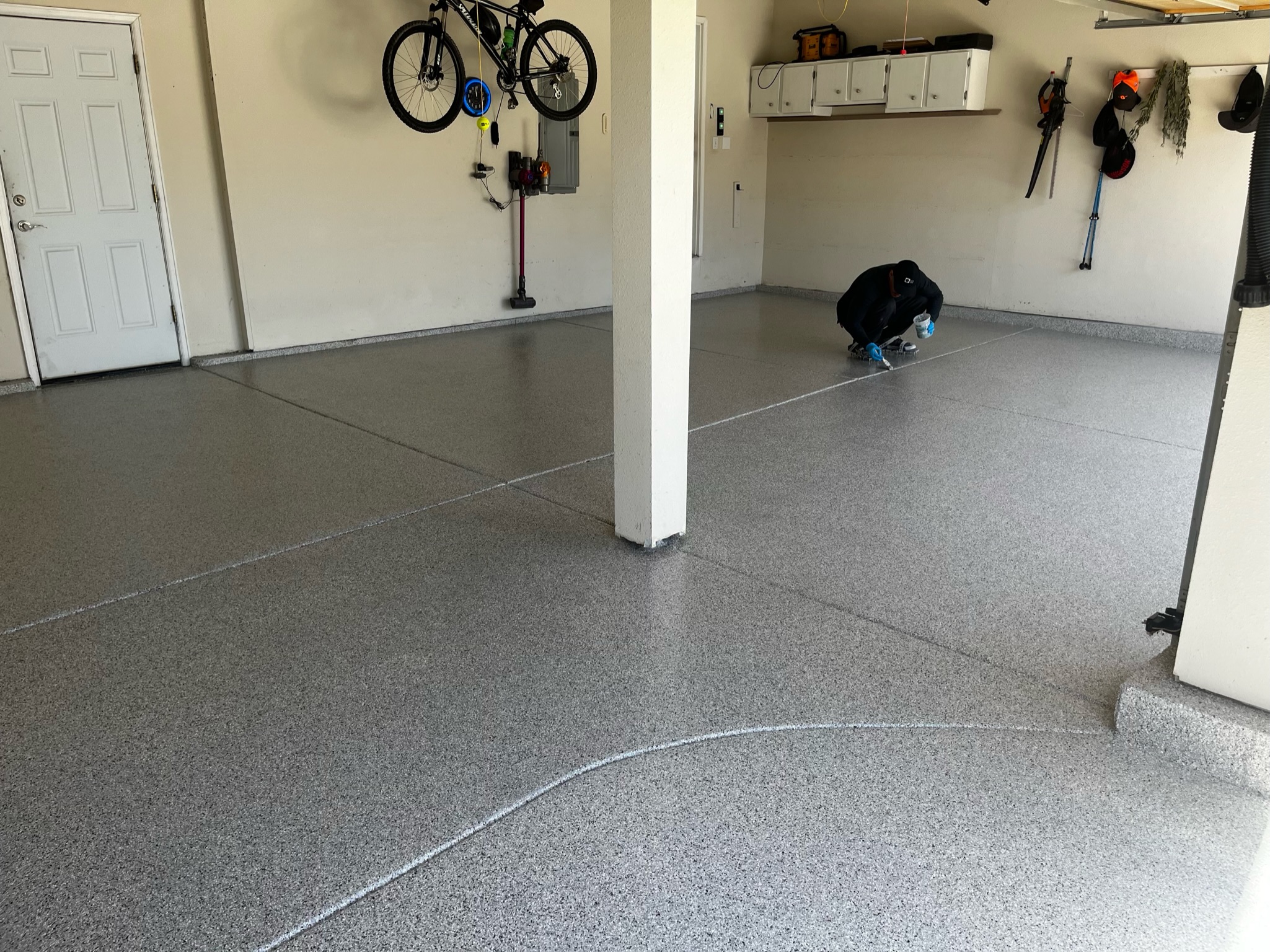
Real slabs from Maricopa and Pinal jobs. Every one was ground, densified, and finished by Danny’s crew, not a subcontractor.
Service area · Gilbert AZ
Questions, answered.
Will slip-resistant colors fade over time?
Stains and dyes locked under polished densifier are UV stable and chemically inert. The color becomes part of the slab itself, there’s no topical film to fade, peel, or yellow. Designed life of the color work matches the life of the building.
Can slip-resistant match a specific brand color?
Yes, within the chemistry of concrete-compatible dyes and stains. We’ll do sample boards on offcuts from the actual slab to confirm the color before committing the full floor. Most architectural projects start with 2-3 sample boards before final color lock.
Is slip-resistant more expensive than standard polished concrete?
Modestly. The base polishing process is identical; the color, dye, or aggregate work adds material and labor. Most slip-resistant jobs land 15-30% above a standard polished concrete install of the same square footage. Full quote at the walkthrough.
What’s included in a Mint slip-resistant install?
Every slip-resistant project includes mechanical surface prep, DCOF 0.6+, slab repair where required, Minimal, polishing or coating to the spec endpoint, and Topical micro-texture. Written spec sheet on completion. AZ ROC-348746 license on file.
Does Mint take on slip-resistant jobs outside Maricopa and Pinal?
Maricopa and Pinal counties are the primary service area. Projects elsewhere in Arizona get evaluated on a case-by-case basis depending on scope, distance, and schedule. Send the project location and we’ll respond either way.
Tell us about the slab.
Free walkthrough. No commitment. Send us the address, square footage, and finish you have in mind. Danny Carpenter shows up personally to measure the slab, scope the prep, and quote the polish.
- Mon to Sat · 7 AM to 6 PM
- Maricopa + Pinal coverage
- Free walkthroughs, no obligation
- License: AZ ROC-348746