Satin Finish Concrete
in Gilbert.
Semi-gloss polished concrete finish: Level 2 polish. Sheen without mirror. The most popular commercial finish for spaces that want polish without the showroom-level gloss reflection. Built by Danny Carpenter personally on every install. Get a free walkthrough.
Satin Finish Concrete in Gilbert.
Satin Finish Concrete defines the gloss level of the finished polished concrete. Same densification process, same long-life slab, different polishing endpoint and a different visual read in the finished space. Semi-gloss polished concrete finish: Level 2 polish. Sheen without mirror. The most popular commercial finish for spaces that want polish without the showroom-level gloss reflection.
Satin Finish sits on the polishing-level spectrum at Level 2 (Semi-Gloss). Where on that spectrum your project should land comes down to lighting, traffic, slip requirements, and what the surrounding architecture asks for. Danny walks every project before recommending a finish level so the polish matches the space, not the other way around.
Best fit applications
The most common project types calling for satin finish in Phoenix:
- Office
- Retail
- Mixed-use
- Light commercial
- Modern residential
What the spec sheet calls for
Satin Finish polish runs through the same four-step protocol as every Mint polished concrete install: progressive diamond grinding, slab repair, lithium-silicate densification, then progressive grit polishing to the spec-level endpoint. Penetrating impregnator-sealer goes on last. The difference between finish levels is the grit endpoint and the burnishing pass count. The longevity, slip resistance, and density of the underlying slab are identical.
Why the grit ladder cannot be shortcut
Polishing is scratch removal, and every step exists only to erase the scratches left by the step before it. Metal-bond diamonds open the slab and leave a coarse pattern. Transitional and resin diamonds walk that pattern down through progressively finer marks until the remaining scratches are small enough that light no longer scatters off them. Skip a grit and you do not save a day. You leave a set of scratches that the finer pads cannot reach, and they will still be there under the gloss, showing up as a dull haze in raking light across a lobby at four in the afternoon.
For a satin endpoint we typically run the resin ladder through 400 and finish at 800, sometimes touching 1500 as a burnish depending on how the aggregate is behaving and how hard the slab tested. That endpoint is deliberate. Satin holds enough tooth to scatter light softly while still cleaning like a polished surface. The mistake we get called in to fix is a floor somebody stopped at 200 and then flooded with a topical gloss sealer to fake a satin look. It shines for a season and then the film wears through in the traffic lane and the whole floor looks patched.
Measuring gloss instead of arguing about it
Satin is a word people picture differently, so on any spec-driven project we take gloss meter readings and put numbers on the submittal instead of trading adjectives. A honed floor and a mirror floor are far apart on a meter and nobody disputes them. Satin sits in the middle, and the middle is exactly where a client and a contractor can both be sincere and completely disagree. Readings taken in a few representative bays, recorded before handoff, mean nobody has to relitigate the finish at closeout.
Distinctness of image is the other number worth knowing. Gloss measures how much light comes back. Distinctness measures how sharply an object reflects in the surface. A satin floor can be reasonably bright while showing almost no clear reflection, which is usually exactly what an office tenant wants: a floor that feels finished and does not put a ceiling grid in your eye all day. When a client tells us they want polish but not a “wet look,” what they are describing is low distinctness at moderate gloss, and satin is the answer.
Traction, and the honest version of the slip conversation
The assumption is that shinier means more slippery. Dry, that is largely false, and a properly polished floor at any level tests well because polishing flattens the surface without lubricating it. Wet is a different story, and it is where the specifier’s real decision lives. Water on any hard mineral floor drops traction, and the finer the finish the more it drops. Satin holds a small advantage over a full mirror finish here, which is one reason it is the most-specified level we install for offices, corridors, and retail floors that sit behind a set of exterior doors.
Where a floor will genuinely get wet, an entry vestibule, a restroom approach, a beverage station, we do not rely on the finish level to solve it. We either drop those zones to a honed endpoint or add a slip-resistant treatment into the impregnator, and we say so on the spec sheet so the facilities team knows the floor was designed that way on purpose. Matting still does more for entry safety than any finish decision, and we will tell a client that even though it is not something we sell.
What satin does for maintenance budgets
Satin is the level that ages the most gracefully, and that is the quiet reason it dominates commercial specifications in the Phoenix valley. A mirror floor is a beautiful thing and it broadcasts every scuff, every cart wheel, every bit of tracked-in grit, because a perfect reflection makes any interruption obvious. Satin absorbs that visual noise. The same amount of wear that reads as damage on a mirror floor reads as nothing on satin, which means the burnishing interval stretches and the facility crew spends less time chasing appearance.
Desert dust makes that difference sharper here than it would be in a wetter climate. Fine grit gets tracked into every building in Gilbert, Chandler, and Mesa year round, and it dulls the top of a floor whether anyone notices or not. On satin the dulling is gradual and even. On a mirror finish it shows first in the walking lanes and creates a visible path across the room within a year, which is a maintenance call whether or not the floor has any real problem.
- Ships at a moderate gloss with low reflected distinctness, so ceiling fixtures do not read in the floor.
- Densified full depth like every other level, so hardness and abrasion resistance are unchanged.
- Burnish interval typically stretches longer than a high-gloss floor under identical traffic.
- Zone-adjustable, so entries and wet areas can drop a level without changing the look of the main field.
If you are choosing between finish levels, the fastest way through it is to stand on both. We keep polished sample panels and will bring them to the site so you can look at them on your floor, under your lights, next to your millwork. Ask for the sample panels when you book the walkthrough and Danny will bring the range with him.
The numbers.
Every Mint install ships with a written spec sheet, a copy of the AZ ROC-348746 license, a certificate of insurance on request, and Danny Carpenter on site for every grind, repair, densify, and polish pass. No subcontracted crews. No walk-on labor.
From the job site.
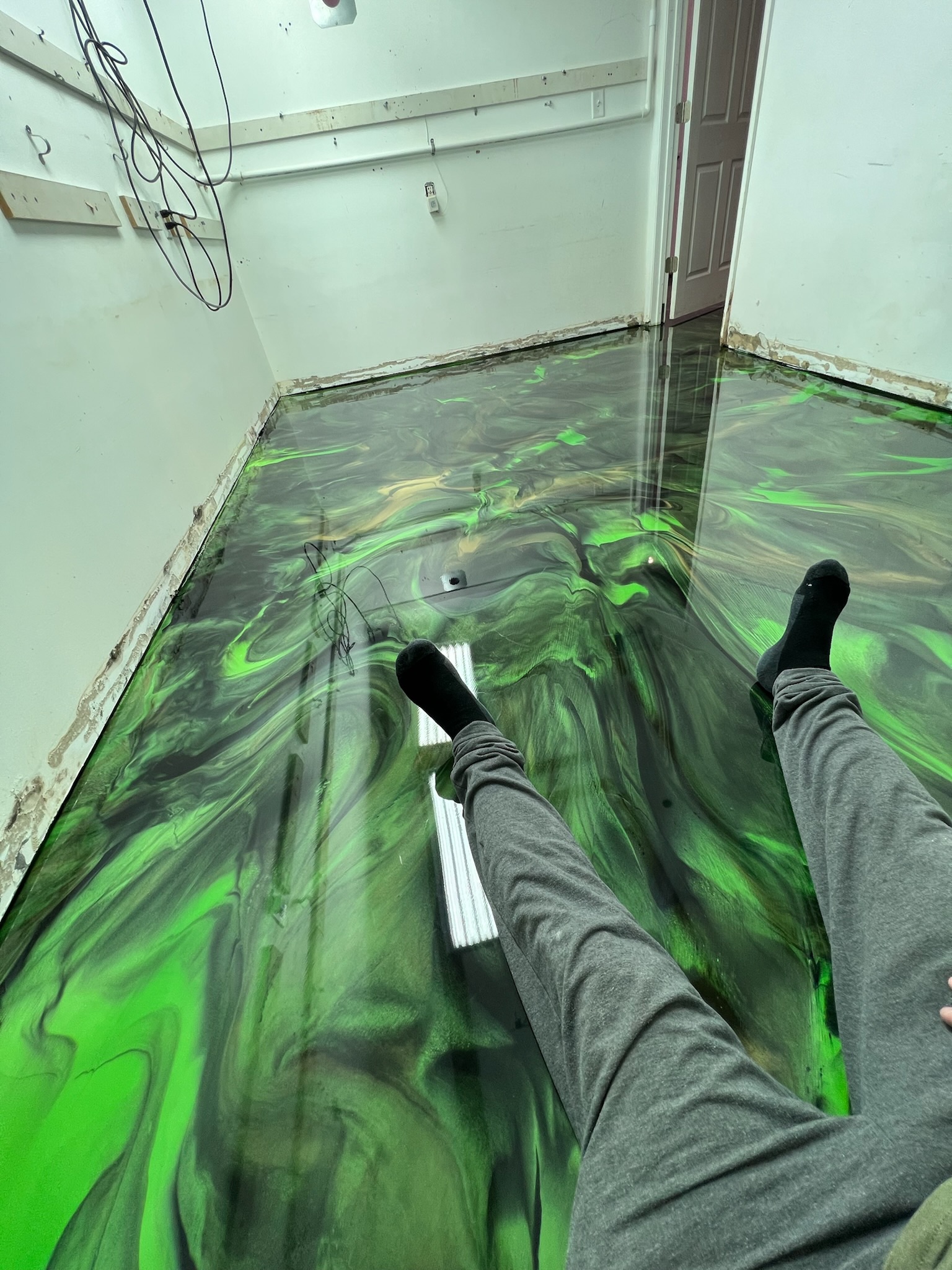
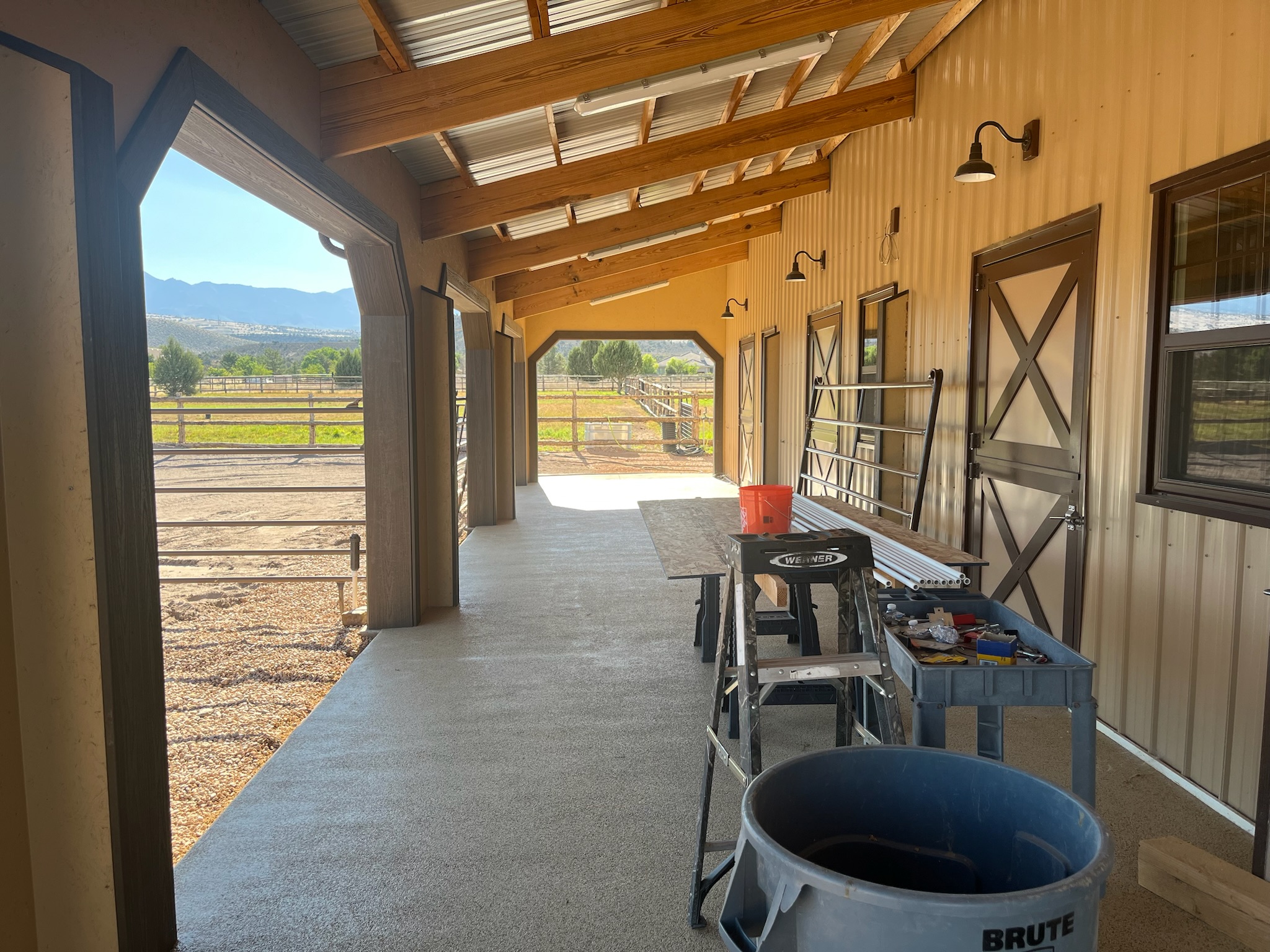
Real slabs from Maricopa and Pinal jobs. Every one was ground, densified, and finished by Danny’s crew, not a subcontractor.

Service area · Gilbert AZ
Questions, answered.
How is satin finish different from a higher-gloss polish?
Satin Finish stops the polishing progression at 400-800. Going to higher grit produces more reflection but adds time and cost. Satin Finish is the right call when the design intent is for office-style spaces.
Will satin finish hold up in commercial traffic?
Yes. The wear performance of polished concrete comes from the densification, not the gloss level. satin finish polish on a properly densified slab will outlast any topical coating system in a commercial wear environment.
Can satin finish be made more or less reflective later?
Yes. The polish level is the last step in the install and can be adjusted up or down with a re-burnish or a higher-grit pass. Many commercial clients start at a moderate sheen and burnish up after a few months of operations to land where the space actually wants to live.
What’s included in a Mint satin finish install?
Every satin finish project includes mechanical surface prep, Level 2 (Semi-Gloss), slab repair where required, 400-800, polishing or coating to the spec endpoint, and Medium. Written spec sheet on completion. AZ ROC-348746 license on file.
Does Mint take on satin finish jobs outside Maricopa and Pinal?
Maricopa and Pinal counties are the primary service area. Projects elsewhere in Arizona get evaluated on a case-by-case basis depending on scope, distance, and schedule. Send the project location and we’ll respond either way.
Tell us about the slab.
Free walkthrough. No commitment. Send us the address, square footage, and finish you have in mind. Danny Carpenter shows up personally to measure the slab, scope the prep, and quote the polish.
- Mon to Sat · 7 AM to 6 PM
- Maricopa + Pinal coverage
- Free walkthroughs, no obligation
- License: AZ ROC-348746